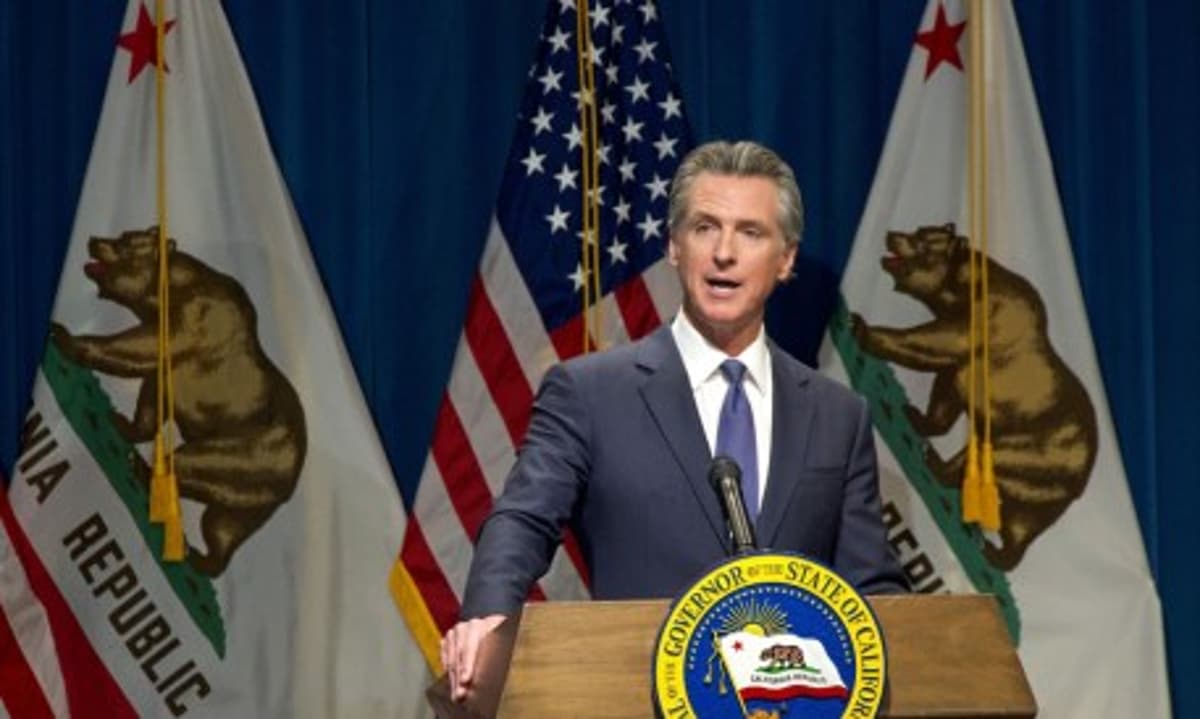
Calif. Governor Signs Order to Prepare Workforce for AI Disruption
Why It Matters
By institutionalizing AI‑specific labor safeguards, California aims to protect millions of workers while preserving its competitive edge in the tech sector, setting a template other states may follow.
Key Takeaways
- •California mandates AI impact dashboard across state agencies.
- •Order explores severance upgrades, equity compensation, universal basic capital.
- •Workforce training programs to target AI‑displaced jobs.
- •State will track hiring/payroll trends for rapid layoff response.
- •Initiative precedes stalled federal AI oversight, positioning California as policy leader.
Pulse Analysis
California’s new executive order reflects the state’s urgency to address AI’s rapid diffusion across its economy. Home to 33 of the world’s top 50 private AI firms, California faces a paradox: unparalleled innovation alongside looming labor displacement. By requiring agencies to publish a live AI‑impact dashboard and to monitor hiring and payroll data, the order creates a feedback loop that can spot sector‑wide layoffs before they cascade. The policy bundles traditional safety‑net upgrades—higher severance, expanded unemployment insurance—with forward‑looking concepts such as equity‑based compensation and universal basic capital, signaling a holistic approach to future‑of‑work challenges.
The order’s emphasis on reskilling and upskilling is a pragmatic response to the skill gap that AI is widening. State‑funded training pipelines will target roles most vulnerable to automation, from routine administrative tasks to entry‑level coding positions, while partnerships with universities and industry leaders aim to certify workers in AI‑adjacent fields like data ethics, prompt engineering, and human‑AI collaboration. By exploring worker ownership models and equity payouts, California is testing whether shared financial upside can soften the shock of displacement, a strategy that could inspire other jurisdictions seeking to balance productivity gains with equitable wealth distribution.
Federal AI oversight has stalled, with the White House’s proposed voluntary vetting framework delayed amid concerns over competitiveness. California’s decisive action therefore positions the state as a de‑facto laboratory for AI‑centric labor policy. If the dashboard proves effective and the training outcomes show measurable employment retention, policymakers in other tech hubs may adopt similar frameworks, potentially nudging the federal government toward more concrete legislation. However, the initiative also faces challenges: funding the expanded safety nets, ensuring program accessibility across diverse communities, and measuring AI‑induced displacement accurately. Success will hinge on coordinated execution and transparent reporting, making California’s experiment a bellwether for the nation’s broader AI transition strategy.
Calif. Governor Signs Order to Prepare Workforce for AI Disruption
Comments
Want to join the conversation?
Loading comments...