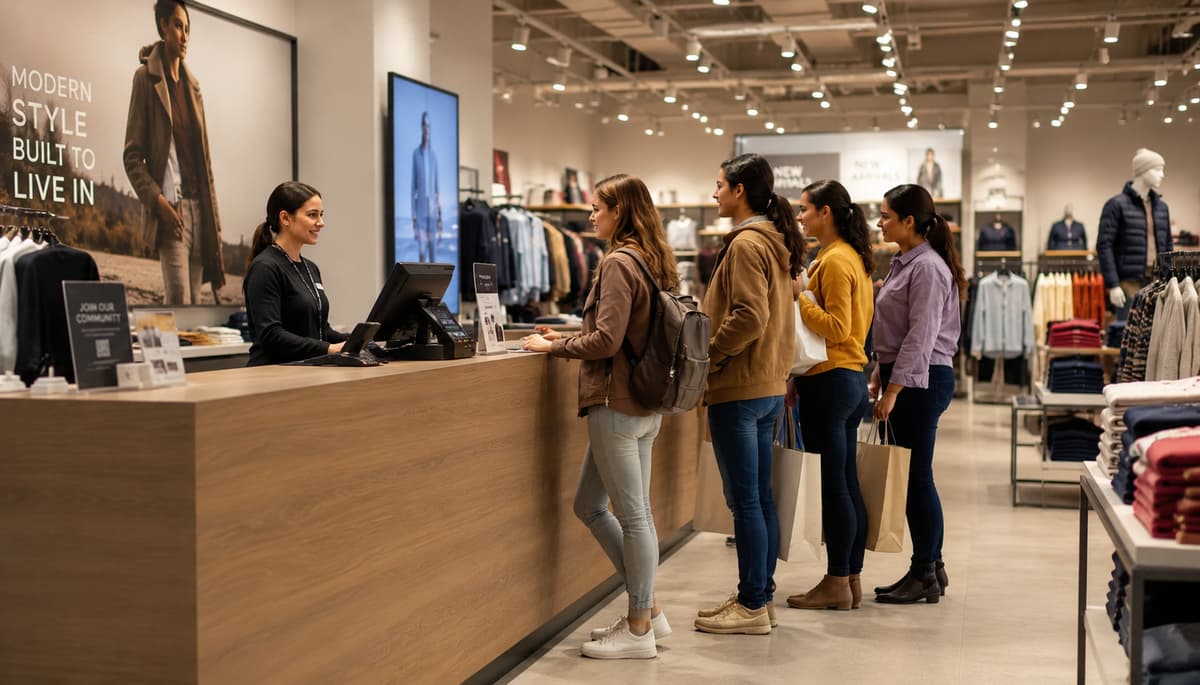
Canadian Retailers Keep Expanding, So Why Are Jobs Disappearing?
Why It Matters
The widening gap between store growth and staffing cuts threatens the experiential retail model that differentiates physical stores from online competitors, and could erode customer service quality. Understanding this shift is critical for investors, labor policymakers, and retailers planning future workforce strategies.
Key Takeaways
- •Retail employment fell 27,000 jobs in April despite store openings
- •Automation and AI adoption cited as drivers of leaner staffing models
- •Older workers see hiring gains while younger talent exits retail sector
- •Canadian retail hiring lags U.S., highlighting divergent productivity pressures
- •Hudson’s Bay collapse still limits jobs for beauty‑category specialists
Pulse Analysis
Canada’s retail sector is sending mixed signals: storefronts are expanding while payrolls shrink. Statistics Canada’s April report showed a 27,000‑job dip in wholesale and retail trade, echoing a similar decline in March. Yet developers continue to announce new locations, mall refurbishments, and experiential concepts. Analysts attribute the paradox to a strategic pivot toward higher productivity, where technology and leaner staffing replace traditional labor‑intensive models. This shift mirrors broader North American trends, but Canada’s pace appears accelerated, prompting questions about the sustainability of in‑store experiences that have long been a competitive edge over e‑commerce.
Automation, artificial intelligence, and outsourced services are reshaping the retail workforce. Self‑checkout kiosks, inventory‑management bots, and centralized digital platforms reduce the need for floor staff and cut labor costs. While these tools boost efficiency, they also diminish the one‑on‑one service that consumers expect from physical stores. The resulting talent gap is evident in demographic data: older workers are finding more opportunities, whereas younger employees are leaving the sector, citing limited career prospects. Specialized roles, such as beauty advisors displaced by the Hudson’s Bay collapse, struggle to find comparable positions, underscoring the sector’s reliance on experienced, service‑focused staff.
The divergence between Canadian and U.S. retail hiring trends adds another layer of complexity. In the United States, retail employment remains robust, buoyed by strong warehousing and logistics growth. Canada’s more cautious labor approach may reflect heightened productivity pressures and lingering economic uncertainty. For investors and policymakers, the key takeaway is that continued store expansion does not guarantee job growth; instead, success will hinge on balancing technological adoption with the human touch that drives brand loyalty. Retailers that can integrate automation without eroding service quality are likely to thrive in the evolving market landscape.
Canadian Retailers Keep Expanding, So Why Are Jobs Disappearing?
Comments
Want to join the conversation?
Loading comments...