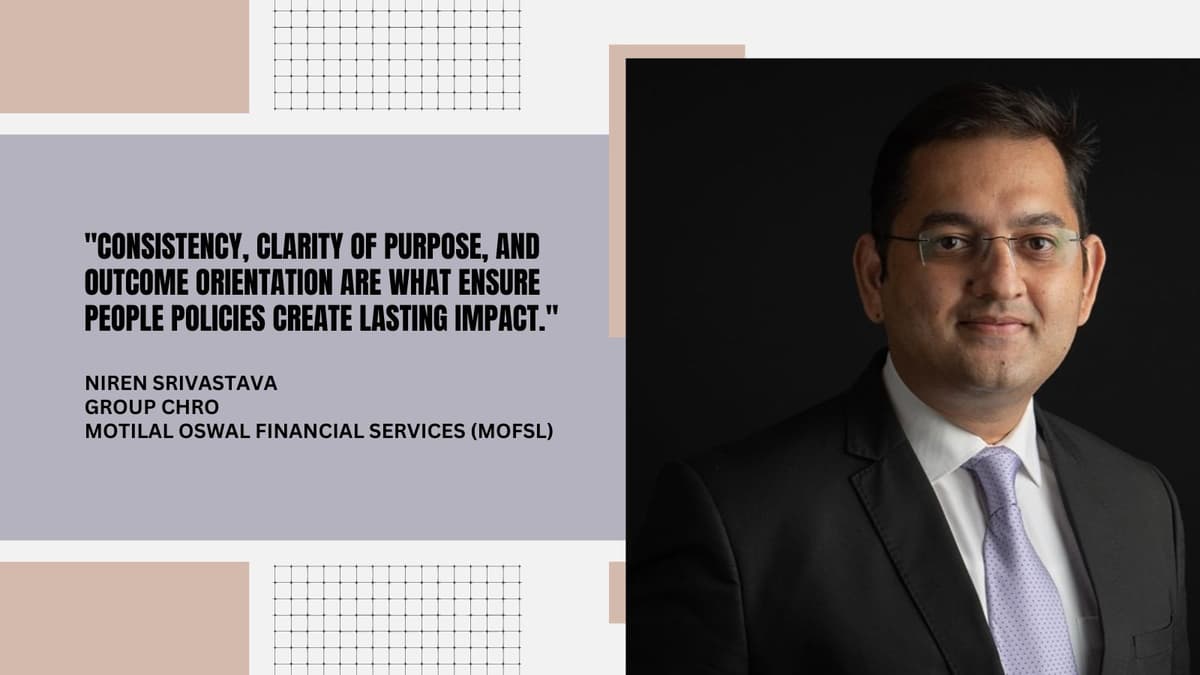
Case Study: How a "Switch‑off" Culture Delivered 91% Compliance, Zero Productivity Loss, and Lower Attrition at MOFSL
Why It Matters
The case proves that high‑intensity financial services can boost employee health without sacrificing output, offering a replicable model for the industry’s talent‑war and burnout challenges.
Key Takeaways
- •91% compliance with switch‑off policy for over 1.5 years
- •Zero productivity loss despite reduced work hours
- •Attrition fell 10% in Wealth Management division
- •9,000+ staff completed medical tests, 85% coverage FY25‑26
- •Monthly employee SIP book worth ~₹50 lakh (~$60k)
Pulse Analysis
MOFSL’s switch‑off strategy flips the traditional belief that longer hours equal higher output. By redefining performance around quality, customer outcomes and focused work windows, the firm secured 91% policy adherence across its workforce for more than 18 months. The approach hinges on shared accountability—HR, managers and senior leaders all model the desired behaviour—while real‑time reporting flags deviations before they become systemic. This disciplined execution demonstrates that cultural engineering, when paired with clear metrics, can sustain high compliance without eroding operational agility.
The productivity myth is further debunked by concrete results: the wealth‑management division recorded a 10% reduction in attrition, and internal data shows no dip in key performance indicators despite shorter workdays. Employees benefit from the My Wellness suite, which spans physical health screenings for over 9,000 staff, mental‑health counselling for 2,500+ participants, and a financial empowerment program that aggregates roughly $60,000 in monthly SIP contributions. Such holistic support not only improves morale but also translates into tangible business gains, reinforcing the link between employee wellbeing and bottom‑line performance.
For the broader financial services sector, MOFSL’s experience offers a scalable blueprint. In an industry where market volatility and client expectations demand constant availability, a structured yet flexible switch‑off framework can preserve client service while protecting talent. The model’s emphasis on data‑driven oversight, leadership buy‑in, and multi‑dimensional wellness aligns with emerging ESG and employee‑experience standards, positioning firms that adopt similar practices as forward‑looking employers capable of attracting and retaining top talent in a competitive market.
Case study: How a "switch‑off" culture delivered 91% compliance, zero productivity loss, and lower attrition at MOFSL
Comments
Want to join the conversation?
Loading comments...