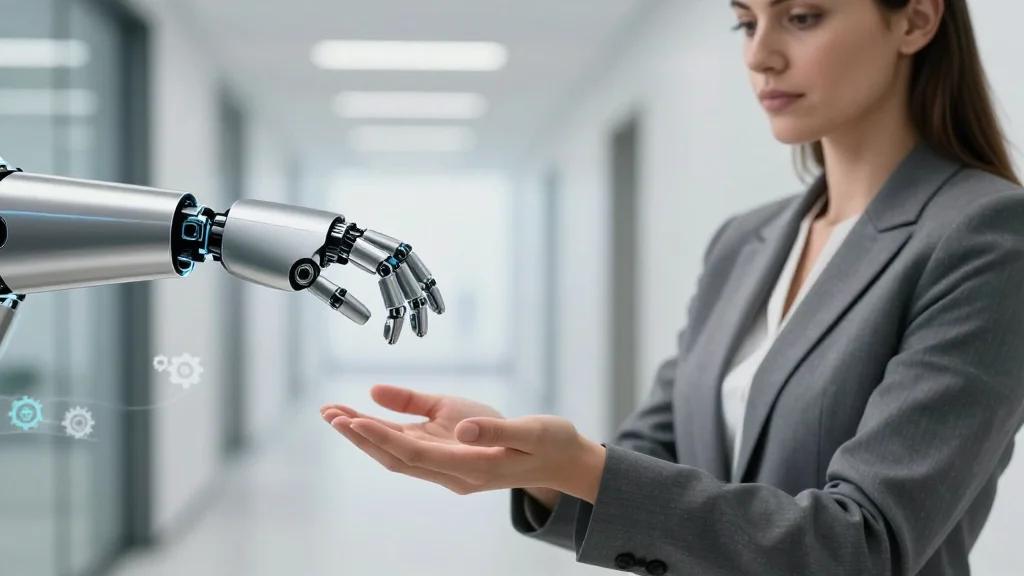
Economist Warns AI Automation Could Slash Jobs and Wage Share, Sparks HR Debate

Companies Mentioned

Why It Matters
Imas’s warning spotlights a potential macro‑economic shock: if AI displaces a large share of the workforce and the wage share collapses, consumer demand could contract, undermining growth. For HR professionals, the stakes are immediate—protecting talent pipelines, maintaining employee morale, and ensuring that compensation structures remain competitive in a market where human labor may become a premium asset. The debate also forces boards and CEOs to confront the ethical dimensions of automation, balancing shareholder returns with societal stability. The Starbucks example illustrates a tangible path forward: firms can leverage AI for efficiency while deliberately preserving human interaction that drives brand loyalty and employee satisfaction. This hybrid approach could become a playbook for industries ranging from retail to financial services, where the human touch remains a differentiator. HR leaders who anticipate these shifts and embed reskilling, talent redeployment, and humane AI policies into their strategies will be better positioned to navigate the coming disruption.
Key Takeaways
- •Economist Imas warned AI could eliminate most jobs and collapse the wage share.
- •Morgan Stanley cited Imas as a primary resource on AI’s employment impact.
- •Starbucks reversed automation, rehiring baristas to emphasize human connection.
- •Imas’s Substack *Ghosts of Electricity* argues scarcity of human qualities will raise their economic value.
- •HR leaders must balance efficiency with preserving roles that leverage uniquely human skills.
Pulse Analysis
Imas’s cautionary note arrives at a moment when corporate boards are under pressure to deliver cost savings through AI, yet the broader economy remains dependent on a healthy wage base. Historically, productivity gains have been absorbed by higher wages and expanded consumption; the AI era threatens to break that link if automation outpaces job creation. HR executives, therefore, must act as the bridge between technology and workforce stability, ensuring that AI augments rather than replaces human labor.
The Starbucks pivot underscores a strategic insight: automation is not a zero‑sum game. By re‑humanizing the coffee experience, Starbucks demonstrates that consumer preference for authentic interaction can outweigh marginal efficiency gains. Companies that embed similar human‑first AI policies can protect the wage share by creating premium, labor‑intensive experiences that command higher prices and, consequently, higher wages.
Looking ahead, the next wave of AI adoption will likely be judged not just by ROI metrics but by its impact on labor market health. HR leaders who champion data‑driven reskilling programs, negotiate fair AI‑related compensation structures, and advocate for policies that preserve consumer purchasing power will shape a more resilient future of work. The debate sparked by Imas is therefore not merely academic—it is a call to action for the HR function to become a strategic steward of both technology and talent.
Economist Warns AI Automation Could Slash Jobs and Wage Share, Sparks HR Debate
Comments
Want to join the conversation?
Loading comments...