Endless Meetings and Apps Leave Employees Struggling to Focus
•February 17, 2026
0
Why It Matters
Fragmented workdays erode employee output and dilute the ROI of AI‑driven initiatives, making focus‑time management a strategic priority for modern enterprises.
Key Takeaways
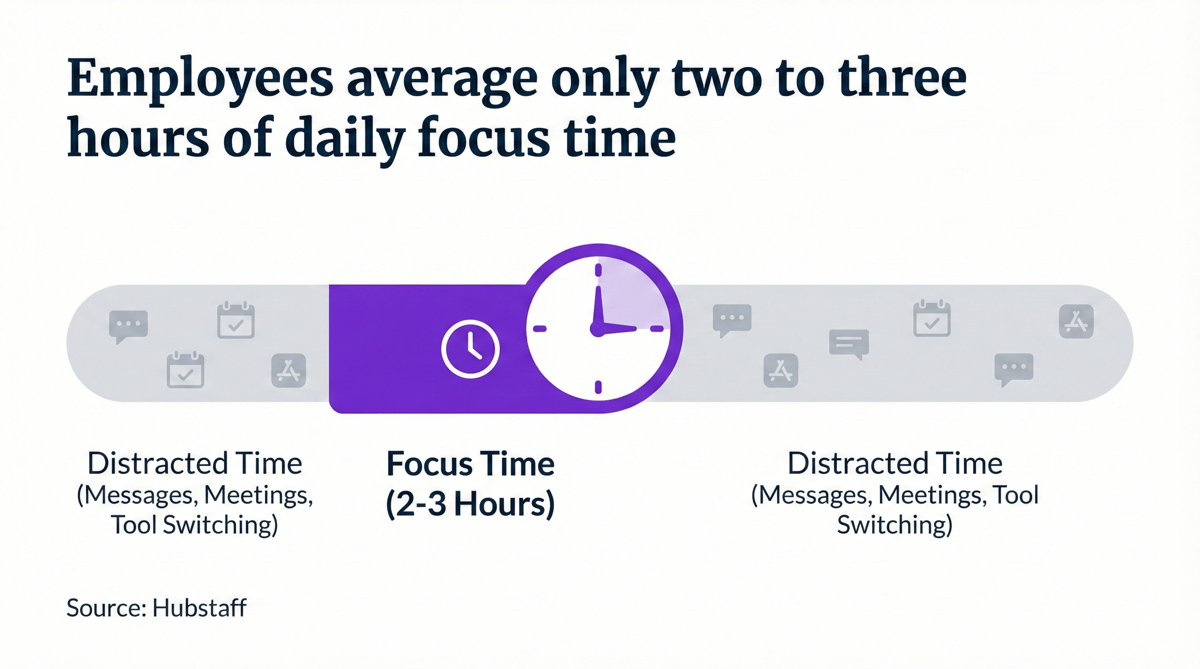
- •Employees get only 2‑3 hours uninterrupted focus daily
- •Meeting volume doubled; organizations hold six times more meetings
- •Workers toggle ~18 apps per day, increasing distractions
- •Hybrid workers achieve just 31% deep‑focus hours
- •Focus blocks and meeting hygiene boost productivity and AI ROI
Pulse Analysis
The modern workplace is battling an invisible epidemic: chronic attention fragmentation. Recent data from Hubstaff reveals that the average employee now spends a mere two to three hours per day in deep focus, a sharp decline driven by a surge in scheduled meetings and a proliferation of collaboration tools. This shift not only hampers individual productivity but also threatens the effectiveness of AI systems that rely on sustained, high‑quality input. As meetings have doubled and organizational meeting counts have risen sixfold, the cognitive load on workers has intensified, especially for hybrid staff who report the lowest focus percentages.
To counteract this drift, forward‑thinking leaders are adopting structured focus blocks and consolidating meetings into dedicated windows. By silencing noisy platforms like Slack and Teams during these periods, employees can minimize context switching and preserve mental bandwidth. Moreover, measuring focus time provides actionable insights, allowing benefit managers to fine‑tune policies and demonstrate tangible improvements. Simple tactics—such as replacing brief syncs with quick chats—can reclaim minutes that would otherwise be lost to unnecessary calendar events, directly enhancing output and accelerating AI project timelines.
The broader implications extend beyond individual efficiency. Companies that embed focus‑time principles into their operating models stand to see higher employee engagement, reduced burnout, and a clearer path to realizing AI ROI. As remote and in‑office teams continue to navigate hybrid dynamics, formalizing meeting hygiene and protecting uninterrupted work intervals become essential components of a resilient, future‑ready workforce strategy.
Endless meetings and apps leave employees struggling to focus
0
Comments
Want to join the conversation?
Loading comments...