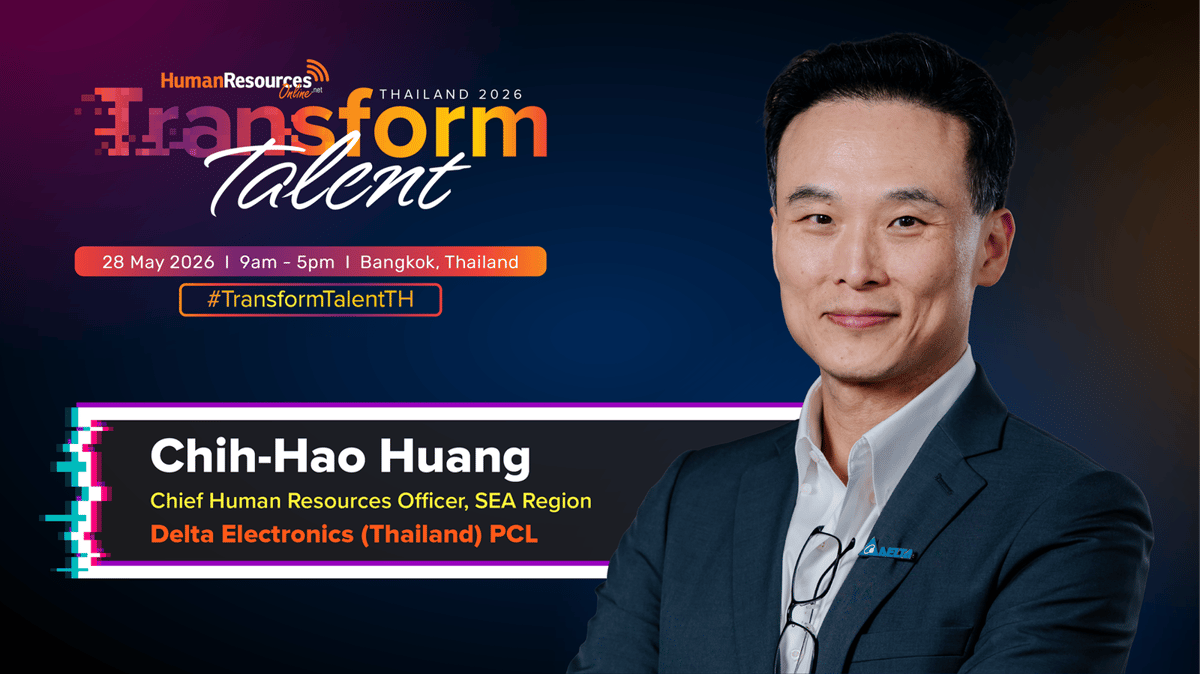
Faces of HR: Chih-Hao Huang on Treating Human Capital as a Measurable Business Asset
Why It Matters
Embedding HR analytics into core business decision‑making elevates talent management from a support function to a growth driver, reshaping how companies sustain competitive advantage.
Key Takeaways
- •Human capital should be measured like financial assets, says Delta's CHRO
- •AI debates help HR leaders stress‑test strategic assumptions
- •Transform Talent TH will push CEOs to recognize HR metrics
- •Treating people data as core drives sustainable business growth
Pulse Analysis
The rise of data‑driven HR has moved human capital from a soft‑skill narrative to a quantifiable business lever. Companies like Delta Electronics are leading the charge in Southeast Asia, integrating talent metrics into dashboards that sit alongside revenue and cash‑flow reports. By treating employee performance, engagement and skill inventories as assets, firms can forecast workforce costs, allocate talent to high‑impact projects, and directly tie HR initiatives to bottom‑line outcomes. This shift mirrors broader enterprise‑wide analytics trends, where every function is expected to deliver measurable ROI.
Artificial intelligence is becoming a strategic partner for HR leaders, but Huang’s approach goes a step further: he engages in structured debates with AI outputs to validate his own logic. This practice, often called AI‑augmented reasoning, helps uncover hidden biases, test scenario assumptions, and refine talent‑allocation models before they hit the boardroom. The result is a more resilient HR strategy that can adapt to rapid market changes while maintaining alignment with corporate financial goals. As AI tools mature, the ability to stress‑test decisions in real time will differentiate forward‑thinking HR executives from traditional administrators.
At the upcoming Transform Talent TH conference, Huang will push CEOs to recognize HR metrics as strategic KPIs. By showcasing case studies where human‑capital analytics drove cost savings and revenue growth, the session aims to shift executive mindsets toward treating people data as a core asset. This cultural pivot is critical for companies seeking sustainable growth in an increasingly talent‑competitive landscape. As more organizations adopt measurable HR frameworks, the line between finance and talent management will blur, creating a unified language for value creation across the enterprise.
Faces of HR: Chih-Hao Huang on treating human capital as a measurable business asset
Comments
Want to join the conversation?
Loading comments...