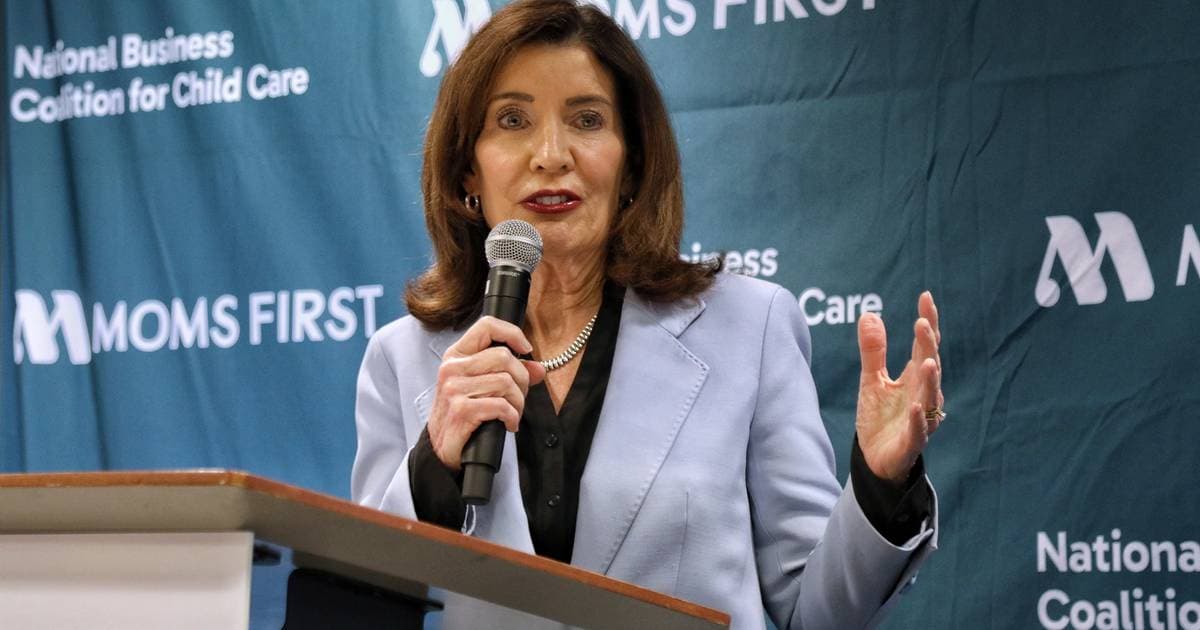
Gov. Kathy Hochul Challenges Businesses to Deepen Investments in Childcare
Key Takeaways
- •$70 billion lost annually from U.S. childcare disruptions.
- •Micron builds on‑site daycare at its Clay, NY semiconductor plant.
- •NYC aims universal childcare for ages 0‑6, funded by $1.2 billion.
- •Employers can use subsidies, backup care, or on‑site centers.
- •Multi‑partner ecosystem needed: government, corporate, philanthropy, tax credits.
Pulse Analysis
The childcare crisis has moved from a personal inconvenience to a macro‑economic liability, with research from Moms First and McKinsey estimating that U.S. firms forfeit roughly $70 billion each year when employees miss work or quit due to unreliable care. This figure underscores how deeply family‑support services are intertwined with labor productivity, especially for hourly and frontline workers who lack flexible schedules. By quantifying the loss, the study provides a data‑driven rationale for businesses to treat childcare as a strategic investment rather than a peripheral benefit.
Enterprises that proactively address childcare can reap tangible returns: reduced absenteeism, higher employee engagement, and a stronger employer brand in tight talent markets. Micron’s on‑site center in Clay, New York, serves as a concrete illustration of how on‑premise facilities can attract and retain skilled technicians in high‑cost regions. Other firms are experimenting with subsidy models, backup care vouchers, and partnerships with local providers, creating a menu of options that align with varying budget constraints and operational footprints. These initiatives not only mitigate the $70 billion leakage but also position companies as “pro‑family” leaders, a differentiator that resonates with a growing segment of the workforce seeking work‑life integration.
Policy makers are amplifying this momentum. New York City’s universal childcare proposal, backed by a $1.2 billion state allocation and a potential wealth tax, signals that government will shoulder a significant share of the cost. However, officials like Governor Hochul stress that lasting solutions require a collaborative ecosystem—state incentives, federal tax credits, corporate sponsorship, and philanthropic grants must converge. As more data emerges and public sentiment favors family‑friendly policies, businesses that embed childcare into their core benefits strategy will likely enjoy a competitive edge while contributing to broader economic resilience.
Gov. Kathy Hochul challenges businesses to deepen investments in childcare
Comments
Want to join the conversation?