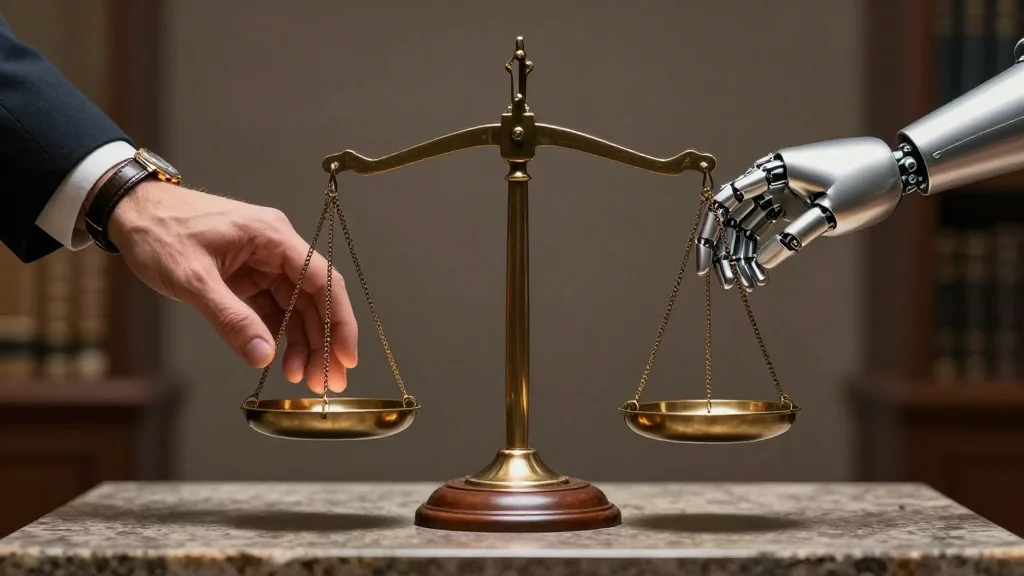
Hangzhou Court Bars AI-Driven Worker Replacements, Citing Labor Law Violations

Why It Matters
The ruling underscores a pivotal shift in how Chinese labor law interprets technological change, signaling that AI cannot be wielded as a shortcut to reduce payroll. For multinational corporations, the decision highlights the need to align global HR policies with local legal expectations, especially in jurisdictions where rapid automation collides with strong labor protections. It also raises broader questions about the future of work, reskilling obligations, and the ethical deployment of AI in employee management. Globally, the case adds to a growing chorus of regulatory scrutiny over AI‑driven job displacement. As governments grapple with the socioeconomic impact of automation, the Hangzhou judgment may serve as a reference point for policymakers seeking to safeguard workers while encouraging innovation. Companies that proactively address these tensions are likely to gain a competitive advantage in talent attraction and retention.
Key Takeaways
- •Hangzhou Intermediate People's Court rules AI‑based dismissal unlawful, rejecting cost‑cutting justification.
- •Worker Zhou earned 300,000 yuan ($43,900) annually; offered a 40% salary cut to 15,000 yuan ($2,200) monthly.
- •Court mandates employers provide retraining, redeployment, or equivalent roles before contract changes.
- •Legal scholar Wang Xuyang warns AI adoption alone cannot justify termination under Chinese labor law.
- •Ruling may prompt new corporate HR policies and influence future AI‑related labor disputes in China.
Pulse Analysis
The Hangzhou decision arrives at a crossroads where AI adoption is both a strategic imperative and a legal minefield. Historically, Chinese labor courts have prioritized social stability over unfettered corporate flexibility, a stance that now extends to the digital realm. By drawing a line between legitimate business restructuring and unlawful dismissal, the court reinforces the principle that technology must serve, not supplant, the workforce without due process.
For HR leaders, the verdict translates into actionable imperatives: develop robust reskilling roadmaps, document genuine operational needs, and engage in transparent dialogue with employees. Companies that treat AI as a collaborative tool rather than a replacement will likely navigate the regulatory environment more smoothly and preserve brand equity. Conversely, firms that ignore these legal nuances risk costly litigation and talent attrition.
Internationally, the case could ripple beyond China’s borders, prompting multinational firms to reassess AI deployment strategies in other high‑growth economies with strong labor protections. As AI continues to reshape job functions, the balance between efficiency gains and employee rights will define the next era of human resources management.
Hangzhou Court Bars AI-Driven Worker Replacements, Citing Labor Law Violations
Comments
Want to join the conversation?
Loading comments...