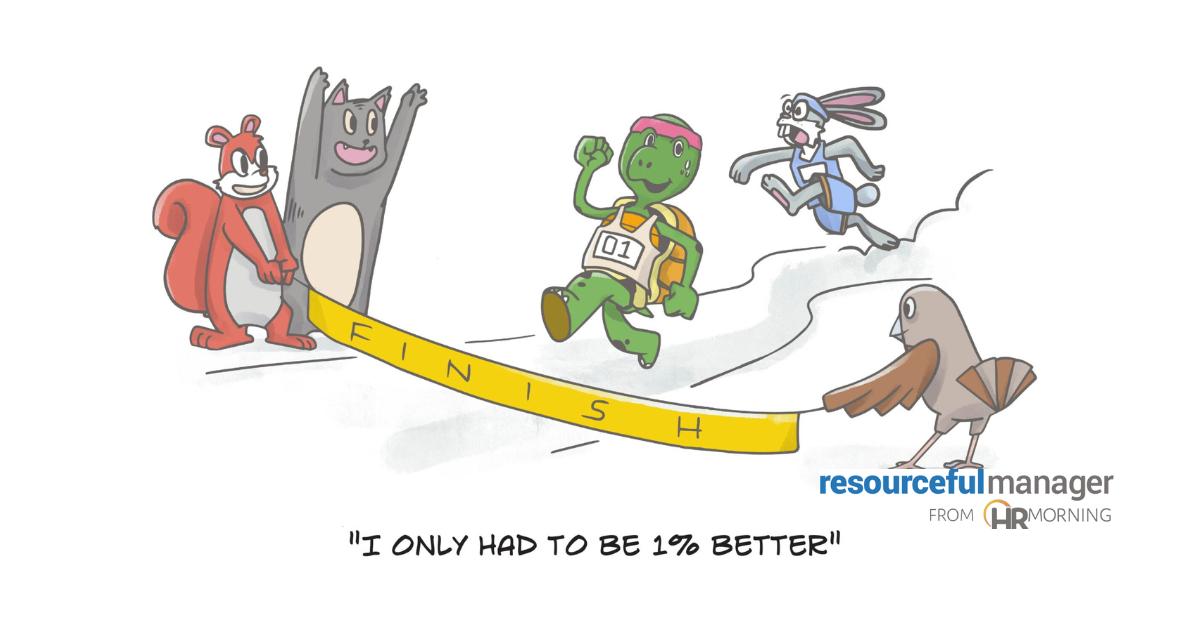
How Much Harder Must You Work To Be A Top-Notch Leader? The Answer Is Surprising
Why It Matters
The 1% model offers a scalable, low‑risk path for leaders to boost engagement and performance, directly impacting talent retention and organizational agility. It demonstrates that incremental change can deliver measurable business results without costly overhauls.
Key Takeaways
- •Tiny 1% improvements boost leadership credibility quickly
- •Future‑focused mindset replaces worry with positive scenario planning
- •Self‑awareness grows through admitting possible mistakes openly
- •Weekly 10‑minute scheduling sessions reinforce long‑term commitment
- •Empowering staff turns irreplaceable talent into unclonable assets
Pulse Analysis
The "1% Leadership" concept introduced by Andy Ellis challenges the myth that great leaders must work dramatically harder than their peers. Instead of seeking sweeping transformations, Ellis promotes a mindset of continuous, marginal gains—akin to the Japanese philosophy of kaizen. This incremental approach resonates with modern executives who face time constraints and demand measurable ROI from development programs. By framing leadership as a series of tiny, repeatable actions, the model aligns with data‑driven performance management and makes improvement goals both realistic and trackable.
Ellis identifies six practical domains where a 1% boost can compound into significant impact. Keeping the future in check encourages leaders to replace anxiety with optimistic scenario planning, while heightened self‑awareness fosters open dialogue and trust. A weekly 10‑minute scheduling ritual reinforces long‑term commitment, and seeking colleague input each week sharpens perception. Documenting adaptable processes expands calculated‑risk capacity, and shifting from directive to empowering behaviors turns high‑performers into irreplaceable, unclonable assets. Each habit is deliberately simple, ensuring busy managers can embed them without disrupting core responsibilities.
For organizations, the 1% framework translates into higher employee engagement scores, lower turnover, and a culture of agility. Incremental improvements are easier to measure, allowing HR and leadership teams to tie specific behaviors to performance metrics. As companies adopt this micro‑improvement mindset, they unlock a scalable talent development engine that fuels sustainable growth without the expense of large‑scale training initiatives. The result is a leadership pipeline that consistently delivers value, reinforcing competitive advantage in fast‑moving markets.
How Much Harder Must You Work To Be A Top-Notch Leader? The Answer is Surprising
Comments
Want to join the conversation?
Loading comments...