HR Teams Struggle with Decision-Making Due to Data Limitations
•February 25, 2026
0
Why It Matters
Without unified data, HR decisions risk bias, pay inequity, and misaligned budgets, eroding talent retention and culture. Providing integrated analytics and AI guardrails enables fair, financially disciplined outcomes, strengthening competitive advantage.
Key Takeaways
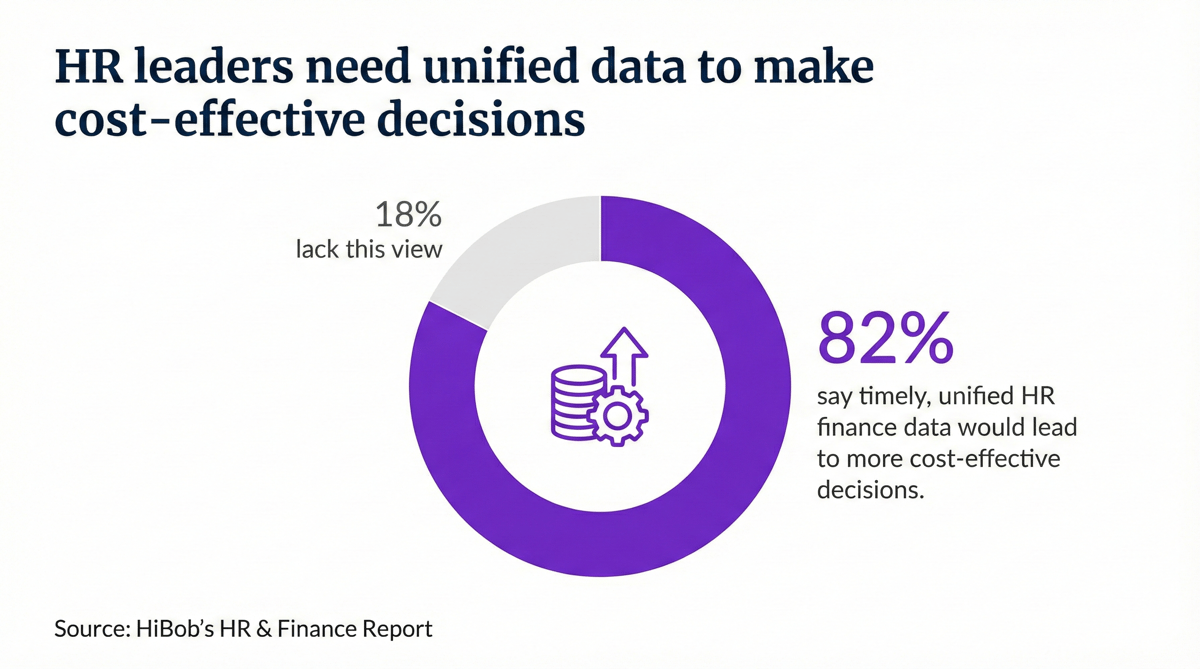
- •82% need unified HR‑finance data for cost‑effective decisions
- •68% cannot ensure fair pay without integrated data view
- •70% restricted by role‑based permissions limiting data access
- •32% want clear finance guardrails; 31% seek AI summarization
- •36% would rely on AI for performance review recommendations
Pulse Analysis
The modern HR function is no longer confined to payroll processing and benefits administration. According to HiBob’s latest HR & Finance Report, 82 % of benefit leaders say they would make more cost‑effective people decisions if they had timely, unified HR‑finance data, while 68 % admit they cannot ensure fair pay without such integration. Fragmented systems force managers to piece together performance notes, compensation histories, and budget constraints, often leading to educated guesses rather than data‑driven choices. This data silos problem not only threatens pay equity but also hampers talent retention and budget discipline.
Artificial intelligence and clear financial guardrails are emerging as the antidotes to these challenges. The survey shows 32 % of respondents would benefit from explicit finance guardrails, and 31 % are looking for AI tools that summarize data and recommend options. Already, 36 % say they would rely on AI recommendations during performance reviews, and a similar share expects AI to flag people‑related risks. By consolidating disparate data streams and surfacing patterns in real time, AI can provide a transparent decision framework without removing managerial discretion.
Industry analysts predict that integrated HR‑finance platforms will become standard as organizations seek to align people strategy with financial performance. Companies that invest early in AI‑enabled analytics are likely to achieve faster decision cycles, stronger compliance with pay‑equity regulations, and a more engaged workforce. For HR leaders, the imperative is clear: secure unified data pipelines, define guardrails that balance fairness with fiscal responsibility, and adopt AI tools that augment—not replace—human judgment. Doing so will transform HR from a cost center into a strategic growth engine.
HR teams struggle with decision-making due to data limitations
0
Comments
Want to join the conversation?
Loading comments...