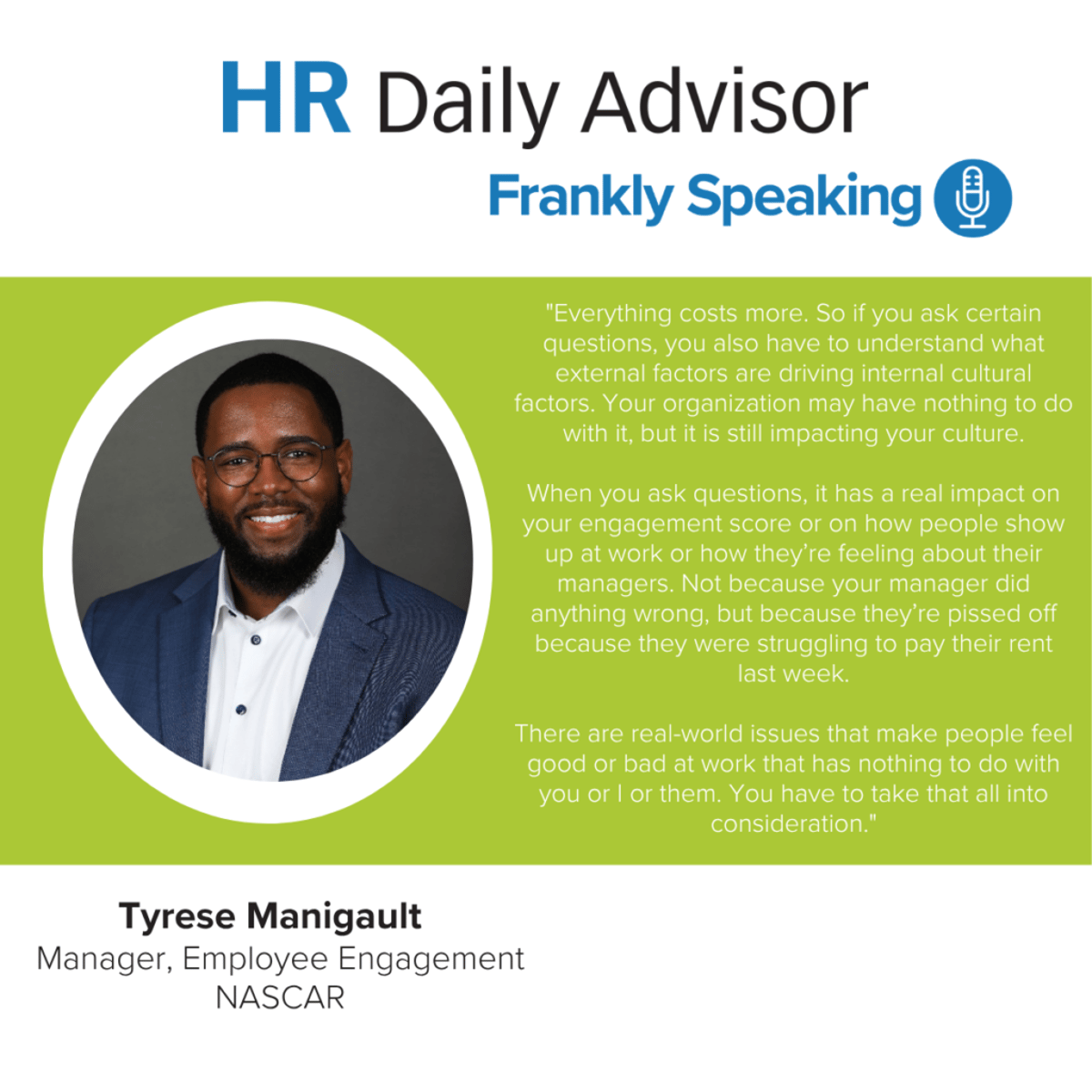
HRDA Frankly Speaking: External Factors on Internal Culture
Why It Matters
Recognizing the limits of HR’s control enables more realistic engagement strategies, boosting retention and productivity in an increasingly volatile business environment.
Key Takeaways
- •HR must differentiate controllable vs uncontrollable factors.
- •Empathy is essential when addressing external influences.
- •AI reshapes leadership expectations and DEI initiatives.
- •NASCAR's approach models proactive employee engagement.
Pulse Analysis
The conversation sparked by NASCAR’s employee‑engagement lead highlights a growing awareness that workplace culture does not exist in a vacuum. Economic fluctuations, social movements, and rapid technological change constantly reshape employee expectations. By framing these forces as external variables, HR leaders can avoid over‑promising and instead allocate resources to initiatives that truly move the needle—such as targeted communication, flexible policies, and data‑driven pulse surveys. This pragmatic stance helps organizations maintain morale even when macro‑level events, like supply‑chain disruptions or regulatory shifts, are beyond their direct influence.
Artificial intelligence is accelerating the evolution of leadership expectations, especially around DEI. AI‑driven analytics can surface hidden bias patterns, but they also raise concerns about privacy and algorithmic fairness. Leaders who integrate AI responsibly can benchmark inclusion metrics, personalize development pathways, and predict turnover risks. However, the technology must be paired with a human‑centered approach; otherwise, it risks reinforcing existing inequities. Manigault’s remarks underscore that DEI initiatives must be adaptable, leveraging AI insights while staying grounded in empathy and cultural nuance.
For HR practitioners, the takeaway is actionable: map external stressors, prioritize empathy‑rich interventions, and use AI as a supportive tool rather than a decision‑maker. Start by conducting a quarterly external‑factor audit—tracking economic indicators, industry trends, and societal events that could affect employee sentiment. Then, translate findings into clear, empathetic communication and flexible policies that address identified risks. By embracing this balanced framework, HR can protect engagement levels, safeguard talent, and position the organization as resilient amid uncertainty.
HRDA Frankly Speaking: External Factors on Internal Culture
Comments
Want to join the conversation?
Loading comments...