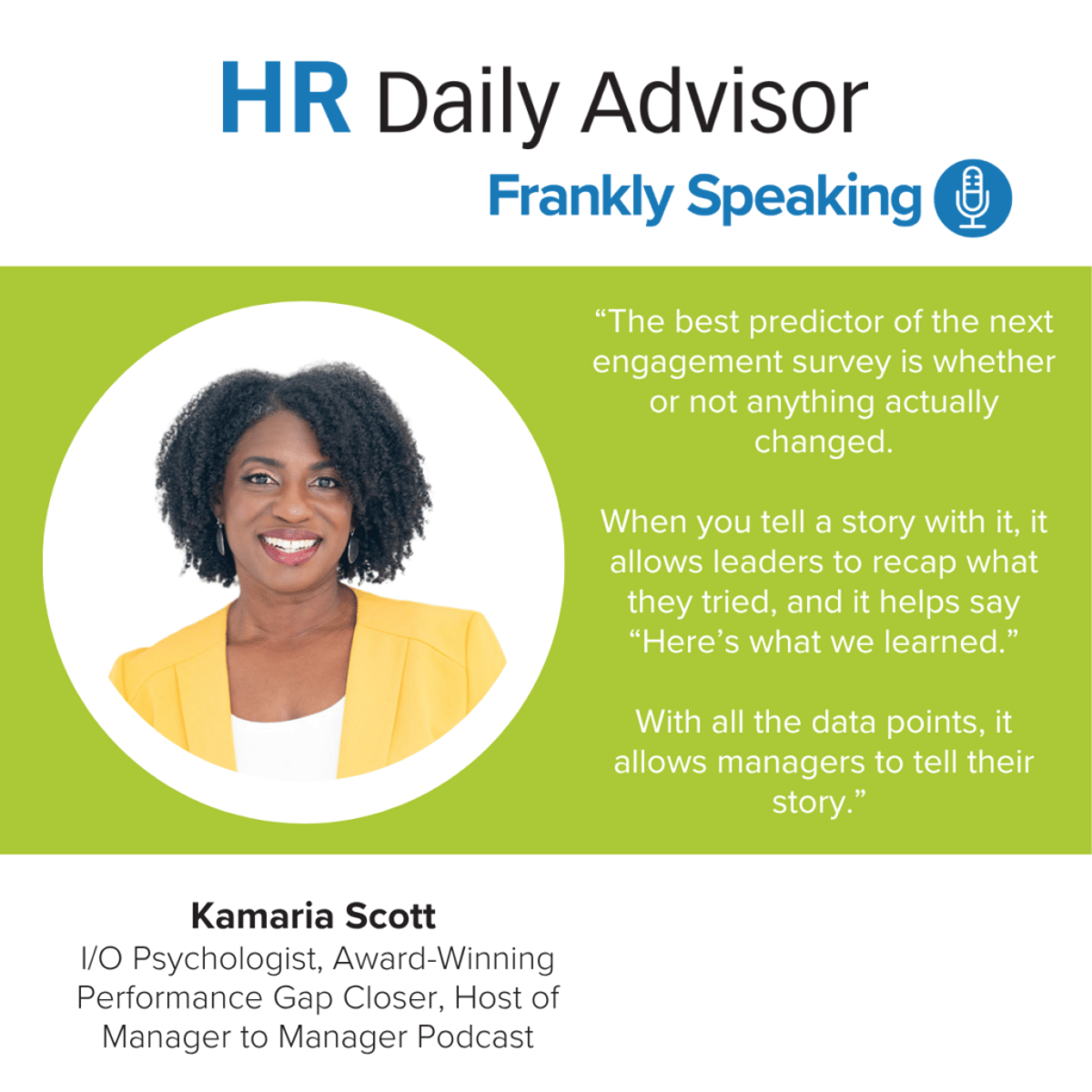
HRDA Frankly Speaking: Let Surveys Tell a Story
Why It Matters
Narrative‑focused surveys let companies quickly address pain points, boosting retention and productivity.
Key Takeaways
- •Turn survey data into narrative, not just percentages
- •Prioritize actionable insights over raw scores
- •Build feedback loops linking input to visible changes
- •Empower managers with tools to act on findings
- •Use storytelling to foster continuous improvement culture
Pulse Analysis
Employee engagement surveys have become a checkbox exercise for many firms, generating endless spreadsheets of percentages that rarely translate into action. The core issue is a disconnect between data collection and storytelling; without a clear narrative, managers struggle to interpret why scores fluctuate and how to respond. I/O psychology research shows that framing survey results as a story—identifying themes, root causes, and employee sentiment—creates a shared language that bridges the gap between HR analytics and day‑to‑day management.
Kamaria Scott’s framework builds on that premise by insisting on three practical steps. First, she urges leaders to extract actionable insights, filtering out noise and zeroing in on the few drivers that move the needle. Second, she recommends a feedback loop where employees see tangible changes tied directly to their input, reinforcing trust and participation. Finally, Scott emphasizes equipping managers with confidence‑building tools—dashboards, coaching scripts, and intervention playbooks—that turn raw numbers into a roadmap for improvement. This systematic approach transforms surveys from static reports into dynamic, decision‑making assets.
The business impact is measurable. Companies that close the feedback loop typically see higher employee retention, as staff perceive their voices matter. Productivity climbs when targeted interventions address specific pain points, reducing disengagement‑related costs. Moreover, a storytelling mindset cultivates a culture of continuous improvement, encouraging teams to iterate on processes rather than settle for static compliance. For organizations seeking to modernize their talent strategy, adopting Scott’s narrative‑centric model offers a scalable path to stronger engagement, better performance, and a more resilient workforce.
HRDA Frankly Speaking: Let Surveys Tell a Story
Comments
Want to join the conversation?
Loading comments...