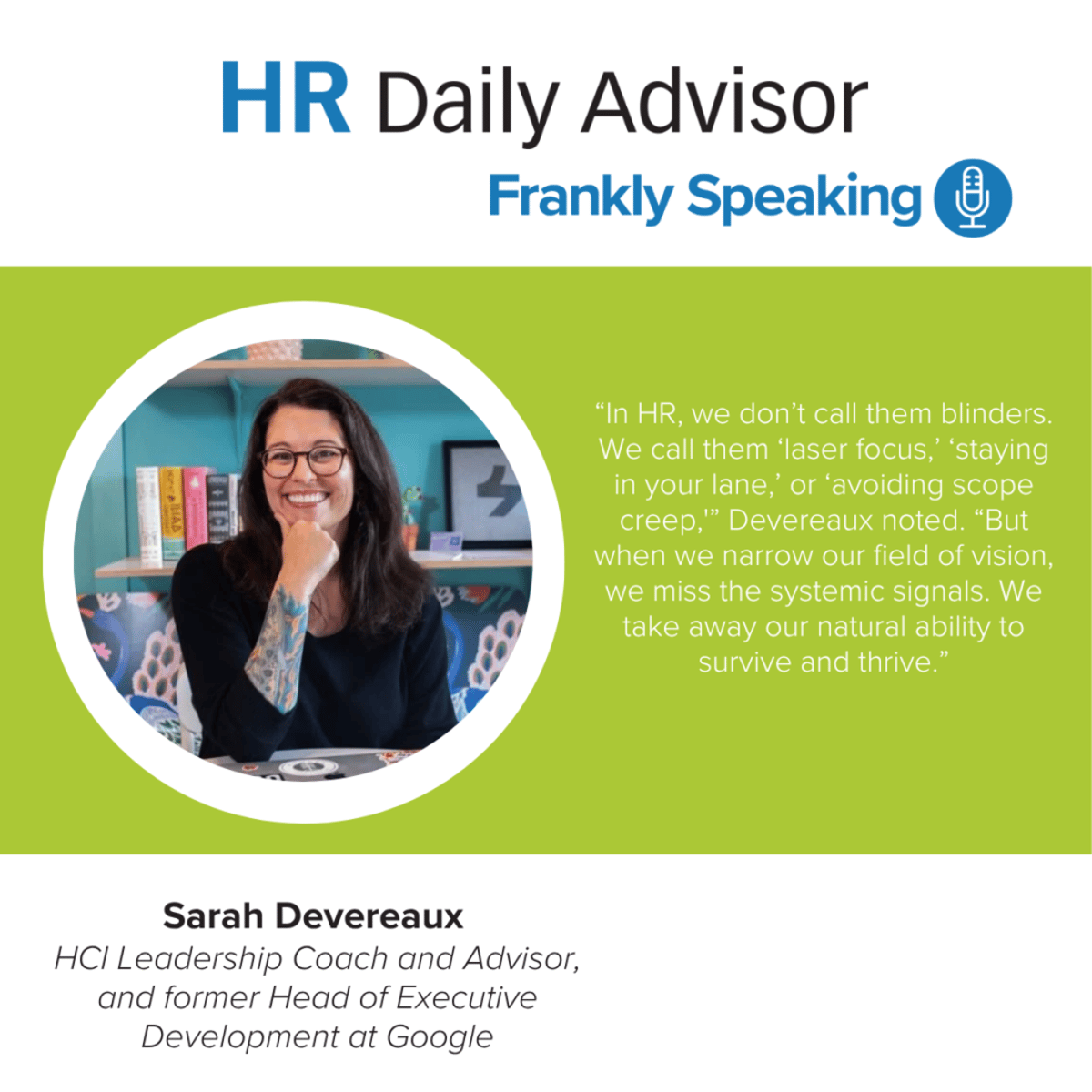
HRDA Frankly Speaking: Stop Leading on Autopilot
Why It Matters
A narrow, tool‑centric HR approach inflates costs and hampers employee experience, while holistic systems thinking drives efficiency and strategic agility.
Key Takeaways
- •Blinders metaphor highlights risk of hyper‑focused HR strategies
- •Over‑layered tools drain time and create hidden friction
- •Systems thinking enables 360‑degree visibility into HR processes
- •Checklist helps identify redundant or outdated HR technologies
- •Broad lens improves agility during market shifts and restructurings
Pulse Analysis
Human‑resource functions have moved from paperwork clerks to strategic partners, yet many leaders still operate with a tunnel‑vision approach. In her recent Spark HR Day 1 session, Sarah Devereaux – a former head of executive development at Google and now an HCI leadership coach – used the image of a racehorse wearing blinders to illustrate how “laser focus” can blind HR teams to broader organizational signals. As companies confront rapid market shifts, digital transformation, and workforce fluidity, a systems‑thinking mindset that considers inter‑dependencies across talent acquisition, payroll, benefits, and compliance is becoming essential for sustainable performance.
The practical fallout of a fragmented HR tech stack is often invisible until it erupts as delayed paychecks, compliance gaps, or employee frustration. Multiple point solutions for time tracking, benefits administration, and payroll can duplicate data entry, inflate licensing costs, and create siloed reporting that hampers decision‑making. For HR administrators, the constant toggling between platforms consumes valuable time that could be spent on strategic initiatives. Employees, meanwhile, experience inconsistent self‑service experiences, which erodes trust and can increase turnover. Quantifying these hidden costs reveals a clear business case for consolidation.
Devereaux’s HR Tech Stack Evaluation Checklist offers a structured, 10‑step audit to surface redundancy, assess integration readiness, and prioritize high‑impact improvements. By mapping each tool against core HR outcomes – accuracy, speed, compliance, and employee experience – leaders can decide whether to consolidate, replace, or retire applications. Implementing the checklist not only streamlines operations but also frees budget for talent development and data‑driven insights. As the HR function continues to evolve into a data‑centric hub, embracing a 360‑degree perspective will be a competitive differentiator for firms navigating the next wave of workplace change.
HRDA Frankly Speaking: Stop Leading on Autopilot
Comments
Want to join the conversation?
Loading comments...