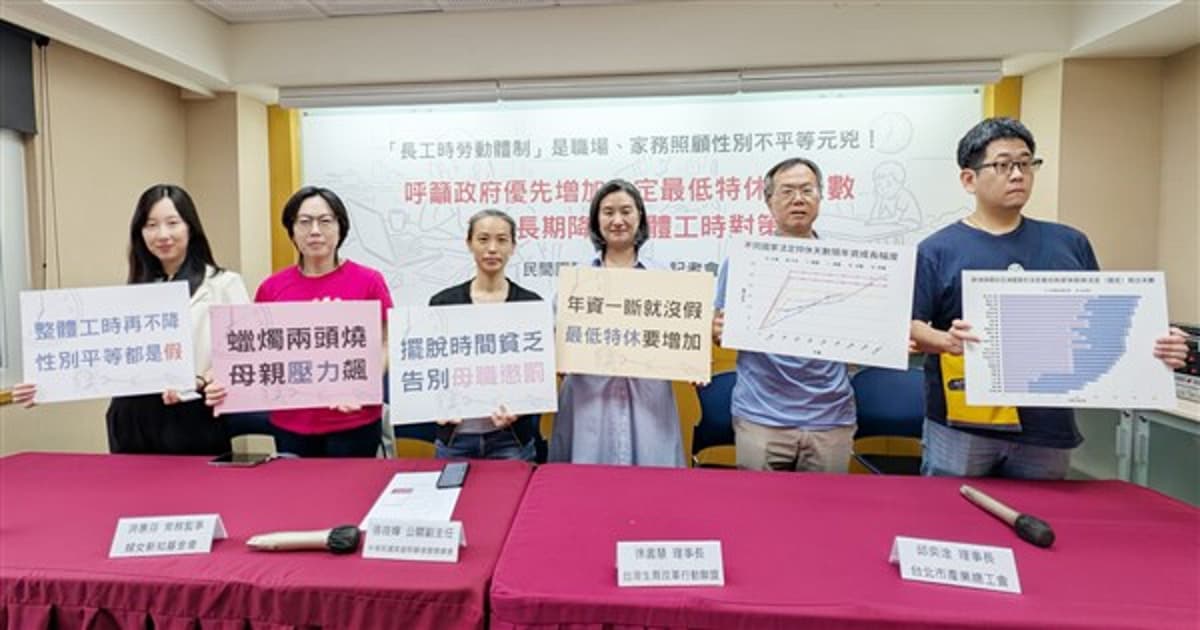
Inadequate, Seniority-Based Paid Annual Leave Hurts Women: Activists
Why It Matters
Decoupling leave from tenure would ease the family‑care load on women, improving gender equity and labor‑force participation. Reform could also align Taiwan with international standards, enhancing its competitiveness for talent.
Key Takeaways
- •Taiwan's paid leave caps at 30 days after 25 years of service.
- •Current seniority system disadvantages women with caregiving responsibilities.
- •Activists demand decoupling leave from tenure and increasing total days.
- •Taiwan lags behind South Korea, Germany, France, UK in statutory leave.
- •High work hours force women to take part‑time or unpaid leave.
Pulse Analysis
Taiwan’s Labor Standards Act ties paid annual leave strictly to length of service, granting a maximum of 30 days only after a quarter‑century with the same employer. Activists point to stark gender disparities: women in Taiwan perform roughly 2.6 times more household and caregiving work than men and often resort to part‑time schedules or unpaid leave to meet family obligations. By keeping leave entitlement seniority‑based, the law inadvertently penalizes younger, mobile workers—many of whom are women—who cannot accrue sufficient days before changing jobs.
When benchmarked against peers, Taiwan’s statutory leave falls short. South Korea offers up to 15 days plus additional days for long service, while Germany guarantees a minimum of 20 days, France 25, and the United Kingdom 28. These more generous regimes support work‑life balance and have been linked to higher female labor‑force participation and lower turnover. In Taiwan, the combination of long working hours—averaging 165.7 hours per month for women—and limited leave amplifies gender gaps, discouraging women from pursuing senior roles and reinforcing traditional caregiving expectations.
Reforming the leave system could yield multiple benefits. Decoupling entitlement from tenure would provide immediate, equitable access for all employees, reducing the pressure on women to curtail their careers. Expanded leave aligns with global best practices, making Taiwan more attractive to multinational firms and talent seeking flexible work environments. Moreover, better work‑life balance can boost productivity, lower absenteeism, and foster a more inclusive economy. Policymakers face a clear choice: maintain a legacy framework that perpetuates inequality, or adopt progressive leave policies that empower women and strengthen Taiwan’s competitive edge.
Inadequate, seniority-based paid annual leave hurts women: Activists
Comments
Want to join the conversation?
Loading comments...