Labor Watch: Loyola, UC Workers to Strike While Harvard Fights Continue
Key Takeaways
- •Loyola faculty strike demands 5% raises, paid parental leave, course release.
- •UC service workers vote to strike over healthcare and housing benefits.
- •Harvard grad students seek 5% annual wage hikes, reject 1% offer.
- •Amherst Compact unites 120 Northeast unions around eight bargaining priorities.
- •Maryland bill expands collective‑bargaining rights for non‑tenure‑track faculty.
Pulse Analysis
The wave of labor activity across American campuses reflects a broader reckoning over faculty and staff compensation, benefits, and job security. At Loyola University Chicago, non‑tenure‑track faculty have leveraged a strike during finals week to press for a baseline 5% salary increase, parental leave, and workload relief—demands that echo similar grievances at the University of California, where over 42,000 service workers are poised to walk out over contested healthcare cost allocations and housing benefit negotiations. These disputes underscore the rising cost of living pressures on academic labor and the growing willingness of unions to mobilize despite academic calendars.
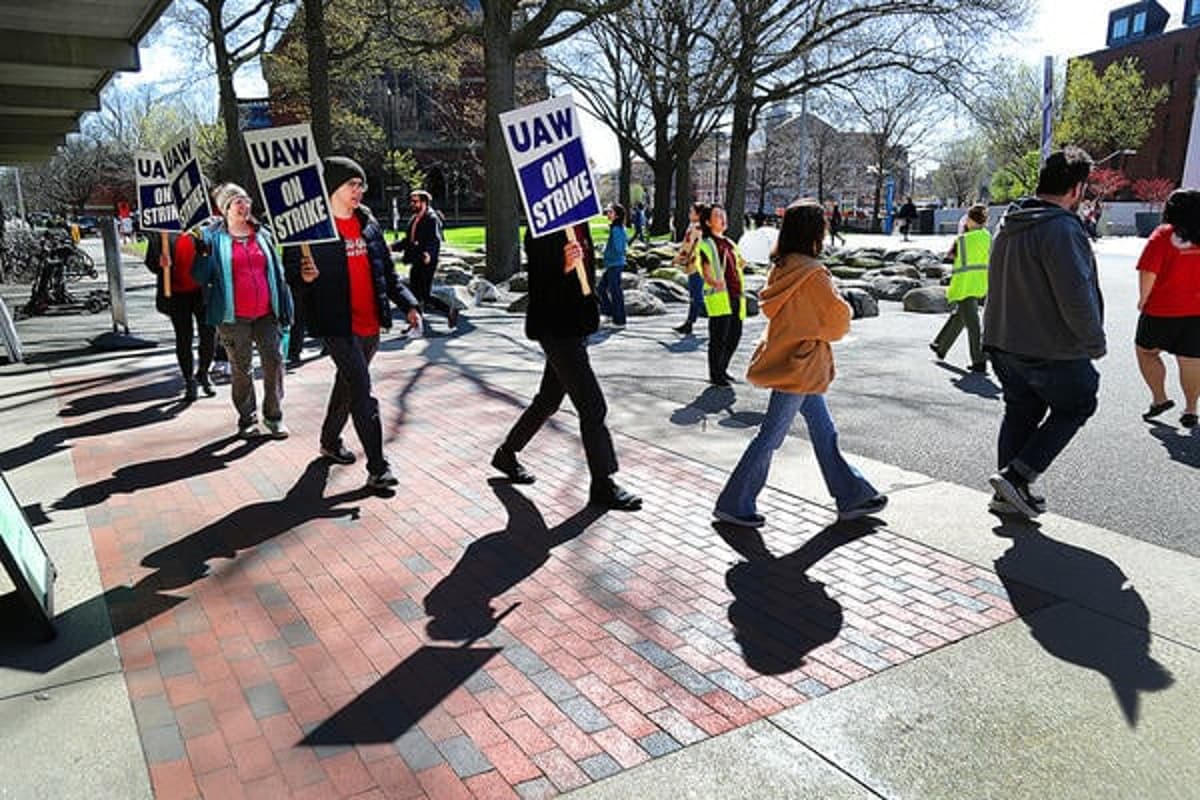
Harvard’s graduate student strike, now in its second week, highlights the stark gap between institutional offers and graduate workers’ cost‑of‑living realities. The university’s proposal of a modest 1% raise for fiscal year 2027 falls far short of the 5% annual increase the union deems necessary to cover rent, healthcare and childcare. The escalation of bargaining tensions at elite institutions signals that even well‑funded universities are confronting budget constraints and a shifting labor market, prompting administrators to balance fiscal prudence with the risk of prolonged work stoppages that could disrupt teaching and research.
Beyond individual campuses, collective initiatives like the Amherst Compact and Maryland’s new bargaining‑rights bill illustrate a strategic shift toward regional coordination and legislative advocacy. By aligning over a hundred unions around core issues such as fair wages, paid leave, and academic freedom, the compact aims to amplify bargaining power across disparate institutions. Meanwhile, Maryland’s legislation could set a precedent for other states, extending collective‑bargaining protections to a broader swath of non‑tenure‑track faculty. Together, these developments suggest a more organized, policy‑driven front that may redefine labor relations in higher education for years to come.
Labor Watch: Loyola, UC Workers to Strike While Harvard Fights Continue
Comments
Want to join the conversation?