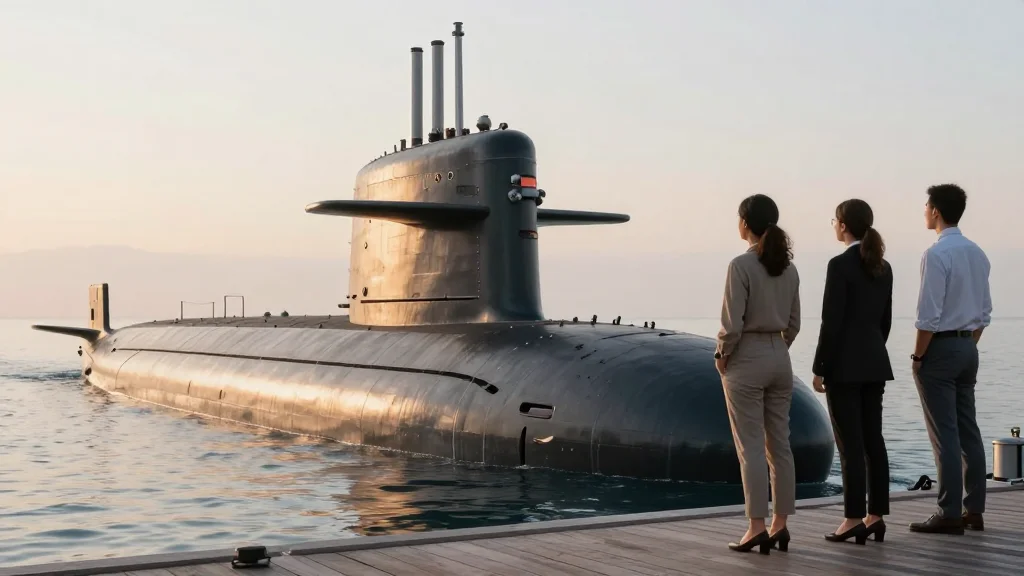
Navy Retires USS Boise, Shifts $800M‑Plus Workforce to Virginia‑ and Columbia‑Class Submarines

Why It Matters
The Boise inactivation is more than a cost‑cutting measure; it is a test case for how a massive federal employer can apply private‑sector talent‑management principles to a traditionally rigid defense acquisition system. By moving skilled engineers and technicians from a sunk‑cost program to high‑priority submarine builds, the Navy aims to improve labor productivity, reduce idle time, and accelerate delivery of platforms that underpin U.S. maritime dominance. For the broader HR community, the decision highlights the importance of data‑driven workforce analytics, cross‑functional redeployment, and the willingness to make hard choices about legacy assets. As other agencies grapple with aging infrastructure and constrained budgets, the Navy’s approach may serve as a blueprint for aligning human capital with strategic priorities while preserving morale through transparent communication of the mission’s larger impact.
Key Takeaways
- •USS Boise inactivated after $800 million spent on stalled overhaul
- •Additional $1.9 billion needed to finish Boise’s refit
- •Admiral Daryl Caudle cites reallocation of skilled crew to Virginia‑ and Columbia‑class subs
- •FY 2027 budget requests $65.8 billion for shipbuilding, supporting the workforce shift
- •Navy Secretary John Phelan emphasizes cutting losses and focusing on readiness
Pulse Analysis
The Navy’s decision to retire USS Boise reflects a growing recognition that talent is a finite resource in the defense enterprise. Historically, the service has allowed crews to remain attached to a single platform for the life of the vessel, even when that platform becomes a financial black hole. By severing that link, the Navy not only stops pouring money into a non‑viable project but also unlocks a pool of highly trained personnel who can immediately add value to the Virginia‑class attack submarine pipeline, which is already operating at near‑full capacity.
From a strategic HR perspective, the move underscores the shift from asset‑centric to people‑centric budgeting. The $800 million sunk cost is now viewed as a sunk talent cost as well; the Navy’s data‑driven analysis likely included metrics on crew utilization, skill overlap, and projected labor demand for upcoming builds. This mirrors corporate practices where firms use workforce analytics to identify under‑utilized talent and redeploy it to growth areas, thereby preserving institutional knowledge while avoiding layoffs.
Looking forward, the success of this reallocation will hinge on the Navy’s ability to integrate the Boise crew into existing shipyard and submarine teams without disrupting ongoing production schedules. If the transition proves smooth, it could set a precedent for other services to evaluate legacy platforms through a talent‑cost lens, potentially prompting a wave of similar workforce realignments across the Pentagon. Conversely, any friction—such as skill mismatches or cultural integration challenges—could temper enthusiasm for broader application. The next congressional appropriations cycle will be the litmus test: will lawmakers reward the Navy’s aggressive talent‑management gamble with continued funding, or will they demand more granular accountability for the human capital moves that underpin the nation’s maritime warfighting edge?
Navy Retires USS Boise, Shifts $800M‑Plus Workforce to Virginia‑ and Columbia‑Class Submarines
Comments
Want to join the conversation?
Loading comments...