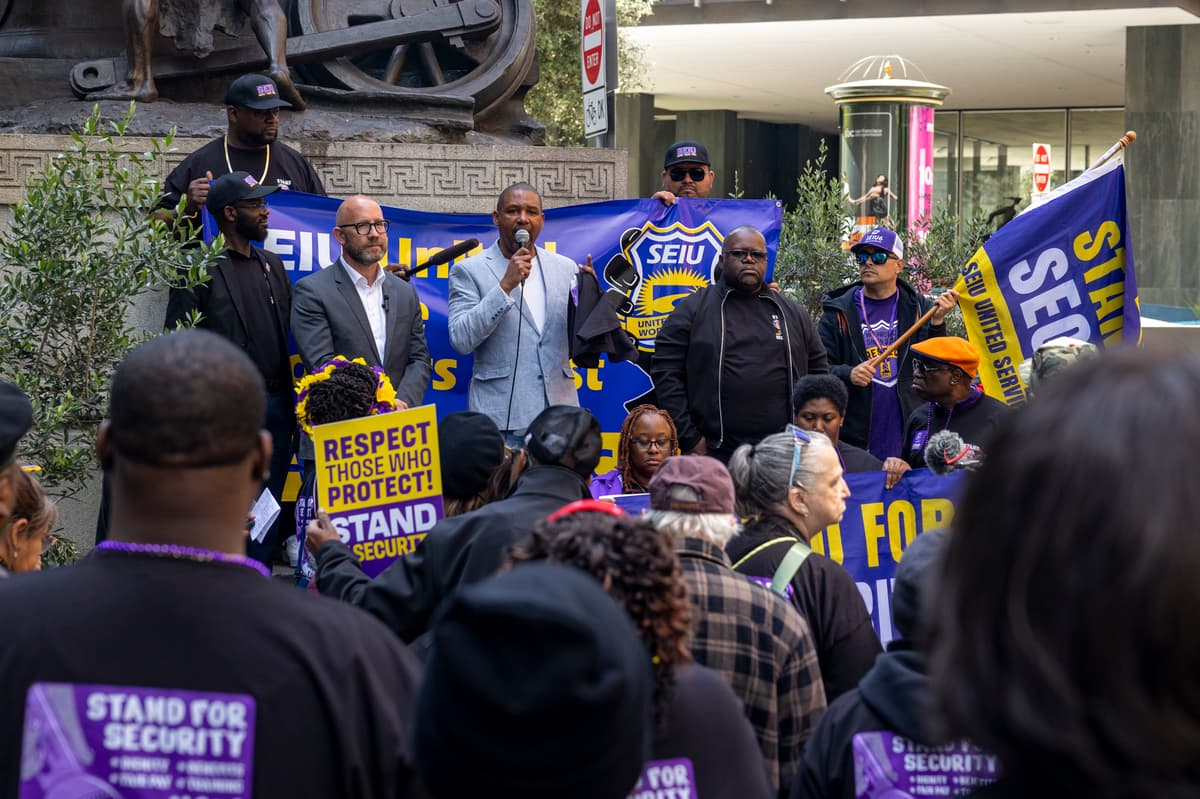
Northern California Security Officers Campaign for Better Wages, Training
Why It Matters
Improved compensation and training for private security guards will reduce safety risks and address systemic wage inequities, strengthening public safety infrastructure. The movement could set a precedent for labor standards across gig‑type, low‑wage sectors.
Key Takeaways
- •SEIU seeks contract with health care, retirement, wage hikes.
- •California law requires only 32 hours initial security guard training.
- •Private guards earn $21.61/hour vs police $53.74/hour.
- •Over 330,000 guards face first‑responder duties without adequate training.
- •Proposed SB 1203 would raise pay standards and training requirements.
Pulse Analysis
The private security sector in California, employing roughly 330,000 workers, has long operated under a wage structure that lags far behind its public‑law enforcement counterpart. With an average hourly pay of $21.61, many guards—predominantly Black and brown—struggle to cover rising living costs, especially as commuting expenses rise. This financial strain is compounded by the fact that these officers protect multi‑billion‑dollar facilities, yet receive no employer‑funded health benefits or retirement plans, prompting the SEIU‑backed rally for a fairer contract.
Training gaps further exacerbate the problem. State regulations mandate just 32 hours of initial instruction and eight hours of annual use‑of‑force refreshers, largely delivered online with limited interaction. By contrast, San Francisco police undergo a 34‑week academy and biennial 40‑hour recertifications. The insufficient preparation has tangible consequences, as seen in the 2023 fatal shooting of Banko Brown and a recent Tenderloin parking‑lot homicide involving a security guard. These incidents have spurred legislative action, notably SB 1203, which seeks to standardize higher pay tiers and more rigorous, hands‑on training for private guards.
If passed, the legislation could reshape the security landscape, aligning compensation and skill requirements more closely with the responsibilities guards shoulder. Enhanced training would likely lower liability risks for employers and improve public confidence in private security as a first‑line response. Moreover, the successful negotiation of a comprehensive SEIU contract could inspire similar labor movements in other low‑wage, high‑risk occupations, signaling a broader shift toward equitable labor standards nationwide.
Northern California Security Officers Campaign for Better Wages, Training
Comments
Want to join the conversation?
Loading comments...