‘Power in the Hands of People’: Union Leaders Push to Revive Ailing US Labor Movement
Why It Matters
Reviving union density could shift bargaining power toward workers, pressuring corporations and policymakers to address wage inequality and labor rights. Political backing may accelerate legislative reforms and improve contract timelines, influencing the broader U.S. economy.
Key Takeaways
- •Union Now launched to raise U.S. union density from 10% toward 70%.
- •First contract negotiations average over 450 days, slowing new union gains.
- •Delta Air Lines faces biggest U.S. organizing drive, targeting 30,000 flight attendants.
- •Bernie Sanders and NYC mayor back Union Now, highlighting political support.
Pulse Analysis
The United States has seen union membership tumble from a peak of 21 million in 1979 to roughly 14.7 million today, while the national population grew by over 100 million. Union density, once above 30% in the 1950s, now hovers around 10% despite polling that shows 70% of workers would join a union if given the chance. This erosion of collective bargaining power has coincided with widening income inequality and a resurgence of anti‑union tactics, prompting a new generation of organizers to rethink how labor can regain influence.
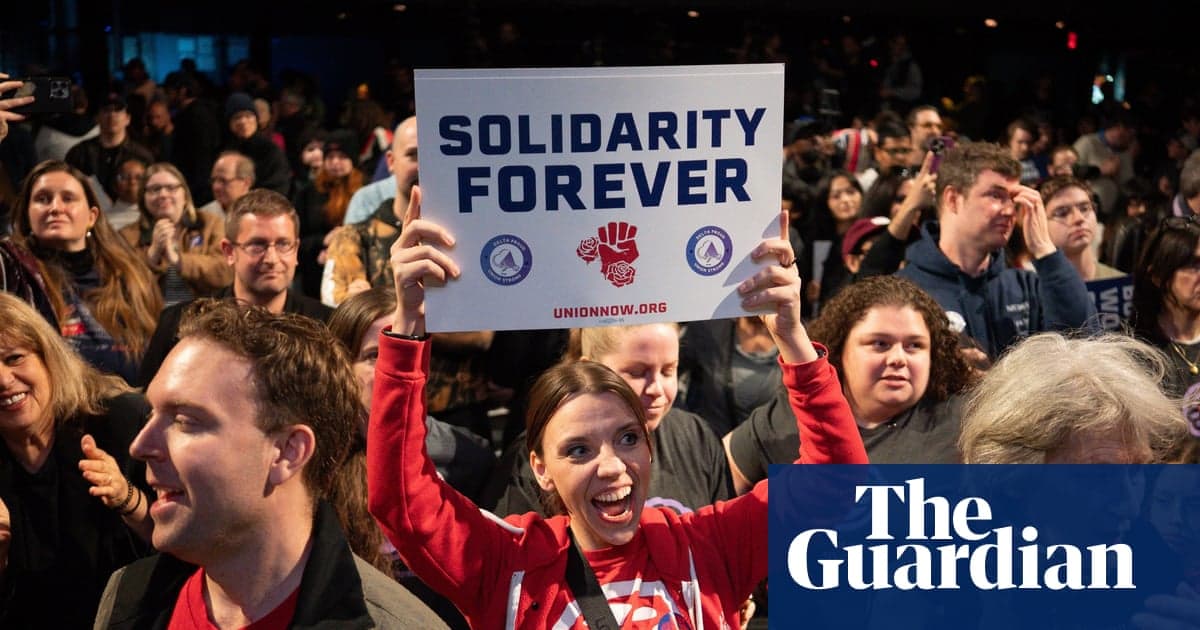
Union Now, announced at a New York rally on April 12, 2026, positions itself as a nonprofit hub for financing campaigns, accelerating organizing, and shortening the 450‑day average lag before a first contract is signed. Leaders such as Sara Nelson of the Association of Flight Attendants argue that traditional union funds alone cannot cover legal battles, strike support, and prolonged negotiations. By pooling resources across sectors—from airline crews to retail baristas—the coalition hopes to create a rapid‑response fund that can counteract employer‑driven delays and a NLRB perceived as hostile to workers.
The presence of Senator Bernie Sanders and NYC Mayor Zohran Mamdani on the Union Now stage signals a rare alignment of labor and progressive politics, potentially paving the way for federal or state legislation that eases card‑signing thresholds and shortens bargaining timelines. If successful, high‑visibility campaigns like the 30,000‑member Delta Air Lines organizing drive could set a precedent for other large employers, forcing corporations to negotiate earlier and more fairly. Such a shift would not only improve wages and benefits for millions but also reshape the power dynamics that have long favored capital over labor.
‘Power in the hands of people’: union leaders push to revive ailing US labor movement
Comments
Want to join the conversation?
Loading comments...