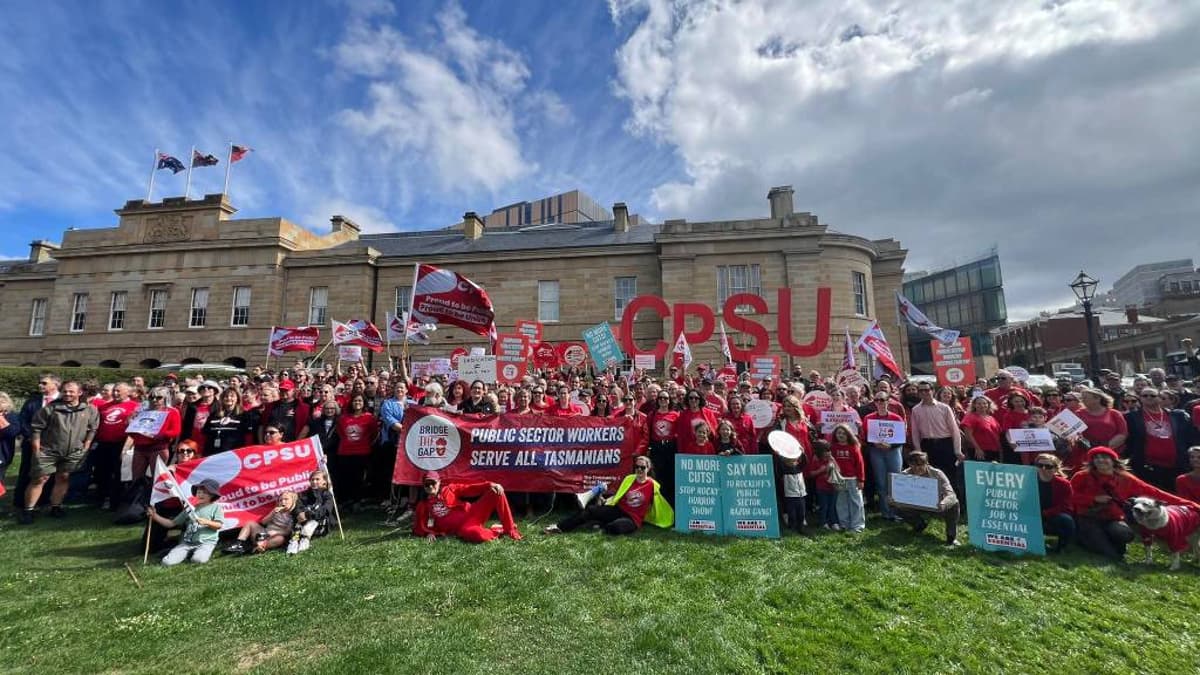
Tasmanian Public Servants Reach Pay Deal with Government
Why It Matters
The raise adds significant recurring cost to Tasmania’s budget, influencing fiscal planning and setting a benchmark for other Australian states’ public‑sector negotiations.
Key Takeaways
- •8.75% headline wage increase for Tasmanian public servants
- •Structured as 3% back‑dated, 3% next year, 2.75% third year
- •Band‑specific dollar raises push total pay rise to ~10.7%
- •Deal aligns Tasmania with South Australia’s recent public‑sector agreement
Pulse Analysis
Inflationary pressures across Australia have intensified scrutiny of public‑sector compensation, prompting unions to demand wage packages that keep pace with cost‑of‑living spikes. In recent months, several states have faced coordinated bargaining cycles, with the CPSU leveraging strong membership numbers to extract concessions. The broader trend reflects a shift from modest indexation to more aggressive, multi‑year agreements that combine percentage hikes with fixed‑dollar increments, aiming to protect lower‑band employees from eroding real wages.
Tasmania’s latest accord exemplifies this new approach. By offering a 3% back‑dated increase, followed by 3% and 2.75% in subsequent years, the government spreads the fiscal impact while delivering a headline 8.75% rise. Band‑specific dollar boosts raise the effective increase to about 10.7% for most staff, a figure that exceeds the state’s projected wage‑price index. The cost translates into several tens of millions of dollars in additional annual payroll outlays, tightening the state’s budget and prompting a review of spending priorities, especially in infrastructure and health sectors.
The ripple effect is likely to be felt beyond Tasmania. Other jurisdictions observing South Australia’s and Tasmania’s deals may feel pressure to match or exceed these terms to retain talent and avoid industrial action. For recruiters, the enhanced packages improve the public sector’s competitiveness against private‑sector offers, potentially easing chronic staffing shortages. However, sustained higher wage growth could constrain fiscal flexibility, prompting governments to explore efficiency reforms or alternative revenue streams to fund the commitments over the agreement’s three‑year horizon.
Tasmanian public servants reach pay deal with government
Comments
Want to join the conversation?
Loading comments...