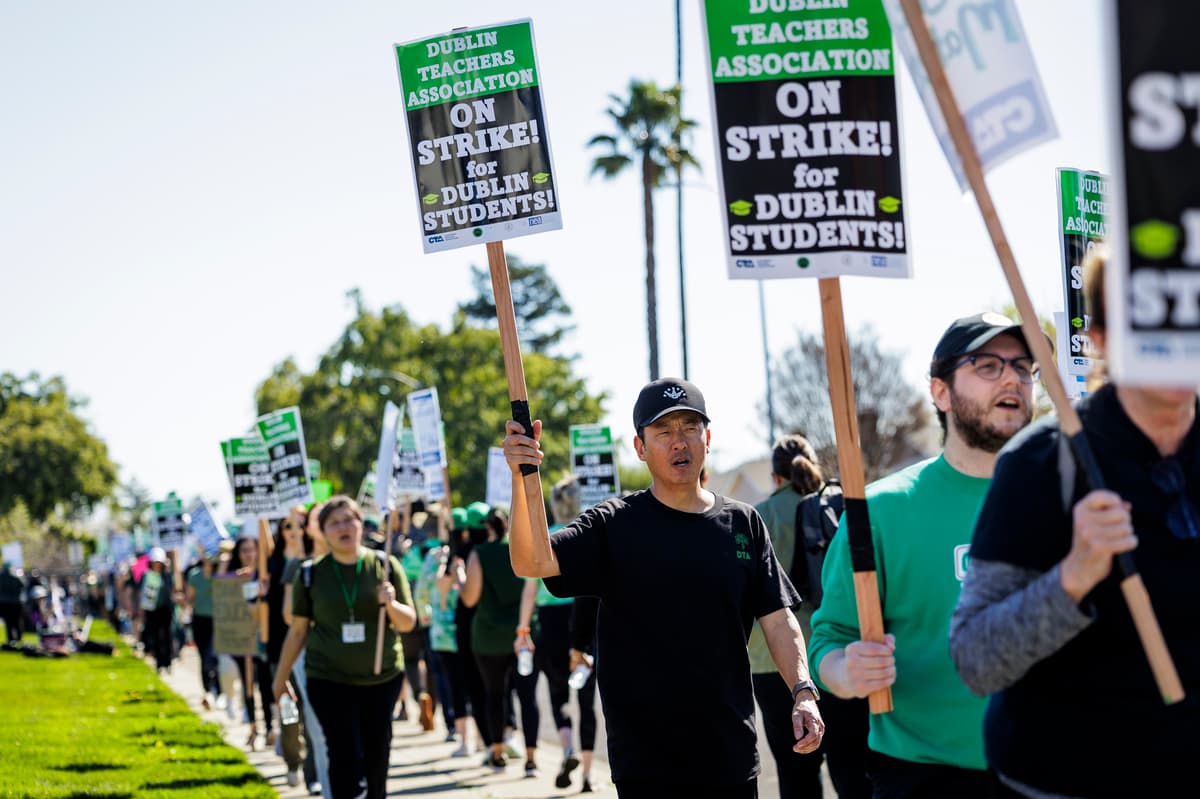
Teacher Strikes Continue Amid Year of Labor Strife
•March 11, 2026
0
Why It Matters
Teacher walkouts pressure state lawmakers to overhaul school financing, while the DHS lawsuit could set a precedent for county oversight of private detention facilities, reshaping immigration enforcement accountability.
Key Takeaways
- •California teachers strike over wages, class size limits
- •State funding tied to enrollment fails to cover rising costs
- •Pandemic grant end leaves districts unable to sustain raises
- •San Diego County sues DHS for detention center health inspection
- •Lawsuit underscores demand for transparency in immigration facilities
Pulse Analysis
California’s education sector is entering a volatile phase as teacher unions leverage strikes to demand higher wages and smaller class sizes. The root cause lies in a structural funding mismatch: state allocations are calculated on student attendance, yet enrollment has been falling, eroding the revenue base just as operating expenses climb. Compounding the problem, districts exhausted a $23.4 billion pandemic relief pool that many used to fund temporary salary bumps and permanent hires, leaving them financially exposed once the one‑time aid vanished. This fiscal squeeze is forcing school boards to confront unsustainable budget gaps and prompting legislators to consider reforms that could decouple funding from enrollment trends.
Beyond the classroom, the financial strain is reverberating through California’s political landscape. Lawmakers face mounting pressure from educators, parents, and taxpayers to devise a more resilient financing model that safeguards instructional quality without overburdening local taxpayers. Proposals range from revisiting property‑tax caps to creating a dedicated education stabilization fund. The stakes are high: prolonged labor actions risk disrupting learning outcomes, while inadequate funding could accelerate teacher attrition, further destabilizing the system. Stakeholders are watching closely as the state navigates a delicate balance between fiscal responsibility and the imperative to retain a qualified teaching workforce.
In a parallel arena, San Diego County’s lawsuit against the Department of Homeland Security marks a watershed moment for detention‑center oversight. By invoking California law that mandates health inspections of private facilities, the county challenges the federal government’s opacity on conditions at the Otay Mesa center. The case could set legal precedent, empowering other counties to demand similar transparency and potentially prompting policy reforms at the national level. As immigration debates intensify, this litigation underscores a broader trend: local authorities increasingly using legal tools to hold federal agencies accountable, a development that may reshape how detention operations are monitored across the United States.
Teacher Strikes Continue Amid Year of Labor Strife
0
Comments
Want to join the conversation?
Loading comments...