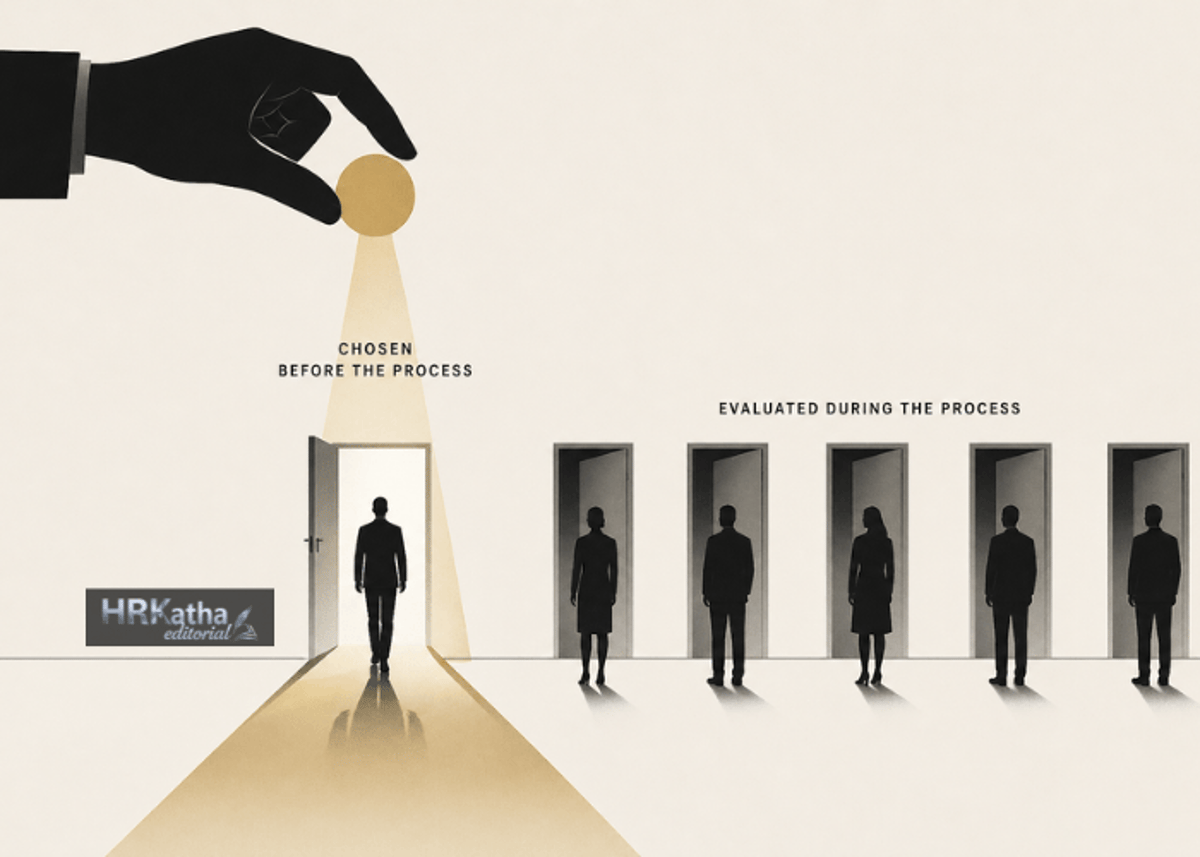
The Reference Economy: When Hiring Decisions Are Made Before Interviews Begin
Why It Matters
Pre‑screening via networks accelerates hiring but systematically excludes candidates without insider connections, eroding diversity and potentially impairing organizational performance. Recognising and correcting this bias is essential for building inclusive, innovative teams.
Key Takeaways
- •Hiring decisions often sealed before formal interviews begin
- •Networks and informal references dominate candidate selection
- •The model speeds hiring but narrows diversity and innovation
- •Executive search firms institutionalize the reference economy
- •Overreliance on references creates blind spots in team thinking
Pulse Analysis
The rise of the reference economy marks a subtle but profound shift in talent acquisition. While job postings and structured interview stages remain visible, the decisive moment now frequently occurs in private chats, WhatsApp groups, and trusted circles of founders, investors, and senior recruiters. These informal endorsements travel faster than résumés and carry weight that formal assessments struggle to match, especially for senior roles where past performance under ambiguity is prized. By front‑loading the selection process, companies reduce uncertainty and accelerate time‑to‑hire, but they also embed a hidden filter that favors those already embedded in elite networks.
The consequences extend beyond speed. When hiring pipelines are pre‑curated, the pool of candidates becomes homogenous, limiting the influx of fresh perspectives and reinforcing existing cultural norms. Diversity initiatives suffer because the most qualified candidates from under‑represented backgrounds often lack the requisite network signals to surface early. Moreover, teams built on similar experiences may develop blind spots, reducing adaptability when market conditions shift. Research consistently links broader talent diversity to higher innovation and financial performance, suggesting that the reference economy’s efficiency comes at a measurable strategic cost.
Addressing this challenge requires transparency and a recalibration of hiring practices. Organizations should audit the sources of their candidate shortlists, quantify the influence of informal referrals, and deliberately integrate structured assessments that can surface talent beyond existing networks. Combining the trust of references with data‑driven evaluation tools can preserve speed while expanding the talent net. Ultimately, acknowledging the reference economy’s role—and its limitations—allows firms to craft more equitable hiring processes that balance speed, certainty, and the long‑term benefits of a diverse workforce.
The reference economy: When hiring decisions are made before interviews begin
Comments
Want to join the conversation?
Loading comments...