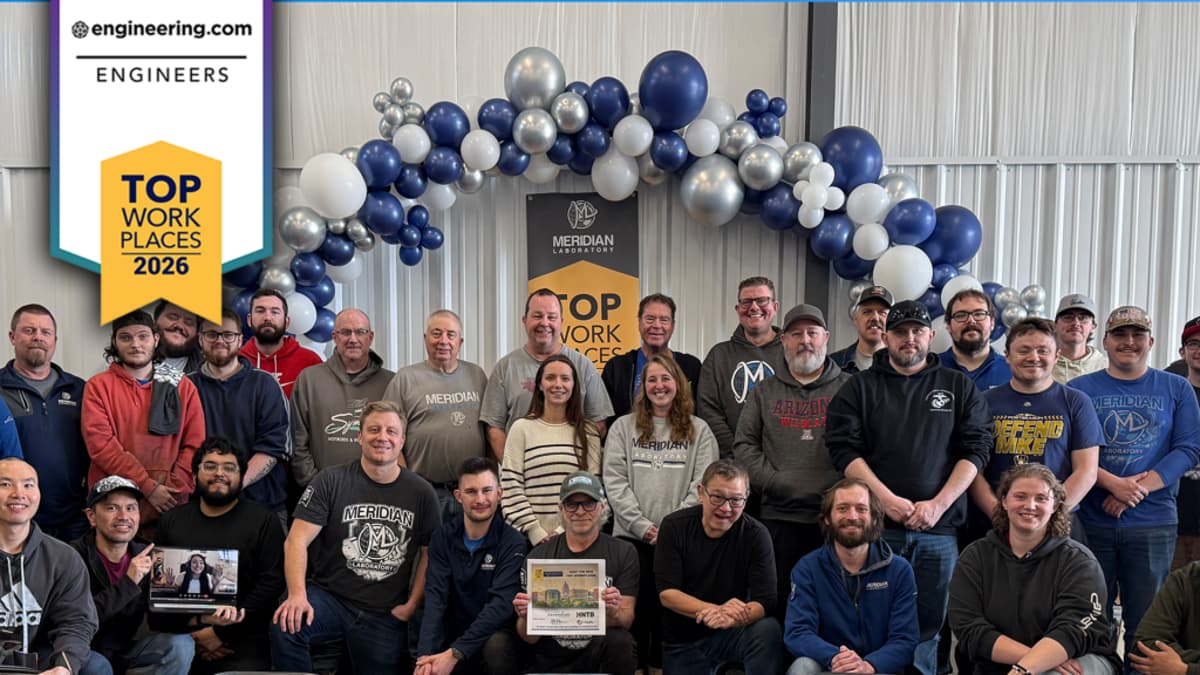
When Engineering Feels Like a Choose-Your-Own-Adventure Novel
Why It Matters
The model shows how small manufacturers can attract and retain top engineering talent by prioritizing culture and leadership alignment, a competitive edge in a talent‑tight market. It signals that employee‑centric practices can drive product innovation and growth for niche industrial firms.
Key Takeaways
- •Meridian Laboratory grew from 10 to 40 staff since 2013
- •Engineers enjoy autonomy, “choose‑your‑own‑adventure” work style
- •Senior managers with engineering backgrounds earned “Clued in Senior Management” award
- •Company produces unique brushless slip rings and custom polyurethane components
- •Employee‑first culture drives high retention and industry recognition
Pulse Analysis
Across the United States, engineering firms are battling a tight labor market, and many struggle to keep creative talent from drifting to larger corporations. Meridian Laboratory’s rise illustrates how a people‑first culture can become a differentiator. By empowering engineers to speak up at the “round table” and removing hierarchical barriers, the Madison‑based company has turned a modest workforce into a magnet for graduates and seasoned professionals alike. The recent “Clued in Senior Management” award validates that senior leaders who understand day‑to‑day engineering challenges can foster trust, boost morale, and ultimately improve retention.
The company’s product portfolio—brushless industrial slip‑ring assemblies, precision polyurethane rollers, bearings, and custom‑engineered prototypes—occupies a niche where performance and reliability are non‑negotiable. Meridian’s policy of granting engineers autonomy to experiment, often described as a “choose‑your‑own‑adventure” environment, accelerates iteration cycles and reduces time‑to‑market for complex components. This freedom to test and discard ideas without fear of failure creates a rapid learning loop that larger, more regimented manufacturers lack. As a result, Meridian can offer solutions that few competitors can match, reinforcing its reputation for technical excellence.
Looking ahead, Meridian’s growth from ten employees in 2013 to over forty today demonstrates that scaling does not have to erode culture. The firm’s ongoing recruitment drive and pipeline of new products suggest a sustainable expansion strategy anchored in employee engagement. For other small‑to‑mid‑size manufacturers, the lesson is clear: aligning leadership with engineering expertise and cultivating a collaborative, idea‑centric workplace can translate into both talent attraction and product innovation. As the industry continues to prioritize agility and specialization, companies that replicate Meridian’s model are likely to gain a competitive edge in the evolving manufacturing landscape.
When engineering feels like a choose-your-own-adventure novel
Comments
Want to join the conversation?
Loading comments...