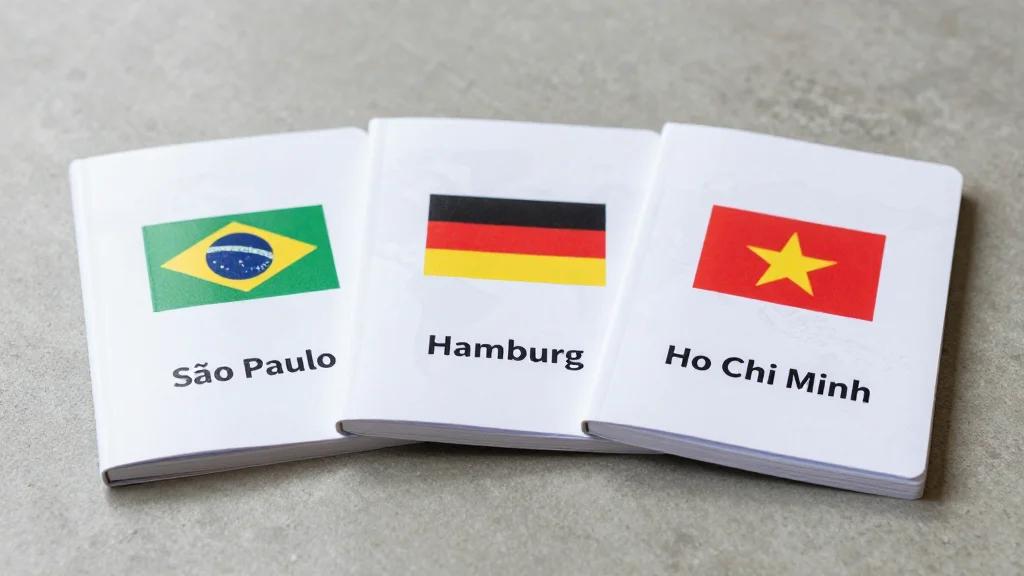
Why Employee Handbook Translation Matters for Global Companies
Why It Matters
A correctly translated handbook eliminates regulatory risk and drives faster, more engaged onboarding, directly impacting a multinational’s bottom line and brand reputation.
Key Takeaways
- •Professional translation prevents costly compliance fines and safety incidents
- •Accurate handbooks boost onboarding speed and employee engagement worldwide
- •Triple‑layer workflow ensures legal harmonization and confidentiality
- •Glossary management cuts update turnaround by up to 60%
- •Local manager input ensures cultural relevance and regulatory fit
Pulse Analysis
For multinational corporations, the employee handbook has evolved into a legal shield that must speak the native language of every workforce. Regulations in France, Japan, California, and Germany demand that critical policy language be understandable to employees, making literal translations insufficient. Companies that rely on bilingual managers or generic machine tools risk misinterpretation of terms like “lock‑out tag‑out,” which can trigger accidents or lawsuits. By partnering with specialists who blend linguistic precision with HR compliance knowledge, firms ensure that each clause meets local statutory nuances while preserving the original intent.
Beyond risk mitigation, multilingual handbooks are a catalyst for operational efficiency. New hires who receive policies in their first language experience clearer expectations, leading to faster productivity ramps and higher engagement scores—metrics that Gallup links to reduced turnover. The ROI becomes evident when onboarding cycles shrink and safety incident rates drop, translating into measurable cost savings. Moreover, a well‑structured translation process, anchored by a shared glossary, enables rapid policy updates across all languages, cutting revision cycles by up to 60 percent and freeing legal teams from repetitive review work.
Choosing the right translation partner hinges on workflow design rather than price alone. Top vendors employ a three‑step quality gate: a subject‑matter translator, a legal harmonizer, and an in‑context proofreader who formats the document exactly as employees will see it. Secure file transfer, NDAs, and version‑controlled glossaries further protect confidential HR data. As AI translation engines improve, the industry’s future lies in hybrid models where machine output is vetted by domain experts, delivering speed without sacrificing compliance. Companies that adopt these best practices today position themselves to scale globally with confidence and agility.
Why Employee Handbook Translation Matters for Global Companies
Comments
Want to join the conversation?
Loading comments...