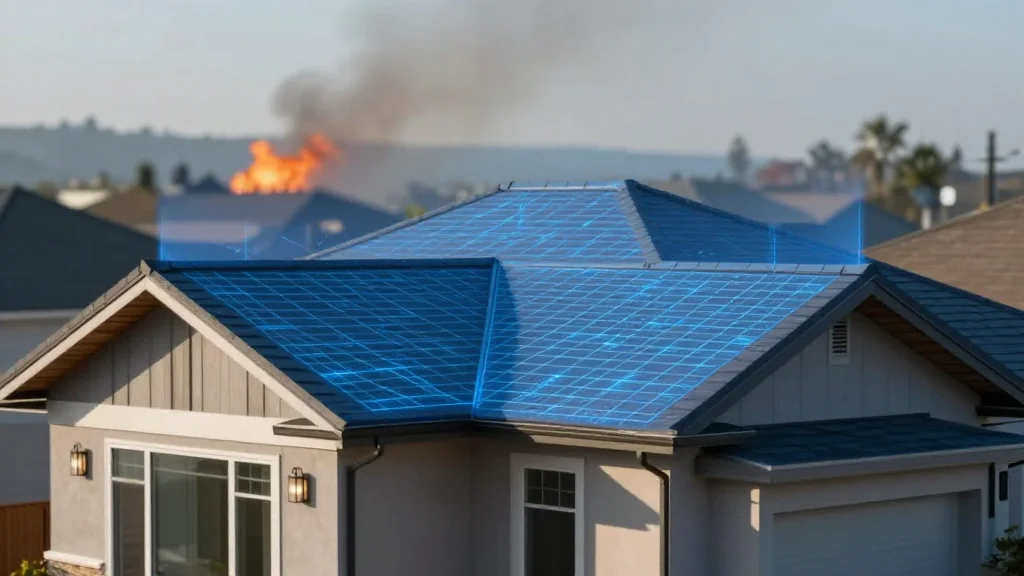
California Mandates Wildfire Modeling for High‑Risk Property Coverage

Why It Matters
Requiring insurers to write policies in high‑risk wildfire zones ties predictive modeling to actual coverage, potentially expanding affordable protection for millions of Californians. The rule also pressures insurers to refine their catastrophe models, which could lead to more accurate pricing and reduced reliance on the state‑run FAIR Plan, a safety net that has grown to over 400,000 policies and $393 billion in exposure. If other states adopt similar frameworks, the industry could see a nationwide shift toward integrated risk modeling and underwriting, reducing coverage gaps and encouraging investment in loss‑mitigation measures such as defensible space and resilient building materials.
Key Takeaways
- •California mandates insurers to write policies in high‑risk wildfire zones to use predictive modeling.
- •FAIR Plan holds 408,432 active policies, representing about $393 billion of exposure.
- •Average California dwelling premium is $1,782, below the national $2,377 average.
- •Commissioner Ricardo Lara cited climate change as a driver for the reform.
- •Insurers must file compliance plans by December; rule takes effect later this year.
Pulse Analysis
California's new wildfire‑modeling rule marks a decisive regulatory pivot from rate‑only oversight to a coverage‑centric approach. Historically, Proposition 103 gave insurers broad latitude to raise rates without guaranteeing universal coverage, a loophole that has left high‑risk homeowners dependent on the FAIR Plan. By linking model usage to mandatory underwriting, the state forces carriers to internalize the true cost of wildfire exposure, potentially narrowing the premium gap between low‑ and high‑risk areas.
The policy could also accelerate the adoption of more granular, location‑specific catastrophe models. Insurers that previously relied on coarse, state‑wide loss curves will need to invest in hyper‑local data—terrain, vegetation, and climate projections—to meet the new underwriting obligations. This investment may raise short‑term costs but could yield more precise pricing, reducing the need for blanket rate hikes that have historically sparked consumer backlash.
Looking ahead, the rule may serve as a template for other fire‑prone jurisdictions. If California demonstrates that integrated modeling and coverage can stabilize premiums while expanding protection, legislators in Oregon, Washington, and Colorado may follow suit. For the industry, the challenge will be balancing actuarial soundness with the political imperative to keep homes insured, a balance that will shape underwriting strategies and capital allocation for years to come.
California Mandates Wildfire Modeling for High‑Risk Property Coverage
Comments
Want to join the conversation?
Loading comments...