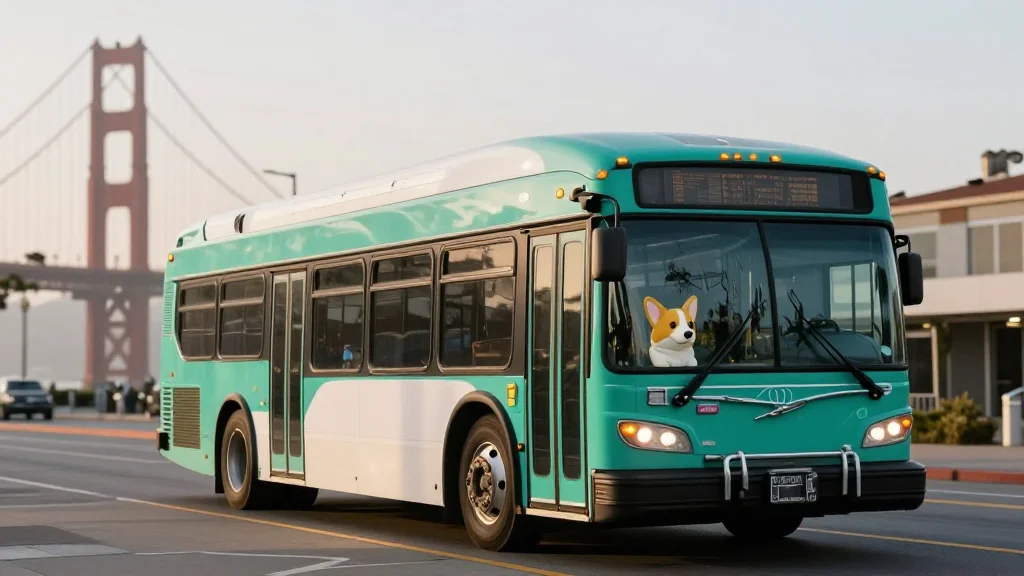
Corgi Insurance Rolls Out Free Community Bus Routes in San Francisco

Companies Mentioned
Why It Matters
The launch signals a new frontier for insurers that blend technology with community infrastructure, blurring the line between financial services and public‑service provision. By directly addressing mobility—a core determinant of risk exposure for auto and property insurers—Corgi can gather granular usage data, potentially refining underwriting models and pricing strategies. If successful, the model could inspire other insurtech firms to pursue similar civic‑oriented projects, creating a feedback loop where community investment drives data acquisition, which in turn fuels product innovation. Regulators and city planners may also view such initiatives as complementary to public transit, prompting discussions on public‑private collaborations in urban mobility.
Key Takeaways
- •Corgi Insurance launched free weekday bus routes across San Francisco on April 23, 2026.
- •The service uses branded “Corgi buses” and stops near high‑traffic neighborhoods and transit hubs.
- •CEO Nico Laqua emphasized the initiative as a tangible community‑focused effort.
- •Corgi has raised $108 million to date; specific funding for the bus program was not disclosed.
- •The program aims to reduce congestion, lower commuter costs, and support local startups.
Pulse Analysis
Corgi’s foray into physical mobility marks a strategic pivot that leverages its AI capabilities beyond underwriting. By operating a free bus network, the insurer can capture real‑time data on travel patterns, route popularity and rider demographics—inputs that are gold mines for usage‑based insurance (UBI) models. Historically, insurers have relied on third‑party data; Corgi’s direct ownership of a mobility asset could give it a competitive edge in pricing auto policies with unprecedented granularity.
The move also serves a dual branding purpose. In an industry where trust is paramount, visible community investment can differentiate Corgi from pure‑play digital rivals. The free service positions the brand as a civic partner, potentially increasing customer loyalty and attracting talent that values purpose‑driven workplaces. However, the initiative carries operational risk: managing a transit fleet demands expertise in logistics, safety compliance and labor relations—areas far removed from traditional insurance.
If the pilot demonstrates measurable reductions in traffic congestion and boosts local economic activity, city officials may be more receptive to scaling the model, perhaps even integrating Corgi’s AI routing tools into municipal transit planning. Conversely, failure to achieve ridership targets or cost overruns could invite scrutiny from regulators wary of insurers overstepping into public‑service domains. The next quarter will be critical as Corgi releases usage statistics and outlines its roadmap for expanding the network.
Corgi Insurance Rolls Out Free Community Bus Routes in San Francisco
Comments
Want to join the conversation?
Loading comments...