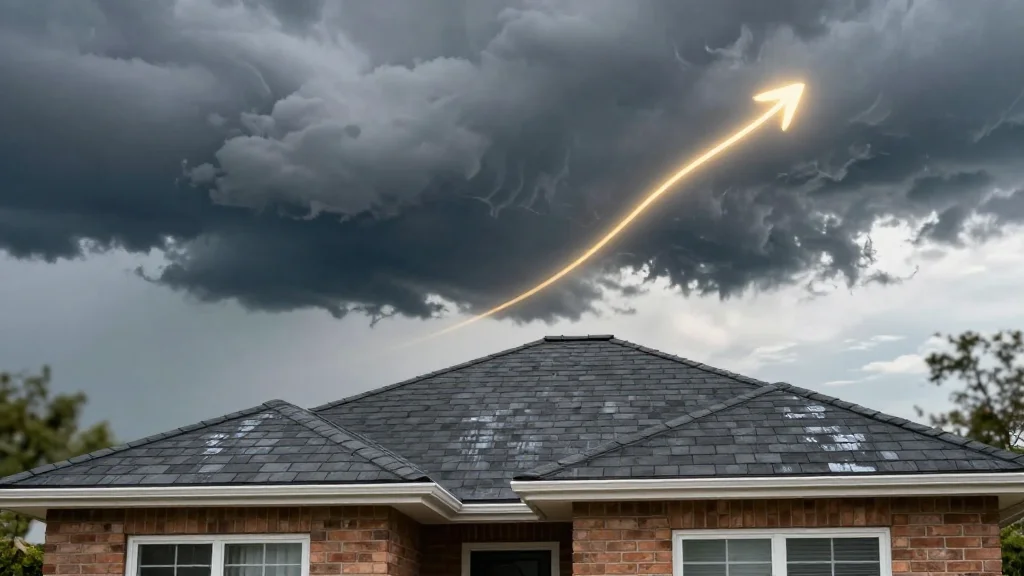
Minnesota Homeowners Face 34% Insurance Premium Surge as Extreme Weather Ramps Up

Why It Matters
The surge in Minnesota home insurance premiums illustrates how climate‑driven losses are reshaping the property‑insurance sector. As insurers grapple with mounting catastrophe payouts, they are forced to raise rates, which can strain household budgets and potentially reduce homeownership affordability in vulnerable regions. Moreover, persistent premium hikes may trigger a wave of policy cancellations or reduced coverage, exposing homeowners to greater financial risk. Policymakers and regulators must balance insurer solvency with consumer protection. If rates continue to outpace inflation, states may consider measures such as rate‑review processes, subsidies for high‑risk homeowners, or incentives for resilient building practices. The Minnesota case serves as an early warning for other states facing similar weather patterns, highlighting the need for coordinated climate‑risk mitigation and insurance market reforms.
Key Takeaways
- •Minnesota homeowners' insurance premiums rose 34% from 2024‑2025, reaching $3,654 in 2026.
- •National average premium increased 12% to $2,948 last year, with a further 4% rise projected.
- •Insured catastrophe losses averaged $100 billion annually (2023‑2025), up from $15 billion a decade earlier.
- •Insurify senior analyst Matt Brannon cited rapid, large‑scale disasters as the driver of rate hikes.
- •Tightening underwriting and higher reinsurance costs are expected to keep premium growth elevated.
Pulse Analysis
The Minnesota premium spike is a microcosm of a broader insurance market stress test driven by climate volatility. Historically, property insurers have relied on relatively stable loss patterns to price risk; the last decade’s jump from $15 billion to $100 billion in annual insured losses represents a paradigm shift that erodes the actuarial assumptions underpinning traditional pricing models. Insurers now face a dual challenge: they must protect their balance sheets against larger, more frequent payouts while remaining competitive in a market where consumers are increasingly price‑sensitive.
One possible outcome is a consolidation of the market, as smaller carriers unable to absorb heightened reinsurance costs exit high‑risk states. This could leave the remaining players with greater market share but also greater exposure, potentially prompting higher reinsurance premiums and a feedback loop of rising consumer rates. Conversely, the pressure may accelerate innovation in risk mitigation, such as wider adoption of parametric insurance products, increased investment in resilient construction, and greater use of AI‑driven catastrophe modeling to fine‑tune underwriting.
Regulators will likely play a pivotal role. In states like Minnesota, rate‑review boards may be called upon to scrutinize premium increases, while federal agencies could explore incentives for climate‑adaptation measures that lower underlying risk. Homeowners, meanwhile, may need to reassess their risk tolerance, consider higher deductibles, or explore alternative risk‑sharing arrangements. The trajectory set by Minnesota’s premium surge suggests that without coordinated action across insurers, policymakers, and consumers, the cost of protecting homes against a warming climate will continue to climb, reshaping the insurance landscape for years to come.
Minnesota Homeowners Face 34% Insurance Premium Surge as Extreme Weather Ramps Up
Comments
Want to join the conversation?
Loading comments...