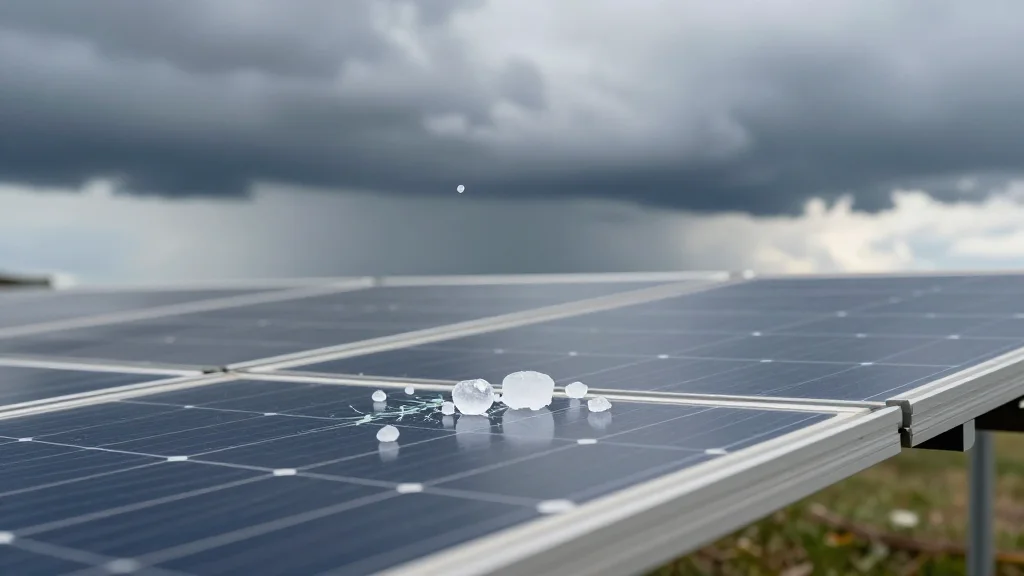
Rising Hail Risk Poses Growing Threat to Solar Farm Insurability
Why It Matters
Hail risk threatens the financial viability of solar projects, forcing insurers and developers to rethink underwriting and design standards. Effective modeling and mitigation can preserve capital and accelerate renewable‑energy deployment.
Key Takeaways
- •Hail contributed 27% of solar PV catastrophe losses 2019‑2025
- •Texas recorded U.S. solar hail claims ten times higher than Nebraska
- •Heat‑strengthened glass modules add roughly $50,000/MW to claim costs
- •High‑tilt stow reduces panel breakage risk by up to 83%
Pulse Analysis
The surge in solar photovoltaic capacity—projected to double global renewable power by 2030—coincides with a growing exposure to hail‑producing convective storms. While solar farms thrive in sun‑rich regions such as Texas, Australia, and South Africa, these same locales sit within historic hail corridors. In 2025, hail‑related events accounted for nearly half of insured catastrophe losses worldwide, underscoring a mismatch between renewable‑energy ambitions and climate‑driven perils. Insurers are now grappling with a new loss segment: more than a million PV modules damaged and $342 million in gross claims recorded between 2019 and 2025.
To bridge the underwriting gap, Gallagher Re has launched a high‑resolution probabilistic hail model for South Africa, leveraging NASA satellite data on overshooting tops to predict hail size and frequency at a two‑kilometer scale. AXIS complements this with a three‑pillar mitigation framework—accurate forecasts, hail‑resistant technology, and operational strategies. One practical measure, high‑tilt stow, can slash breakage probability by 83% when panels are angled 60 degrees or more during storms, effectively halving average claim costs. Moreover, the shift toward larger, thinner, heat‑strengthened glass modules, while cost‑effective, raises claim severity by about $50,000 per megawatt, prompting a reassessment of material specifications.
Looking ahead, climate change is expected to amplify both the frequency and intensity of severe convective storms, expanding hail‑risk footprints globally. Warmer surface temperatures and heightened humidity create more favorable conditions for large hail formation, especially in regions like South Africa where stronger updrafts may produce stones that resist melting. For the solar industry, this translates into higher reinsurance premiums and stricter risk‑management protocols. Developers that integrate advanced modeling, adopt robust panel designs, and implement dynamic operational controls will be better positioned to secure affordable coverage and sustain the renewable‑energy transition.
Rising Hail Risk Poses Growing Threat to Solar Farm Insurability
Comments
Want to join the conversation?
Loading comments...