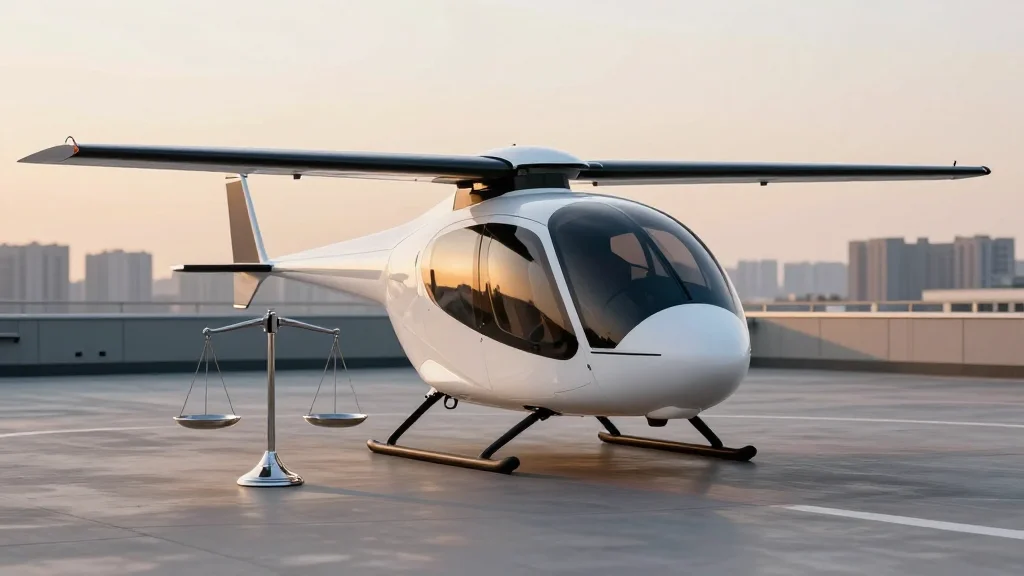
Underwriters Wrestle with Coverage Limits for Uber’s eVTOL Air‑taxi Launch

Companies Mentioned
Why It Matters
The underwriting challenge signals a broader inflection point for the insurance industry as it confronts a class of risk that blends aviation, energy storage, software, and urban infrastructure. Insurers that can develop data‑driven, flexible policies will capture a lucrative new market, while those that cling to traditional aviation models may miss out. For the eVTOL ecosystem, insurance cost and availability will dictate the speed at which services can scale, influencing investment decisions, city planning, and the public’s perception of safety in the skies. Moreover, the eVTOL insurance debate highlights the need for industry‑wide standards on data sharing, battery safety, and cyber risk. Establishing common frameworks could accelerate loss‑experience accumulation, allowing insurers to move from narrow, high‑premium policies to broader, more affordable coverage. The outcome will affect not only Uber’s air‑taxi ambitions but also the entire advanced‑air‑mobility sector’s ability to deliver on the promise of cheap, on‑demand urban flight.
Key Takeaways
- •Insurers currently offer up to $100 million liability and $22.5 million property‑damage capacity for eVTOLs via Apollo‑Moonrock facility.
- •Allianz Commercial provides test‑flight insurance, but commercial passenger coverage remains limited.
- •Underwriters require extensive data on battery health, flight logs, maintenance, and vertiport safety before expanding limits.
- •High premiums and narrow exclusions threaten the economic viability of Uber’s low‑cost eVTOL service.
- •Regulatory certification and industry data‑sharing standards will be critical to unlocking broader, cheaper coverage.
Pulse Analysis
The insurance bottleneck facing Uber’s eVTOL program is less about a lack of willingness to cover novel aircraft and more about the absence of a mature loss history. Traditional aviation insurers have decades of data on helicopters and fixed‑wing aircraft, allowing them to price risk with confidence. eVTOLs, however, combine high‑energy batteries, autonomous software, and dense urban operations – a risk matrix that does not map neatly onto any existing category. This forces insurers to start with test‑flight policies that are deliberately narrow, high‑deductible, and data‑intensive.
From a market perspective, the $100 million liability ceiling set by Apollo‑Moonrock is a double‑edged sword. It signals that capital is willing to back the sector, yet the ceiling is modest when measured against the potential aggregate liability of a city‑wide fleet. If Uber cannot secure higher limits without prohibitive premiums, the company may be forced to limit service to a few high‑value routes or to operate under a self‑insure model, both of which dilute the disruptive promise of ubiquitous air taxis.
Looking ahead, the path to affordable, scalable eVTOL insurance will likely hinge on three levers: (1) systematic collection and anonymization of operational data to feed actuarial models; (2) collaborative standards for battery safety and cyber‑risk mitigation that reduce insurer uncertainty; and (3) regulatory frameworks that define clear liability hierarchies among manufacturers, operators, and vertiport owners. Companies that can align these levers – perhaps through joint industry consortia – will not only lower their own cost of capital but also set the template for the next wave of urban air mobility ventures. In the meantime, Uber’s timeline will be a litmus test for how quickly the insurance industry can adapt to this multi‑disciplinary risk environment.
Underwriters wrestle with coverage limits for Uber’s eVTOL air‑taxi launch
Comments
Want to join the conversation?
Loading comments...