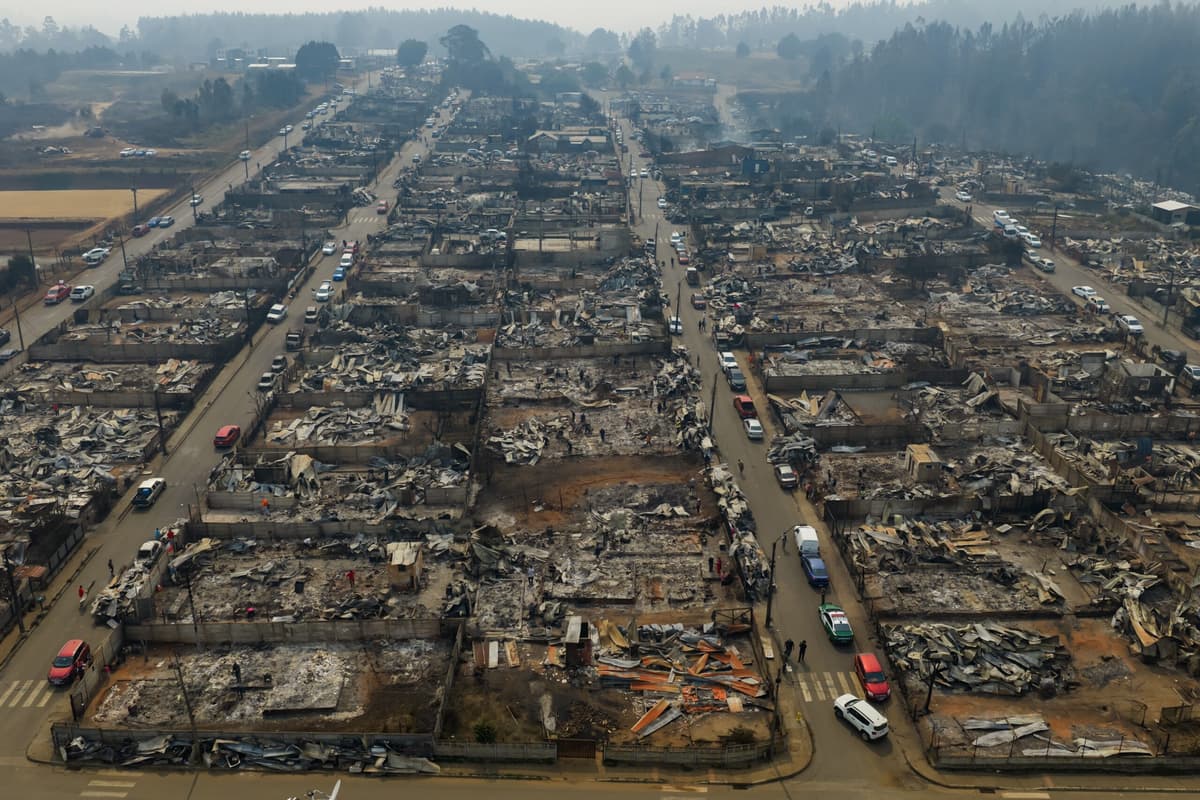
Warming World Increases Fire Risk Around the Globe
•February 20, 2026
0
Why It Matters
The surge in synchronized fire‑weather dramatically raises the risk of simultaneous, hard‑to‑contain wildfires, straining national and international firefighting resources and escalating economic and ecological damage.
Key Takeaways
- •Synchronous fire‑weather days tripled since 1979
- •Human‑caused climate change drives >60% increase
- •US fire‑weather days up to 38 per year
- •Southern South America now sees 70+ days annually
- •Only Southeast Asia shows decreasing fire‑weather days
Pulse Analysis
The acceleration of fire‑weather conditions reflects a broader climate signal: rising global temperatures intensify the atmospheric dynamics that produce heat, low humidity, and strong winds. Researchers label this pattern "synchronous fire‑weather" because multiple regions experience peak fire risk at the same time, eroding the historical staggered fire seasons that once allowed resources to be shared across borders. Climate models link this synchronization directly to anthropogenic greenhouse‑gas emissions, underscoring how fossil‑fuel combustion reshapes the planet's fire regime beyond isolated hotspots.
When fire‑weather aligns across continents, emergency management faces unprecedented coordination challenges. Firefighting crews, already stretched thin by longer seasons, must now contend with concurrent outbreaks that limit mutual aid and inflate operational costs. Insurance markets respond with higher premiums, while local economies suffer from disrupted tourism, agriculture, and infrastructure. The compound effect of simultaneous blazes also hampers air‑quality mitigation, as smoke plumes travel farther, affecting public health on a global scale.
Policymakers and land managers must therefore pursue dual strategies: aggressive mitigation to curb emissions and targeted adaptation to reduce fuel loads and improve early‑warning systems. Investing in satellite‑based fire‑weather forecasting, expanding prescribed‑burn programs, and strengthening cross‑border response agreements can buffer communities against the growing threat. Ultimately, the study’s findings reinforce that limiting carbon output is not just an environmental imperative but a direct safeguard against escalating wildfire disasters worldwide.
Warming World Increases Fire Risk Around the Globe
0
Comments
Want to join the conversation?
Loading comments...