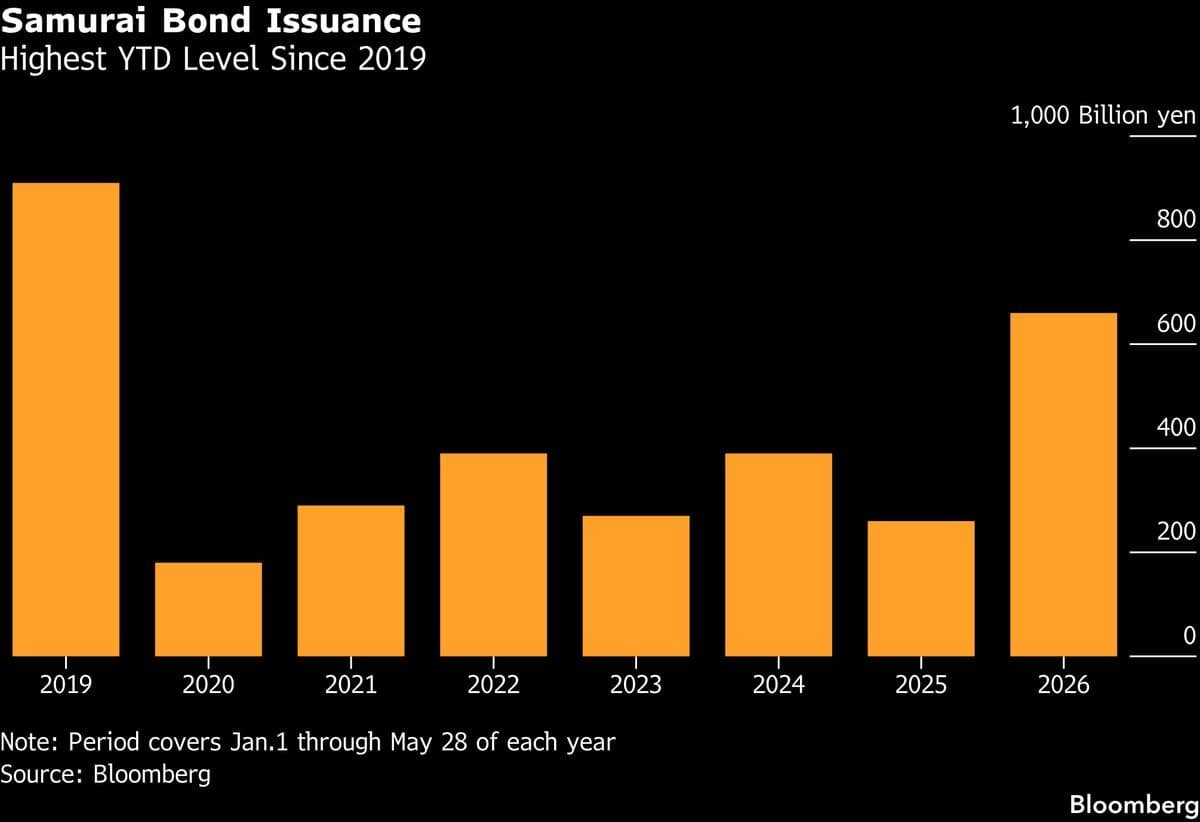
Credit Agricole SA Raises $670M via Samurai Bond Issuance
Participants
Why It Matters
The wider spread raises borrowing costs for foreign issuers but offers Japanese investors higher yields, reshaping the pricing landscape for yen‑denominated debt.
Key Takeaways
- •Credit Agricole issued ¥106.5 bn samurai bonds at 58 bps spread
- •Five‑year notes carry 2.454% coupon, priced Friday
- •Spread exceeds comparable domestic corporate debt, reflecting higher yen rates
- •Seven tranches diversify investor base across Japanese and overseas markets
Pulse Analysis
Samurai bonds—yen‑denominated debt issued by non‑Japanese entities—have become a strategic tool for banks seeking diversification and access to Japan’s deep capital market. Historically, foreign issuers benefit from Japan’s low‑interest environment and a stable investor base that values currency‑matched assets. However, the recent upward shift in benchmark yen rates, driven by the Bank of Japan’s policy adjustments, has compressed the yield gap between foreign and domestic issuers. This dynamic forces overseas banks to price their offerings at wider spreads to attract sufficient demand.
Credit Agricole SA responded by setting terms for ¥106.5 billion (approximately $670 million) of samurai bonds across seven tranches. The five‑year notes were priced at a 58‑basis‑point spread over the TONA mid‑swap rate, with a 2.454 % coupon—significantly broader than the spreads on comparable Japanese corporates. The wider premium reflects both the higher benchmark yen rates and investors’ appetite for higher yields amid tightening monetary conditions. By issuing multiple tranches, the bank tapped varied investor segments, balancing liquidity needs with pricing flexibility.
The issuance signals a cautious optimism among European banks about re‑entering the Japanese market despite tighter funding conditions. A broader spread may set a new pricing benchmark for future foreign issuers, potentially widening the cost differential between domestic and overseas debt. For investors, the higher yield offers an attractive addition to diversified portfolios, especially as global rates rise. Meanwhile, the Bank of Japan’s trajectory will remain a key driver of samurai bond pricing, making monitoring of yen benchmark movements essential for both issuers and investors.
Deal Summary
Credit Agricole SA set terms for ¥106.5 billion ($670 million) of samurai bonds, pricing seven tranches with a five‑year spread of 58 bps over the TONA mid‑swap rate and a 2.454% coupon. The issuance offers wider spreads than comparable domestic corporate debt amid rising yen rates, marking a new fundraising effort in Japan's samurai bond market.
Comments
Want to join the conversation?
Loading comments...