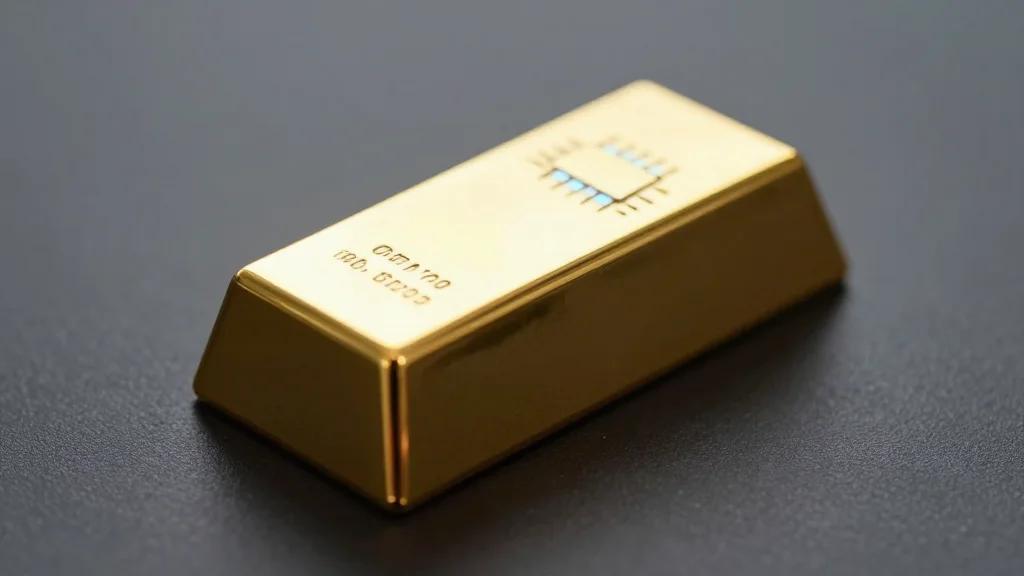
Apollo and Blackstone Mull $35 Billion Private Credit Deal for Broadcom AI Chip Push

Companies Mentioned
Why It Matters
The prospective $35 billion financing illustrates how private‑credit markets are becoming a primary source of capital for technology firms pursuing AI ambitions. By bypassing traditional bank loans, Broadcom can secure a larger, more flexible funding pool, accelerating its product pipeline and potentially gaining a competitive edge in the fast‑moving AI chip arena. For investors, the deal highlights the growing appetite of private‑credit funds to deploy capital at scale, offering higher yields but also exposing them to sector‑specific risks such as rapid technology cycles and supply‑chain disruptions. Moreover, the transaction could reshape the financing landscape for the broader semiconductor industry. If successful, it may encourage other chipmakers to seek similar private‑credit solutions, prompting banks to re‑evaluate their lending strategies and possibly leading to tighter credit standards for high‑growth tech firms. The ripple effect could also influence valuation models, as analysts incorporate the cost of private‑credit financing into earnings forecasts and risk assessments.
Key Takeaways
- •Apollo Global Management and Blackstone are negotiating a $35 billion private‑credit package for Broadcom.
- •The financing aims to fund Broadcom’s AI‑focused chip development and inventory buildup.
- •At $35 billion, the deal would be one of the largest private‑credit transactions ever recorded.
- •Private‑credit lenders are stepping in as banks tighten traditional loan offerings for tech firms.
- •If completed, the deal could set a new benchmark for large‑scale financing in the semiconductor sector.
Pulse Analysis
Broadcom’s turn to private credit reflects a broader financing evolution driven by the AI boom. Historically, chipmakers relied on a mix of equity issuance and bank debt to fund capital‑intensive projects. However, the surge in AI demand has compressed timelines and inflated cost structures, prompting firms to seek larger, more flexible capital sources. Private‑credit funds like Apollo and Blackstone have built sizable balance sheets precisely to capture this niche, offering bespoke structures that can accommodate the unique cash‑flow profiles of semiconductor manufacturers.
The $35 billion figure is not just a headline; it signals a pricing floor for future AI‑related credit deals. Lenders will likely demand higher spreads to compensate for the sector’s volatility, but the sheer size of the financing could dilute those costs through economies of scale. For Broadcom, securing such a package could accelerate its roadmap, allowing it to outpace rivals like Nvidia and AMD in AI‑specific silicon. Yet the deal also raises questions about leverage levels in a market where demand can swing sharply with macroeconomic shifts. Investors will need to monitor covenant structures and repayment schedules closely, as any misstep could reverberate across the private‑credit market, influencing pricing and appetite for similar deals.
In the longer term, this financing could catalyze a new era where private‑credit becomes the default conduit for AI‑driven hardware expansion. As more firms chase the same high‑margin AI opportunities, the competition for capital may intensify, driving innovation not only in chip design but also in financing structures. The outcome of Broadcom’s negotiations will therefore serve as a bellwether for the intersection of technology ambition and alternative credit markets.
Apollo and Blackstone Mull $35 Billion Private Credit Deal for Broadcom AI Chip Push
Comments
Want to join the conversation?
Loading comments...