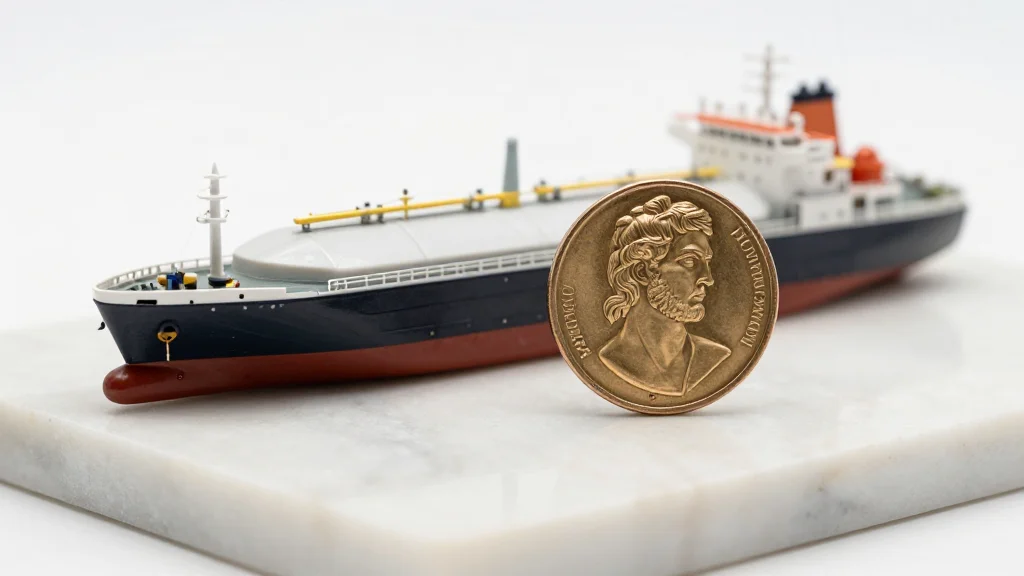
CCEC Secures €250 Million ($270 M) via Greek Sovereign Bond at 3.75% Coupon

Why It Matters
The €250 million sovereign bond demonstrates how shipping firms can tap government‑backed debt markets to secure long‑dated, low‑cost financing, a model that could become more prevalent as banks tighten credit to capital‑intensive industries. By locking in a 3.75% coupon, CCEC not only strengthens its liquidity but also gains a financing runway that aligns with the ten‑year charter contracts of its new LNG fleet, reducing refinancing risk. For the broader European investment‑banking landscape, the transaction showcases the continued relevance of sovereign‑linked instruments in a market where traditional syndicated loans are under pressure. It also highlights the strategic importance of the Greek sovereign market as a conduit for maritime financing, potentially attracting more issuers seeking to leverage Greece’s maritime heritage and investor base.
Key Takeaways
- •CCEC raised €250 million ($270 million) via a Greek sovereign bond at a 3.75% coupon.
- •Cash on hand increased to $546 million, up from $296 million in the prior quarter.
- •Debt‑to‑equity leverage reported at 45.6%, within industry‑acceptable ranges.
- •CCEC sold a 49% stake in the Yamora Mia‑1 LNG carrier for €230 million, securing a ten‑year charter.
- •The bond’s yield of 3.75% is below the recent average of 4.2% for similar maritime‑linked sovereign issues.
Pulse Analysis
CCEC’s bond issuance arrives at a crossroads where shipping firms are forced to balance capital intensity with volatile market fundamentals. By turning to a sovereign‑backed instrument, CCEC sidesteps the tightening bank‑loan environment that has plagued the sector since the Basel III reforms. The 3.75% coupon reflects both the company’s solid credit standing and the appetite of European investors for stable, asset‑linked yields amid a low‑interest-rate backdrop.
Historically, sovereign‑linked maritime bonds have been used by larger, state‑owned carriers; CCEC’s success signals a democratization of this financing channel. If other mid‑size operators can replicate the pricing, we may see a shift in the capital‑structure mix of the industry, with a greater proportion of debt sourced from sovereign markets rather than syndicated loans. This could compress loan spreads further and pressure banks to innovate with hybrid products, such as loan‑linked bonds or sustainability‑linked debt, to retain market share.
Looking forward, the real test will be whether the bond proceeds translate into higher charter revenues and improved margins. The company’s exposure to off‑hire risk, highlighted by CFO Kalogiratos, remains a wildcard. Should geopolitical tensions flare or LNG demand soften, the anticipated cash‑flow cushion could erode, putting pressure on the debt service coverage. Nonetheless, the bond gives CCEC a strategic advantage: it can lock in financing costs now while the market anticipates higher charter rates, positioning the firm to capture upside without the need for costly refinancing later in the cycle.
CCEC Secures €250 Million ($270 M) via Greek Sovereign Bond at 3.75% Coupon
Comments
Want to join the conversation?
Loading comments...