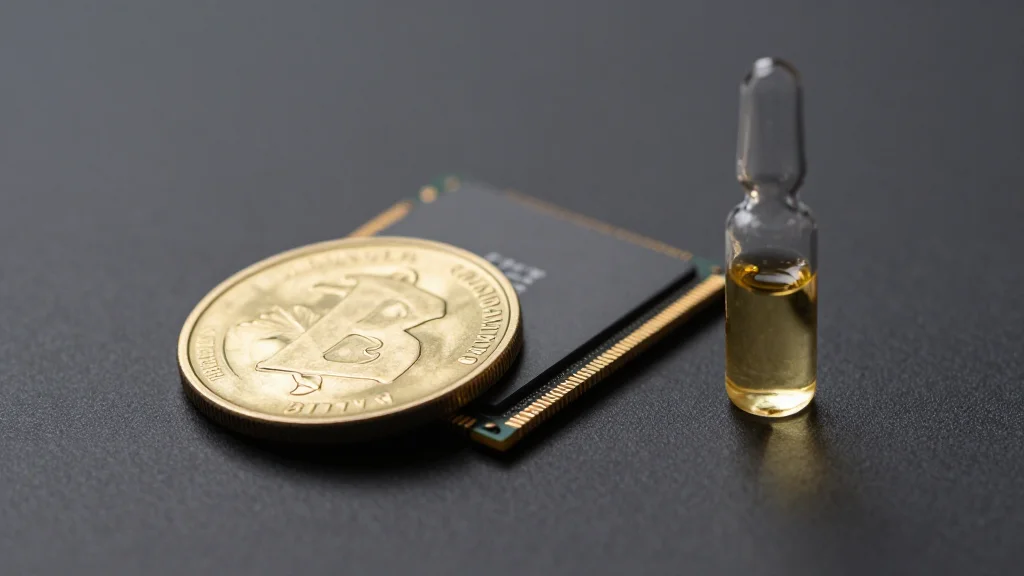
Eclipse Ventures’ $2.5 B Cerebras IPO Return Bolsters Physical‑World Bet

Companies Mentioned

Why It Matters
The $2.5 billion Cerebras payout validates a venture capital thesis that has been marginal for a decade: that investing in companies that build the machinery of the real world can generate returns far beyond software‑only plays. As AI models become more compute‑hungry, the demand for specialized silicon and robotics platforms is accelerating, creating a feedback loop where hardware enables AI, and AI drives hardware innovation. For limited partners, the Eclipse story offers a template for portfolio diversification. Traditional VC funds have leaned heavily on SaaS and consumer internet, sectors that now face valuation compression. Physical‑world bets, though capital‑intensive and longer‑horizon, can deliver multi‑digit multiples when market timing aligns, as demonstrated by Cerebras and the recent Mind Robotics round. This shift may reshape fund allocation strategies and spur a new wave of capital toward deep‑tech, reshaping the venture ecosystem for the next decade.
Key Takeaways
- •Eclipse Ventures turned a $147 M stake in Cerebras into a $2.5 B return, a 17‑fold gain at IPO.
- •Cerebras IPO priced at $185 per share, marking the largest exit for a physical‑world startup this year.
- •Mind Robotics raised $400 M at a $3.4 B valuation, a 70 % increase from its Series A two months earlier.
- •Eclipse’s portfolio raised $15 B last year, with $4.5 B in Q1 2026 alone, highlighting late‑stage momentum.
- •Founder Lior Susan cites five aligned forces – capital, talent, demand, policy, and technology – driving the hardware surge.
Pulse Analysis
Eclipse Ventures’ Cerebras exit is more than a headline; it is a proof point that the venture capital industry is recalibrating its risk‑reward calculus. The firm’s early bet on a niche AI chipmaker paid off at a time when SaaS valuations are under pressure, suggesting that capital is migrating toward assets that cannot be replicated by code alone. This migration is reinforced by macro trends: the U.S. government’s CHIPS Act, rising defense budgets, and the relentless demand for compute power in generative AI models. Together, they create a fertile environment for capital‑intensive, hardware‑first startups.
The Mind Robotics round further illustrates how founder credibility can amplify capital flows. RJ Scaringe’s cross‑company reputation helped secure a $400 M infusion at a premium valuation, indicating that investors are now willing to bet on a founder’s ecosystem as much as on a single product. This could herald a new era where serial entrepreneurs with complementary hardware and AI ventures attract bundled funding, blurring the lines between traditional sector silos.
Looking forward, the challenge for VCs will be balancing the longer capital cycles of hardware with the need for liquidity. Funds that can provide patient capital, perhaps through evergreen structures or strategic LP partnerships, will be best positioned to capture the upside. Meanwhile, startups must demonstrate clear pathways to revenue and defensible IP to justify the deep‑pocketed bets. If Eclipse and its peers can continue to identify and nurture such companies, the physical‑world thesis may become the new cornerstone of venture investing, reshaping the industry’s portfolio composition for years to come.
Eclipse Ventures’ $2.5 B Cerebras IPO Return Bolsters Physical‑World Bet
Comments
Want to join the conversation?
Loading comments...