IPOs, Huawei Plan Add to China’s $900 Billion Chip Stock Boom
Companies Mentioned
Why It Matters
The surge in Chinese chip IPOs could reshape global semiconductor supply chains and intensify competition for AI‑driven silicon, while also exposing investors to heightened valuation risks.
Key Takeaways
- •Huawei's upcoming IPO targets $10B valuation amid chip surge
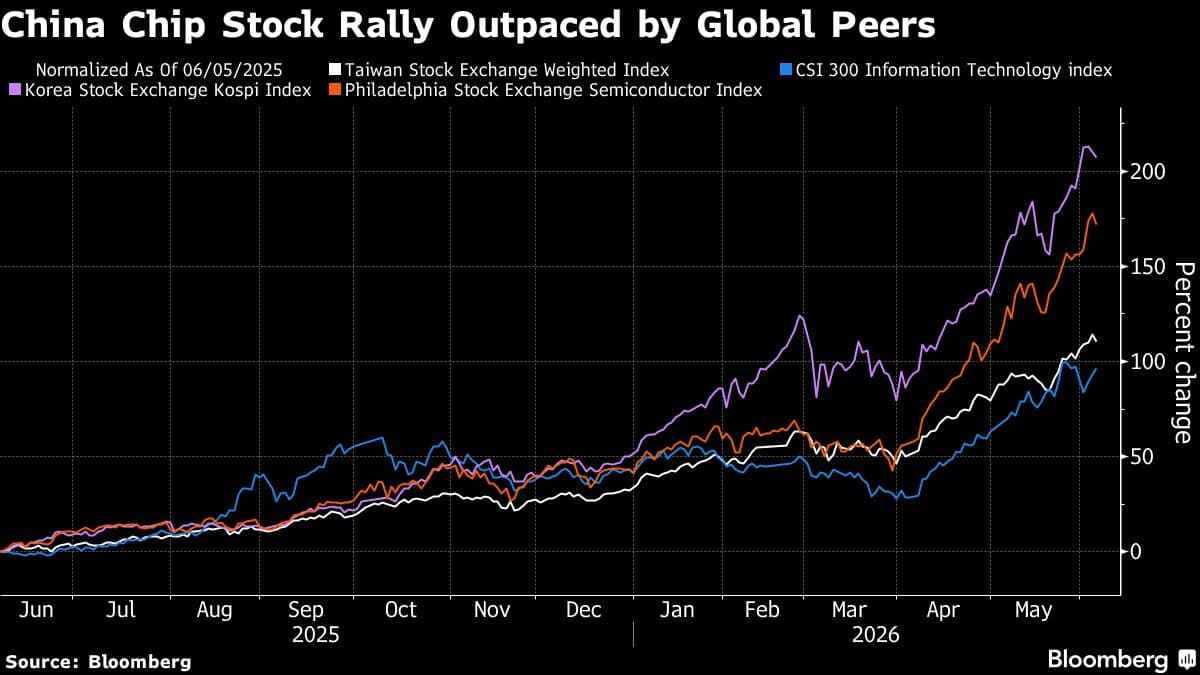
- •Chinese chip firms raise $900B market cap, outpacing Taiwan
- •New AI chip designs aim to reduce reliance on foreign tech
- •Analysts warn of overheating as capital concentrates in few giants
- •Government incentives accelerate domestic semiconductor R&D and production
Pulse Analysis
The Chinese semiconductor sector has entered a rapid expansion phase, now valued at roughly $900 billion. A wave of high‑profile initial public offerings, led by Huawei’s anticipated listing, is set to inject fresh capital and elevate market visibility. Investors are drawn by the convergence of massive AI‑driven demand and a national strategy that prioritises home‑grown chip design and fabrication. While Huawei’s IPO could command a valuation near $10 billion, other emerging firms are also preparing to list, promising a broader diversification of capital across the industry.
Globally, the surge reshapes the competitive landscape that has long been dominated by the United States, South Korea and Taiwan. Chinese chipmakers are accelerating development of AI‑optimized processors, aiming to cut dependence on imported fabs and intellectual property. This drive aligns with the broader AI boom, now in its fourth year, which fuels demand for high‑performance silicon across cloud, automotive and edge applications. However, analysts caution that the rapid inflow of funds could overheat the market, especially as a handful of mega‑players absorb the majority of new investment.
Beijing’s policy toolkit reinforces the momentum, offering tax breaks, subsidized land and direct R&D grants to semiconductor firms. These incentives aim to shorten the technology gap with rivals and secure a domestic supply chain for critical AI workloads. Yet challenges remain: talent shortages, complex export controls and the need for advanced lithography equipment could temper growth. If the sector maintains disciplined capital allocation while leveraging state support, China could emerge as a self‑sufficient chip powerhouse, reshaping global pricing and supply dynamics for years to come.
IPOs, Huawei Plan Add to China’s $900 Billion Chip Stock Boom
Comments
Want to join the conversation?
Loading comments...