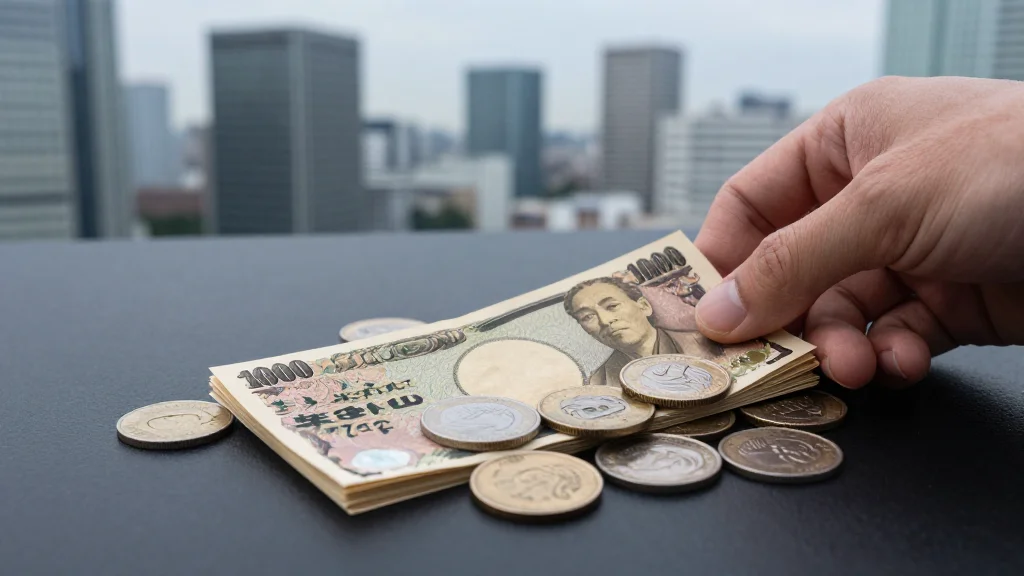
Japan's Q1 GDP Revised to 1.8%, Casting Doubt on Investment‑Banking Deal Flow

Why It Matters
The GDP downgrade directly influences the health of Japan's capital markets, where investment banks serve as the primary conduit for corporate financing. A sustained slowdown in business investment can shrink the pool of viable M&A targets, reduce the appetite for new equity and debt issuances, and force banks to tighten credit standards. This environment not only impacts fee income for banks but also reshapes the competitive dynamics among domestic and foreign financial institutions vying for limited deal flow. For the broader Asia‑Pacific region, Japan remains a key source of cross‑border capital. A contraction in Japanese financing activity could shift the balance of capital toward other hubs such as Singapore, Hong Kong, and Seoul, altering the regional hierarchy of investment‑banking centers. Stakeholders—from corporate treasurers to private‑equity sponsors—must therefore monitor Japan's macro data closely as it will dictate the availability and cost of capital in the months ahead.
Key Takeaways
- •Japan's Q1 annualized GDP growth revised to 1.8% from 2.1% (Cabinet Office, June 8, 2026).
- •Quarterly growth held at 0.5%, indicating a slowdown in business investment.
- •Analysts estimate a 5%–7% reduction in projected equity and debt issuances for 2026.
- •Potential tightening of loan covenants and higher spreads on syndicated loans.
- •Possible shift of foreign capital toward other Asia‑Pacific markets if Japan's growth remains weak.
Pulse Analysis
Japan's latest GDP revision underscores a fragile recovery that hinges on private‑sector confidence. Investment banks have historically thrived on a virtuous cycle: strong macro growth fuels corporate earnings, which in turn drives M&A and capital‑raising activity. The current data break that cycle, forcing banks to recalibrate their revenue forecasts. Historically, a 0.3‑point dip in annualized growth has preceded a 4%–6% decline in underwriting fees for the following quarter, a pattern that appears to be re‑emerging.
Strategically, banks with diversified regional platforms can mitigate the impact by reallocating resources to markets with stronger growth trajectories. For instance, banks that have built robust relationships in Vietnam's tech sector may capture displaced Japanese deal flow. Conversely, banks heavily reliant on Japan's domestic market may need to tighten cost structures and prioritize advisory work that does not depend on large capital raises.
Looking forward, policy response will be pivotal. If Tokyo introduces targeted fiscal incentives—such as tax credits for R&D or accelerated depreciation for capital equipment—investment banks could see a resurgence in deal activity by the fourth quarter. Absent such measures, the sector may experience a protracted period of subdued activity, prompting a strategic shift toward fee‑based services like restructuring and risk advisory. Investors should watch upcoming budget deliberations and the Bank of Japan's monetary stance for clues on the trajectory of Japan's investment‑banking landscape.
Japan's Q1 GDP Revised to 1.8%, Casting Doubt on Investment‑Banking Deal Flow
Comments
Want to join the conversation?
Loading comments...