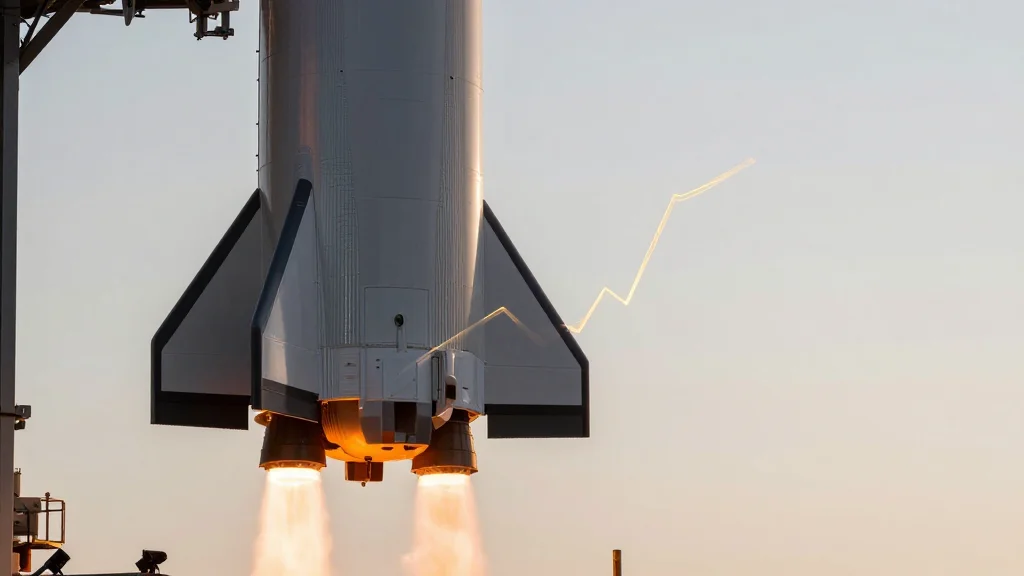
SpaceX IPO Targets $1.75 Trillion Valuation, Retail Allocation Up to 30%

Why It Matters
The SpaceX IPO represents a watershed moment for investment banking, as the underwriting fees alone could eclipse the total revenue of many boutique firms. A successful offering would reinforce the role of large banks in orchestrating mega‑cap deals and could spur a new wave of aerospace and AI‑focused listings. Conversely, pricing challenges or a weak market debut could prompt banks to reassess risk models for high‑valuation, low‑profitability companies. Retail investors stand to gain unprecedented access to a company traditionally reserved for private‑equity and venture capital backers. The 30% allocation could democratize ownership of a firm that shapes satellite broadband, launch services, and future AI infrastructure, potentially reshaping the investor base for future high‑tech IPOs.
Key Takeaways
- •SpaceX aims for a $1.75 trillion valuation in a summer 2026 IPO.
- •Up to 30% of shares are earmarked for retail investors.
- •Prospectus expected late May; roadshow slated for early June.
- •Potential underwriting fees could exceed $500 million.
- •IPO could become the largest U.S. listing this year, dwarfing recent tech offerings.
Pulse Analysis
From an investment‑banking perspective, the SpaceX IPO is a litmus test for the market’s appetite for ultra‑large, growth‑oriented listings. Historically, mega‑cap IPOs such as Alibaba (2014) and Saudi Aramco (2019) have generated underwriting fees that dwarf the annual revenue of many banks. If SpaceX’s pricing lands near the $1.75 trillion mark, the syndicate could collect fees in the high‑hundreds of millions, reinforcing the dominance of top-tier banks in structuring and distributing such deals. The retail‑allocation component adds a layer of complexity: banks must balance the desire for a broad investor base with the need to secure firm commitments from institutional anchors that can stabilize the price post‑launch.
The competitive landscape is also shifting. While traditional aerospace firms like Boeing and Lockheed Martin have relied on government contracts, SpaceX’s hybrid model—combining launch services, satellite broadband, and AI—creates a diversified revenue mix that may appeal to a wider investor set. However, the lack of transparent financials introduces valuation risk. Investment banks will likely employ rigorous scenario modeling, factoring in Starlink subscriber growth, launch cadence, and the uncertain timeline for NASA’s lunar contracts. The outcome of this modeling will influence the final price range and the size of the offering.
Looking ahead, the SpaceX IPO could set a new benchmark for how retail participation is structured in mega‑cap offerings. If the 30% allocation proves popular and the shares trade well on debut, other firms may adopt similar strategies to broaden their shareholder base and mitigate concentration risk. Conversely, a disappointing performance could reinforce the status quo, where institutional investors dominate the allocation of the largest listings. Either way, the deal will shape underwriting practices, fee structures, and market expectations for years to come.
SpaceX IPO Targets $1.75 Trillion Valuation, Retail Allocation Up to 30%
Comments
Want to join the conversation?
Loading comments...