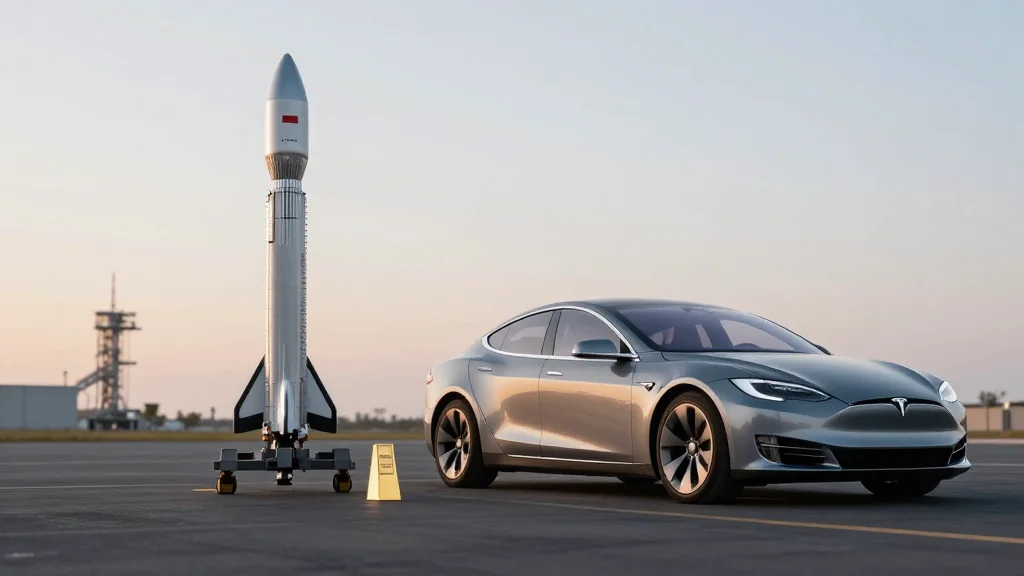
SpaceX S-1 Reveals Tesla’s Terafab Deal Is Far From Done
Why It Matters
Investors must weigh the gap between Musk’s public hype and the uncommitted reality of the joint projects, as the lack of concrete terms adds material risk to SpaceX’s valuation. The disclosed financial entanglement also highlights potential conflicts of interest across Musk’s empire.
Key Takeaways
- •SpaceX's S‑1 shows Terafab and Macrohard are only framework agreements.
- •Tesla provided $650 million in goods/services to SpaceX and xAI in 2025.
- •Musk's divided focus limits his full-time commitment to SpaceX operations.
- •No financial terms, IP rights, or timelines are finalized for Terafab.
- •Risk factors warn investors the projects could fail or be delayed indefinitely.
Pulse Analysis
The filing of SpaceX’s S‑1 marks a pivotal moment for the company’s bid to become the largest IPO in history, but the document also pulls back the curtain on the financial web linking Musk’s ventures. In 2025, Tesla supplied $144 million of goods and services to SpaceX, while the newly absorbed AI startup xAI alone bought $506 million of Tesla Megapack batteries for its data centers. Combined, these transactions total roughly $650 million, underscoring a deepening fiscal interdependence that investors must scrutinize alongside revenue growth claims.
Beyond the dollar figures, the S‑1 reveals that the headline‑grabbing Terafab chip fab and the Macrohard AI platform remain conceptual. Both projects are described only as “general frameworks” without any signed contracts, capital commitments, or intellectual‑property allocations. This stark contrast to Musk’s public announcements raises red flags for shareholders, as the prospectus’ risk factors explicitly warn that the initiatives may never materialize or could be delayed indefinitely. The absence of binding terms means the projected revenue streams and strategic synergies are speculative at best.
Musk’s divided attention compounds the uncertainty. The filing admits he does not devote his full time to SpaceX, juggling roles at Tesla, Neuralink, The Boring Company, and other ventures. Without a formal duty to prioritize SpaceX opportunities, the company faces heightened governance risk. For the market, the takeaway is clear: while the narrative of a multi‑billion‑dollar chip factory and an autonomous AI platform fuels excitement, the underlying contracts—and thus the financial upside—are still a work in progress. Investors should calibrate valuations accordingly, factoring both the potential upside and the substantial execution risk.
SpaceX S-1 reveals Tesla’s Terafab deal is far from done
Comments
Want to join the conversation?
Loading comments...