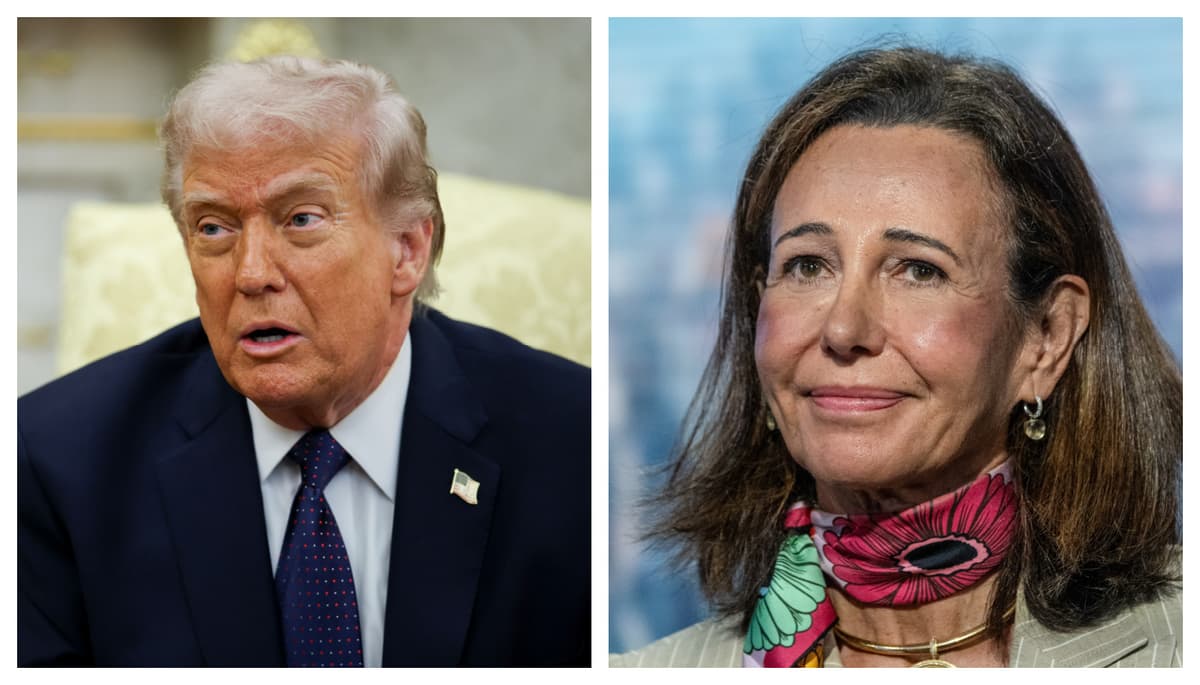
Will Trump Scramble Santander's Plan to Buy Webster?
•March 4, 2026
0
Companies Mentioned

Why It Matters
The deal is Santander’s biggest U.S. expansion and its fate hinges on geopolitical stability, making it a bellwether for cross‑border banking M&A. A collapse would reshape the competitive landscape and invite other bidders at a discount.
Key Takeaways
- •Trump threatens trade cut with Spain, risking deal.
- •$12.3 bn Santander‑Webster merger may face regulatory delays.
- •Analyst downgrades Webster stock, citing heightened closing risk.
- •Deal would create $327 bn U.S. regional banking powerhouse.
- •Spain‑U.S. diplomatic tension could spur alternative bidders.
Pulse Analysis
European banks have long eyed the United States as a growth frontier, and Santander’s pursuit of Webster Financial marks its most aggressive cross‑border move to date. By adding Webster’s low‑cost deposit base and a dense Northeast branch network, Santander would instantly boost its U.S. footprint to over $300 billion in assets, positioning the combined entity alongside Truist and PNC. The strategic rationale extends beyond scale; it gives the Spanish lender a direct conduit to American consumers and businesses, reinforcing its ambition to serve as a bridge between Europe, Latin America, and the U.S. market.
The sudden escalation of U.S.–Spain tensions introduces a non‑traditional risk factor rarely seen in banking M&A. President Trump’s threat to halt trade with Spain, tied to disagreements over military basing rights, could trigger heightened scrutiny from the Federal Reserve and the Committee on Foreign Investment in the United States. Regulators may view the geopolitical dispute as a proxy for political risk, potentially extending the antitrust review timeline or imposing additional conditions. Analysts like Mike Mayo have already downgraded Webster’s stock, citing a "not insignificant" chance that the deal could fall apart, underscoring how diplomatic friction can translate into tangible financial uncertainty.
Should the acquisition stall, the market is likely to see a scramble for Webster’s assets. Competing banks with existing U.S. platforms could step in, possibly at a lower valuation, reshaping the regional banking landscape. Moreover, the episode serves as a cautionary tale for other foreign institutions eyeing American targets, highlighting the need to factor geopolitical volatility into deal structuring and risk assessments. For investors, monitoring the evolution of U.S.–Spain relations will be as critical as watching the usual regulatory filings when evaluating the ultimate outcome of this high‑profile transaction.
Will Trump scramble Santander's plan to buy Webster?
0
Comments
Want to join the conversation?
Loading comments...