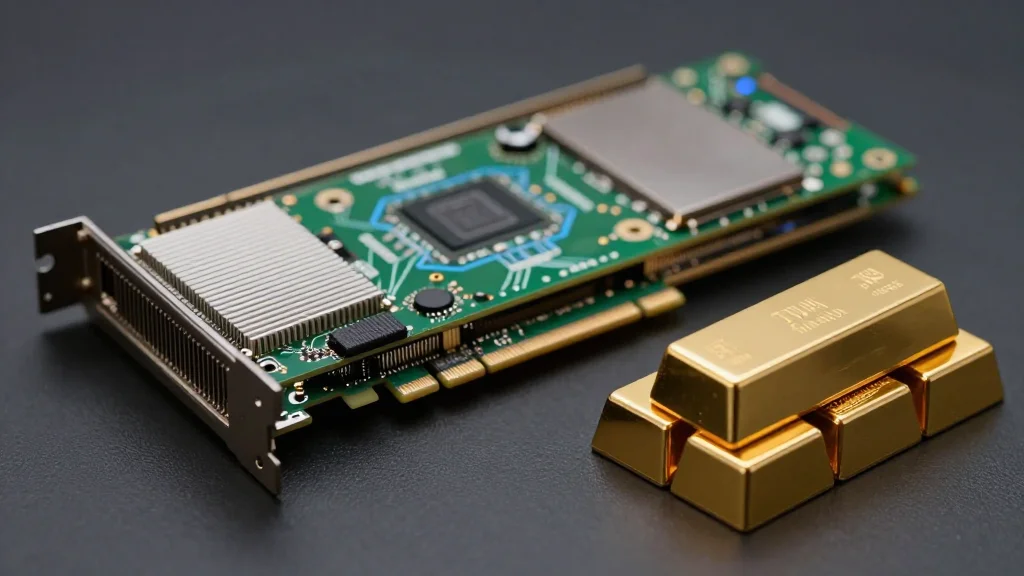
Nvidia Launches $80 B Buyback, Raises Dividend as AI Demand Surges

Companies Mentioned
Why It Matters
Nvidia’s $80 billion buyback and dividend hike are the most sizable capital‑return actions ever seen in the semiconductor sector, directly affecting the weighting of the S&P 500 and Nasdaq‑100. The moves reinforce confidence in Nvidia’s AI‑driven growth model, which has become a bellwether for the broader tech industry’s health. By committing to return cash while still investing in next‑gen GPU architectures, Nvidia signals that its revenue engine is resilient enough to support both shareholders and R&D, a rare combination for a large‑cap hardware company. The exclusion of Chinese compute revenue highlights the geopolitical risk premium embedded in Nvidia’s outlook. If the company can successfully re‑route demand to other regions, it may set a precedent for how large‑cap tech firms manage supply‑chain disruptions while maintaining aggressive shareholder‑return policies. Conversely, any slowdown in hyperscaler spending could pressure Nvidia’s valuation, given its high P/E multiple, making the upcoming quarters critical for market sentiment.
Key Takeaways
- •$80 billion share‑buyback program authorized
- •Quarterly dividend increased to $0.25 per share
- •Data‑center revenue up 92% YoY to $75.2 billion
- •Market cap around $5.5 trillion; trailing P/E ~45×
- •Zero Data Center Hopper shipments to China this quarter
Pulse Analysis
Nvidia’s aggressive capital‑return strategy is a calculated bet that its AI compute moat will outlast the current hype cycle. By pairing a massive buyback with a dividend hike, the company is effectively using its cash surplus to lock in investor loyalty, a tactic that can dampen volatility in a stock that has historically experienced sharp swings on earnings beats or misses. The $80 billion repurchase, the largest ever for a semiconductor firm, also serves as a defensive shield against potential valuation compression if AI spending slows.
The underlying growth narrative remains compelling. Blackwell GPUs continue to dominate training workloads, and the upcoming Vera Rubin platform is positioned to capture the next wave of agentic AI workloads, which Huang described as “parabolic.” If Vera Rubin can deliver the promised performance gains, Nvidia could sustain double‑digit revenue growth even as the market matures. However, the loss of Chinese compute revenue introduces a new variable; the firm must prove that demand from other regions can fully offset the $4.6 billion revenue gap from the previous year.
From a market‑structure perspective, Nvidia’s actions will reverberate across large‑cap indices. Its weight in the S&P 500 and Nasdaq‑100 means that any upward pressure on the stock can lift the entire tech sector, while a pullback could drag index performance. Investors should monitor the pace of buyback execution, the timing of Vera Rubin shipments, and the broader macro‑environment for hyperscaler capex, as these factors will dictate whether Nvidia’s valuation remains justified or becomes a cautionary tale of over‑extension.
Nvidia Launches $80 B Buyback, Raises Dividend as AI Demand Surges
Comments
Want to join the conversation?
Loading comments...