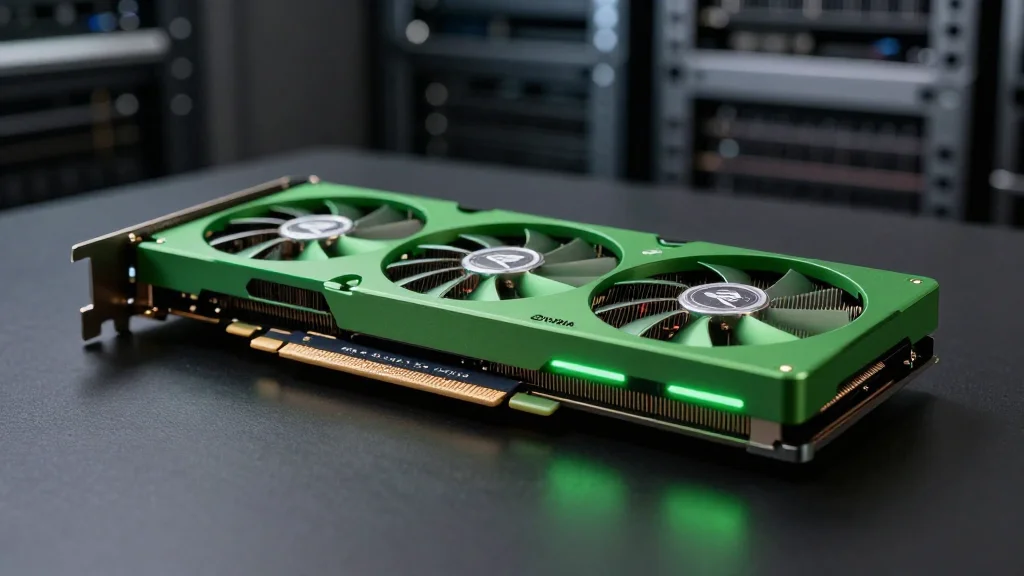
Nvidia’s Q1 Earnings Test AI Surge and Consumer Spending, Stakes on S&P 500

Companies Mentioned

Why It Matters
Nvidia’s earnings are a bellwether for the AI‑driven segment of the large‑cap universe, which has been the primary engine behind the S&P 500’s recent 17% YTD gain. A strong top line would validate continued corporate spending on data‑center infrastructure, bolstering confidence in other AI‑centric firms and potentially expanding the rally beyond the handful of mega‑caps that have led the market. Conversely, a weaker read could expose the fragility of a rally built on a few high‑growth names, prompting investors to re‑price risk across the broader index and shift capital toward more defensive large‑caps. The earnings also intersect with macro‑economic pressures: rising oil prices, higher Treasury yields, and upcoming Fed minutes all influence consumer spending and corporate budgeting. The interplay of these forces will shape equity valuations not just for Nvidia but for the entire technology sector, influencing portfolio allocations, index weighting decisions, and the pace of AI‑related capital deployment over the coming quarters.
Key Takeaways
- •Nvidia’s fiscal Q1 2027 revenue forecast: $78.5 bn, EPS $1.74, ~80% YoY growth.
- •Nvidia stock up 36% since March low; semiconductor index up >60% in same period.
- •S&P 500 up ~17% YTD, but only ~20% of constituents have outperformed the index.
- •Oil prices remain high: Brent at $109 per barrel, WTI at $105 per barrel.
- •Analysts question whether Nvidia can "defend its leadership position" amid rising yields.
Pulse Analysis
Nvidia’s upcoming earnings report sits at the crossroads of two macro‑economic currents that have defined equity markets this year: the AI‑driven growth narrative and the inflation‑driven risk narrative. The AI story has been largely built on a handful of mega‑caps—Nvidia, Microsoft, Alphabet—whose market‑capitalization gains have lifted the Nasdaq and, by extension, the S&P 500. This concentration has made the index vulnerable to any shock that hits the AI supply chain. A solid Nvidia read would reinforce the notion that corporate data‑center spend is still accelerating, likely prompting fund managers to increase exposure to downstream hardware and software players, expanding the AI rally beyond its current narrow base.
However, the backdrop of elevated energy prices and a 10‑year Treasury yield near 4.6% introduces a counterweight. Higher yields compress the valuation multiples that have justified the steep multiples on AI stocks. If Nvidia’s revenue growth comes with a softer margin or a warning on future demand, the market could interpret it as a sign that the AI boom is hitting a ceiling, prompting a rotation into defensive large‑caps such as consumer staples and utilities. Moreover, the Fed’s minutes could reveal a more hawkish stance, further anchoring yields and pressuring growth‑oriented equities.
In the longer view, Nvidia’s performance will also signal the health of the broader semiconductor ecosystem. The recent declines in AMD and Intel suggest that investors are already pruning exposure to companies perceived as lagging behind Nvidia’s innovation curve. A strong Nvidia report could accelerate this pruning, widening the performance gap between the AI leaders and the rest of the chip sector. Conversely, a tepid result may embolden rivals to capture market share, potentially reshaping the competitive dynamics in AI hardware. Either outcome will reverberate through the large‑cap space, influencing index composition, sector rotation, and the strategic positioning of institutional portfolios for the rest of 2026.
Nvidia’s Q1 Earnings Test AI Surge and Consumer Spending, Stakes on S&P 500
Comments
Want to join the conversation?
Loading comments...