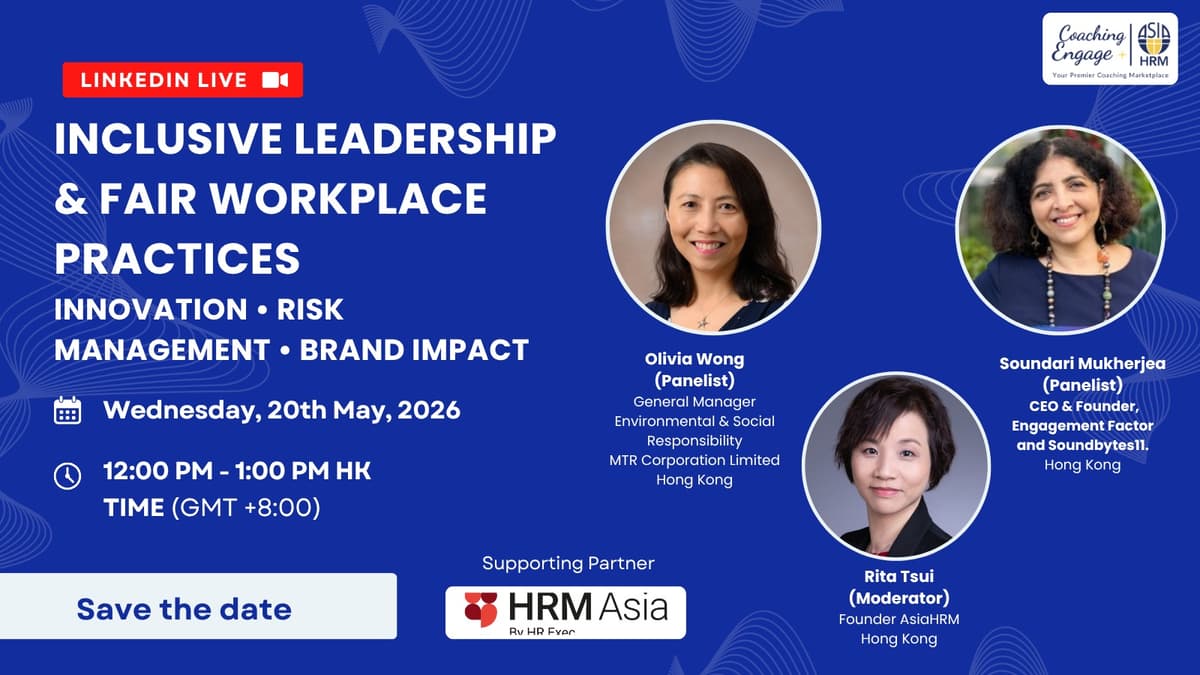
Beyond the Buzzword: What Inclusive Leadership Actually Looks Like in Practice
Why It Matters
Inclusive leadership directly impacts talent attraction, innovation, and brand reputation, making it a strategic imperative for companies navigating global DEI challenges. Measuring and localising inclusion practices ensures sustainable competitive advantage.
Key Takeaways
- •Psychological safety to dissent is core of inclusive leadership.
- •Diverse teams outperform when culture encourages open debate.
- •Inclusive design benefits all employees, not just specific groups.
- •Break down metrics by demographic to pinpoint inclusion gaps.
- •Replace DEI label with local values like respect and harmony.
Pulse Analysis
The conversation at AsiaHRM’s live session marked a turning point from treating inclusion as a checkbox to recognizing it as a strategic capability. Leaders like Rita Tsui argue that inclusive leadership mitigates risk, strengthens brand equity, and fuels innovation by fostering psychological safety—where employees feel empowered to voice dissenting opinions. This safety not only curbs groupthink but also unlocks diverse perspectives that drive better decision‑making, a claim backed by Deloitte research linking varied thinking to higher innovation revenue.
Beyond mindset, the panel underscored tangible actions. Inclusive design—whether flexible work policies, universally accessible office spaces, or product testing that reflects all body types—delivers benefits across the workforce. Measurement, however, must move past aggregate scores. By cross‑referencing engagement data with demographic breakdowns, firms can spot hidden gaps, such as gender disparities in perceived voice. Embedding diversity, equity, and inclusion metrics into leadership KPIs ensures accountability, turning good intentions into measurable outcomes.
The discussion also tackled the rising anti‑DEI sentiment in the United States and its ripple effects in Asia. Rather than abandoning the agenda, speakers advocated localising the language—focusing on respect, harmony, and shared values—to maintain momentum without triggering backlash. They highlighted the human element of grace, urging leaders to accept imperfections while continuously seeking candid feedback. For organizations aiming to stay competitive, the takeaway is clear: inclusive leadership is an ongoing discipline that blends cultural nuance, rigorous measurement, and compassionate execution.
Beyond the buzzword: What inclusive leadership actually looks like in practice
Comments
Want to join the conversation?
Loading comments...