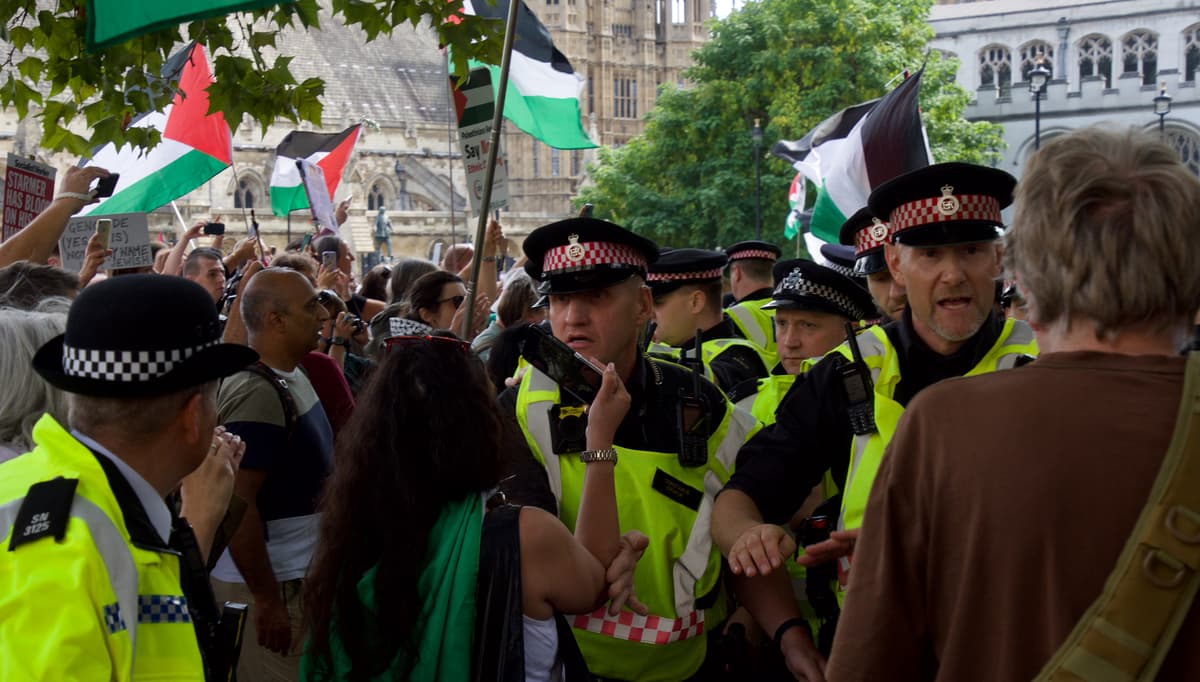
Rights Groups Condemn Conviction of Two UK Palestine Solidarity Activists
Companies Mentioned
Why It Matters
The convictions illustrate how expanded policing powers can curtail democratic protest, raising concerns for civil liberties in the UK and setting a precedent for future activism. They also spotlight tension between national security legislation and the UK’s international human‑rights obligations.
Key Takeaways
- •Activists sentenced to conditional discharges, £7,500 (~$9,500) costs.
- •Convictions invoke 2022 Police Act and 2023 Public Order Act powers.
- •Rights groups warn the rulings erode civil liberties and protest rights.
- •Crime and Policing Bill could further expand police authority.
- •High‑profile NGOs co‑signed statement condemning the verdict.
Pulse Analysis
The UK’s recent convictions of Ben Jamal and Chris Nineham have reignited debate over the balance between public order and the right to protest. Both leaders organized a peaceful flower‑laying demonstration that challenged police‑imposed barriers, yet the district judge invoked the 2022 Police, Crime, Sentencing and Courts Act and the 2023 Public Order Act to deem their actions unlawful. While the court emphasized that protest rights are not absolute, the conditional discharges and £7,500 in costs signal a willingness to penalise civil‑society figures for borderline infractions, especially when the demonstrations target high‑profile institutions like the BBC.
Human rights organisations, including Human Rights Watch and Amnesty International, argue that the verdict undermines decades‑long gains in civil liberties, workers’ rights, and gender equality that were secured through protest. International observers note that the UK’s approach may conflict with its obligations under the European Convention on Human Rights, which protects peaceful assembly. The joint statement from a coalition of NGOs underscores fears that the legal framework is being weaponised to deter dissent, particularly on contentious issues such as the Israel‑Palestine conflict.
Legislative momentum adds urgency to the controversy. The pending Crime and Policing Bill proposes even broader police powers, potentially lowering thresholds for protest restrictions and increasing penalties. If enacted, activists could face harsher consequences for similar demonstrations, prompting a wave of legal challenges and strategic shifts within advocacy groups. Stakeholders are watching closely, as the outcome will shape the UK’s democratic landscape and influence how other liberal democracies navigate the tension between security legislation and the right to protest.
Rights groups condemn conviction of two UK Palestine solidarity activists
Comments
Want to join the conversation?
Loading comments...