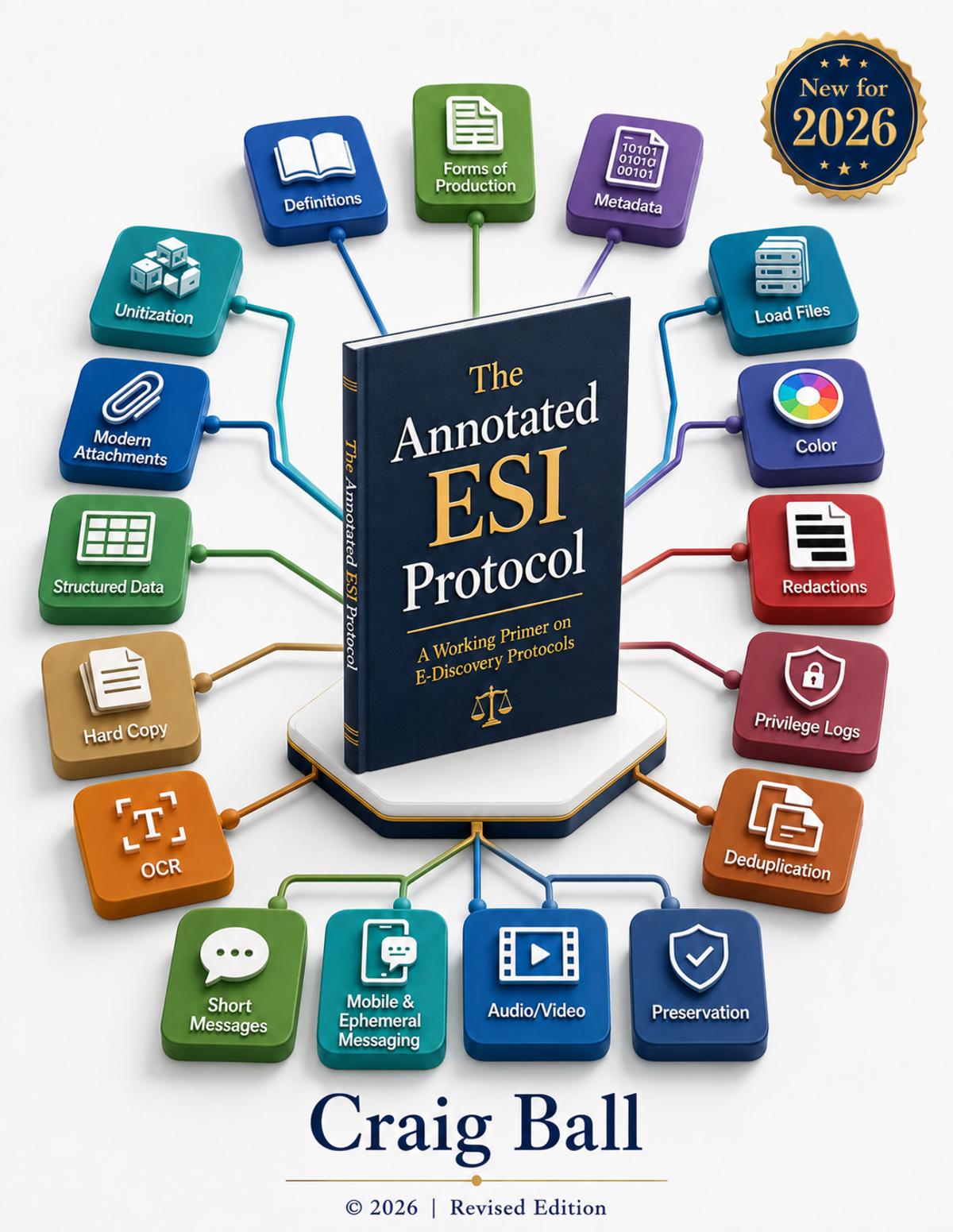
Key Takeaways
- •Adds cloud‑hosted document provisions for genuine substitute attachments
- •Requires native export and readable transcripts for Slack, Teams, Google Chat
- •Tiered mobile data collection: consumer tools for routine cases, forensic for spoliation
- •Expands native production carve‑outs to spreadsheets, CAD, audio, video, and more
- •Load‑file metadata fields grow to ~60, adding tool disclosure and edit flags
Pulse Analysis
The rapid evolution of collaboration tools and mobile messaging has forced e‑discovery practitioners to rethink traditional evidence protocols. When the original Annotated ESI Protocol debuted in 2023, most parties still relied on static TIFF images and basic email collections. Today, cloud‑hosted documents, real‑time chat platforms, and AI‑assisted review are standard, prompting Craig Ball to overhaul the guidance with concrete provisions that address these modern data sources. By codifying expectations for native exports, transcript rendering, and attachment metadata, the 2026 edition offers a roadmap that mirrors the technical capabilities of leading platforms.
Key innovations in the revised protocol focus on proportionality and practicality. The new sections acknowledge that a producing party’s subscription tier may limit what can be delivered, embedding meet‑and‑confer triggers and disclosure obligations to keep demands realistic. Tiered approaches for mobile data—allowing consumer‑grade tools for routine cases while reserving forensic‑grade extraction for spoliation disputes—balance cost with evidentiary integrity. Meanwhile, the expansion of native‑production carve‑outs to include spreadsheets, CAD files, audio, and video signals a shift away from the inefficient TIFF‑only mindset, encouraging courts to accept richer, more searchable formats.
For the broader legal tech ecosystem, the revised protocol serves as a catalyst for standardization. Its alignment with the Electronic Discovery Reference Model (EDRM) project invites collaboration across firms, vendors, and courts to converge on consensus protocols. As AI‑generated content and generative tools become commonplace, the protocol’s brief yet forward‑looking sections on technology‑assisted review lay groundwork for future amendments. Practitioners who adopt these guidelines can expect fewer production disputes, clearer cost expectations, and a smoother path toward defensible, technology‑aligned e‑discovery practices.
A Refresh of the Annotated ESI Protocol
Comments
Want to join the conversation?