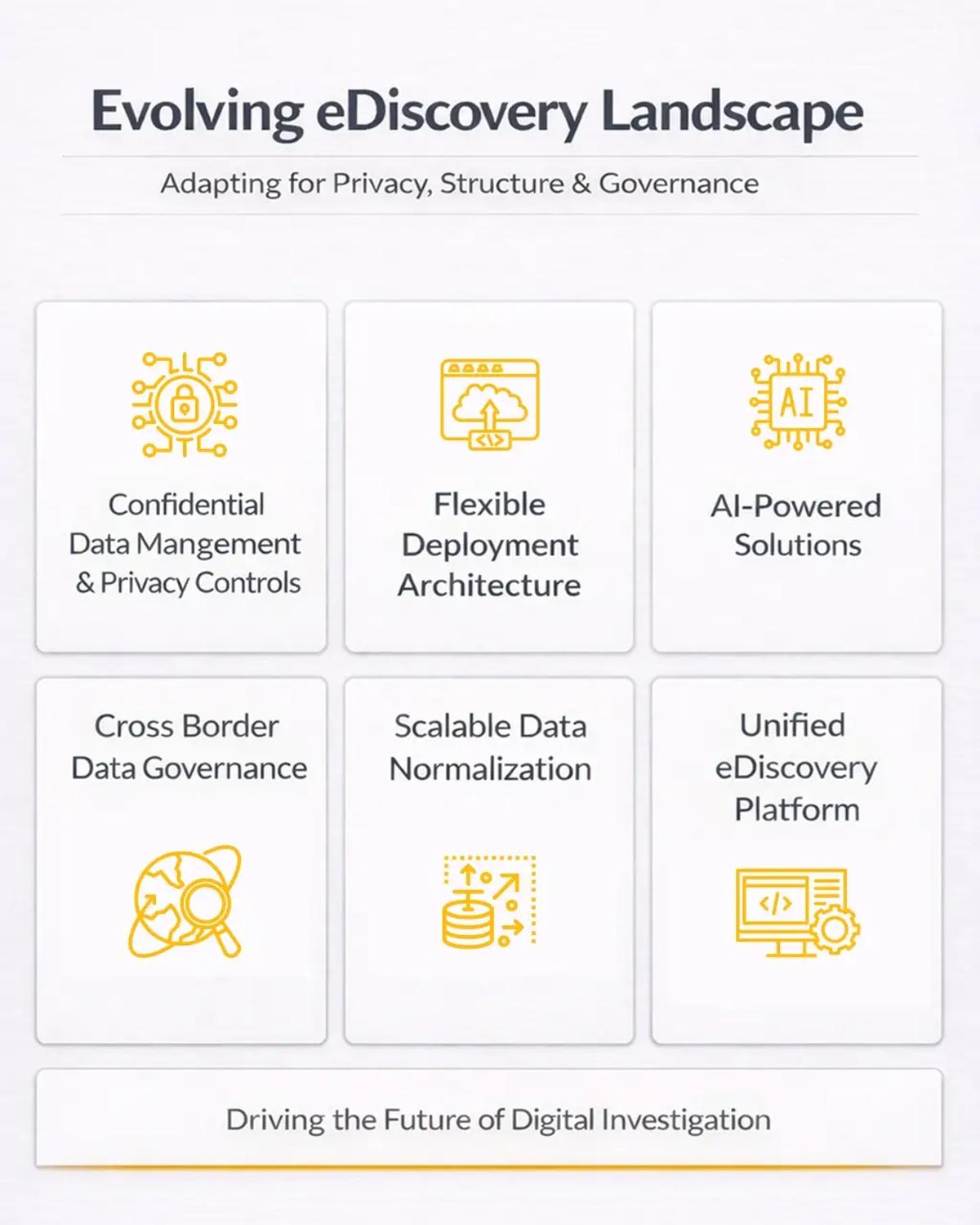
6 Emerging Shifts Reshaping eDiscovery Needs
Key Takeaways
- •GDPR drives privacy-centric eDiscovery workflows.
- •Flexible cloud and AI deployments reduce infrastructure costs.
- •AI automates review, cutting time and errors.
- •Cross‑border governance ensures compliance in multinational cases.
- •Integrated platforms unify processing, review, and production.
Pulse Analysis
The rise of global privacy frameworks such as GDPR has forced eDiscovery platforms to embed robust data protection mechanisms. Automated PII detection, encryption, and role‑based access now form the baseline for any modern solution, ensuring that sensitive information remains secure throughout the litigation lifecycle. This privacy‑first approach not only satisfies regulators but also builds client trust, a critical differentiator in a crowded legal‑tech market.
Simultaneously, the shift toward flexible deployment architectures—particularly Bring Your Own Cloud (BYC) and Bring Your AI Model (BYAIM)—is redefining infrastructure strategy. Organizations can now host eDiscovery workloads in preferred clouds or on‑premises, aligning data residency with jurisdictional requirements while avoiding costly hardware upgrades. Plug‑and‑play AI models further empower firms to leverage best‑in‑class analytics without vendor lock‑in, accelerating review cycles and cutting operational spend.
Finally, comprehensive, integrated platforms are consolidating fragmented workflows into single, auditable ecosystems. By unifying ingestion, processing, analytics, and production, these solutions eliminate data silos, reduce training overhead, and provide end‑to‑end governance. The result is faster, more defensible outcomes for cross‑border investigations and large‑scale data breaches, positioning eDiscovery as a strategic asset rather than a reactive cost center.
6 Emerging Shifts Reshaping eDiscovery Needs
Comments
Want to join the conversation?