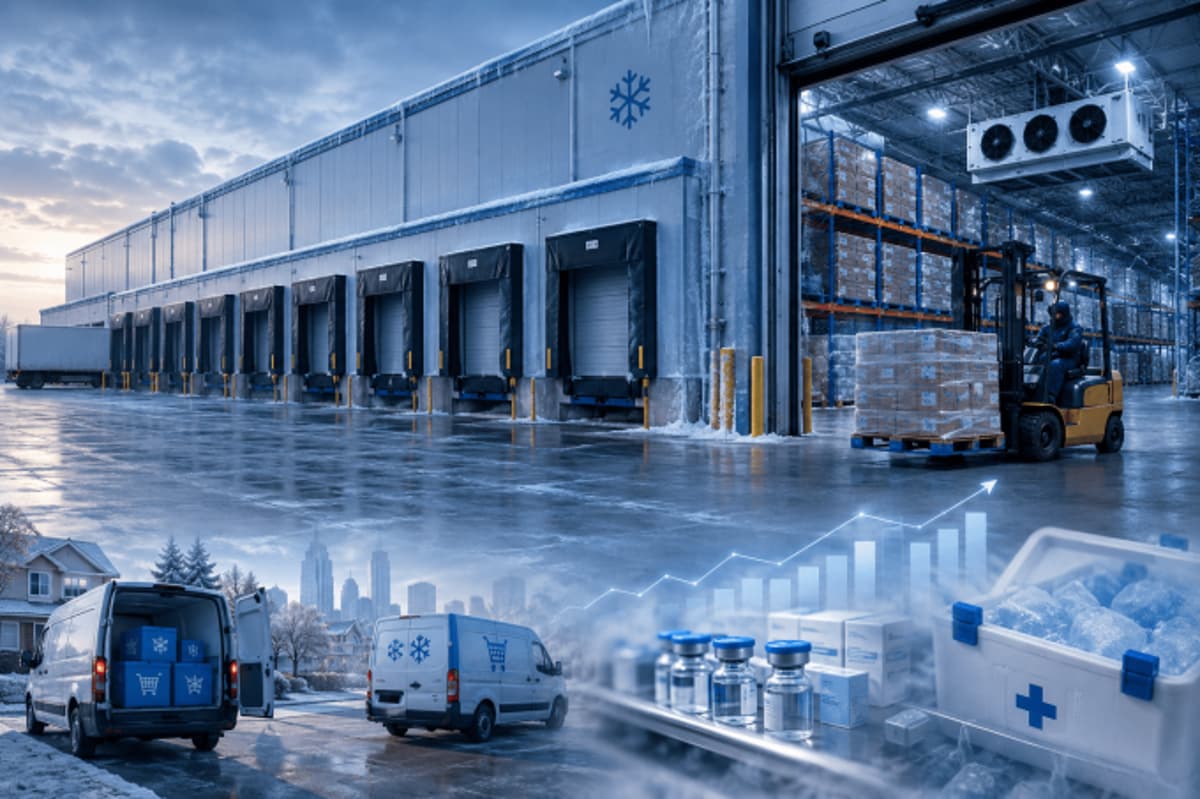
Vertical Cold Storage Acquires Dothan Warehouse's Refrigerated Facility
Why It Matters
The imbalance between scarce capacity and rising demand positions cold‑storage assets for future price appreciation, while legacy facilities face heightened vacancy risk. Investors and operators must navigate a market pivot where modern warehouses become premium assets.
Key Takeaways
- •U.S. cold‑storage vacancy hits 20‑year high
- •Development pipeline at lowest level in two decades
- •Rents have more than doubled since 2020
- •Modern warehouses vacancy 2.7%, legacy 7.6% last quarter
- •Online grocery growth and pharma drive future demand
Pulse Analysis
The cold‑storage sector is at a crossroads, with vacancy rates climbing to levels not seen since the early 2000s. A record‑low pipeline of new facilities means that supply growth has stalled just as demand from online grocery, pharmaceutical products, and population influxes in metros like Dallas‑Fort Worth intensifies. This scarcity is already reflected in rent escalations—average rates have surged over 100% since 2020—making existing space a premium commodity.
Financial results from industry leaders illustrate the pressure cooker environment. Americold posted a modest 0.1% revenue increase to $629.9 million but still logged a $13.6 million loss, while Lineage Logistics saw revenues barely move above $1.3 billion and a $51 million net loss. Higher operating costs, driven by tariffs and inflation, have squeezed margins, prompting CEOs to double down on pricing discipline and cost control. Yet, demand fundamentals remain solid: 72% of Lineage’s surveyed clients report rising need for refrigerated and frozen foods, and online grocery sales jumped 32% last year, amplifying cold‑chain requirements.
Looking ahead, analysts see an inflection point where demand outpaces capacity expansion, especially for modern, energy‑efficient warehouses. Legacy facilities, however, are vulnerable—vacancy rates for older buildings sit at 7.6% versus just 2.7% for newer assets. This bifurcation creates a strategic opportunity for investors to prioritize upgrades or acquisitions of contemporary cold‑storage sites, while owners of aging properties may need to consider repurposing or intensive retrofits to stay competitive. The market’s trajectory suggests that, despite short‑term oversupply from projects under construction, long‑term fundamentals favor a tighter, higher‑value cold‑storage landscape.
Deal Summary
Vertical Cold Storage announced the acquisition of a refrigerated warehouse in Dothan, Alabama from Dothan Warehouse for an undisclosed sum. The deal marks the company's second temperature‑controlled facility purchase in the town within two years, amid a cold‑storage market where vacancy rates have hit a 20‑year high and new supply is scarce.
Comments
Want to join the conversation?
Loading comments...