Beyond Subsidies: What’s Really Driving China’s Industrial Climb
Companies Mentioned
Why It Matters
The strategy shows how coordinated state support, talent development, and supply‑chain integration can accelerate advanced‑manufacturing leadership, offering a template for rivals seeking scale without unlimited fiscal firepower.
Key Takeaways
- •China invested $184 billion in AI firms from 2000‑2023.
- •5.2 million STEM graduates produced 2020‑2022, 13% growth.
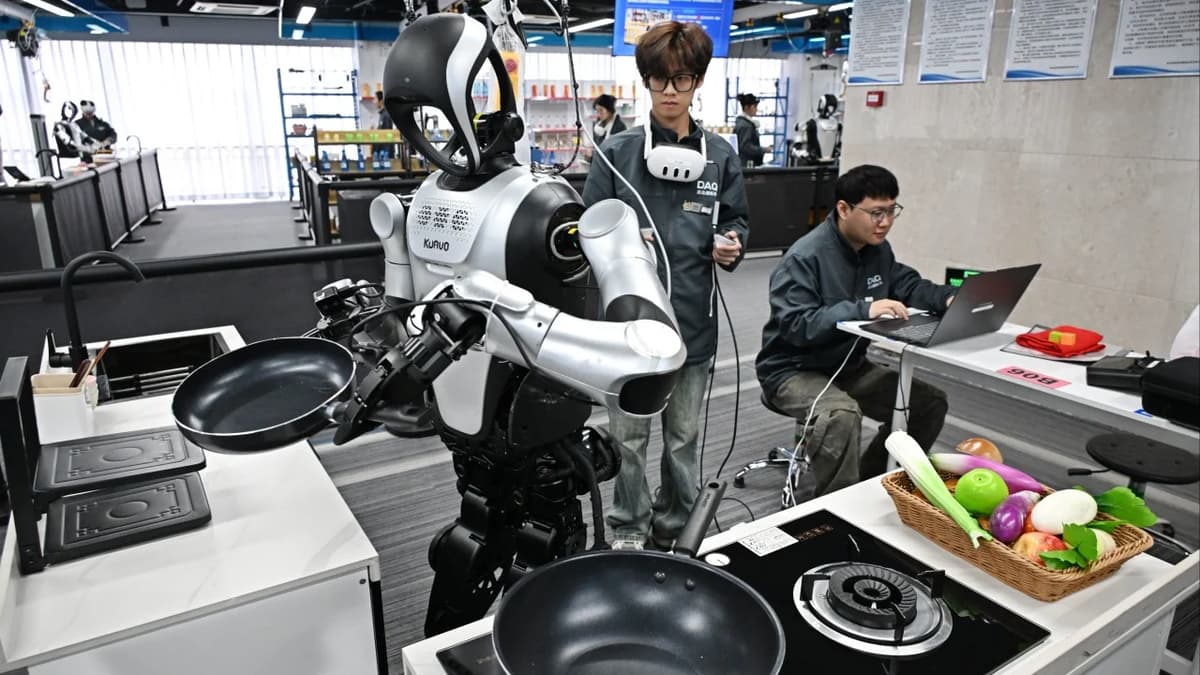
- •Beijing promotes “newer three”: AI, industrial robots, innovative medicines.
- •Unitree sources 80% components domestically, enabling rapid robot iteration.
- •Policy aims for 100 high‑standard industrial data sets by 2027.
Pulse Analysis
The latest "China shock 2.0" reflects a deliberate, state‑driven upgrade from low‑tech export staples to high‑value sectors such as electric vehicles, batteries, solar panels and now artificial intelligence, robotics, and cutting‑edge medicines. While the first wave reshaped global supply chains after China’s WTO entry in 2001, the current wave is faster‑moving, with Beijing already signalling the next trio of priority industries. This rapid succession underscores a long‑term industrial strategy that layers incremental capability gains rather than betting on a single breakthrough.
Beyond headline subsidies, China’s competitive edge stems from a massive, expanding STEM talent pool. Over 5.2 million graduates earned bachelor’s degrees in science, technology, engineering and mathematics between 2020 and 2022, a 13% increase, and a higher proportion of STEM graduates than most manufacturing rivals. Coupled with $184 billion in AI‑focused public funding, the talent pipeline fuels home‑grown firms and attracts top engineers away from finance toward manufacturing. Policy levers—such as tighter financial sector oversight and salary reforms at state‑linked institutions—further steer skilled labor into the real economy.
The industrial ecosystem itself amplifies these inputs. Companies like Unitree benefit from an 80% domestic component base, enabling rapid product iteration, cost control and reliable logistics—advantages that foreign‑heavy supply chains lack. Government targets, such as building 100 high‑standard industrial data sets by 2027, aim to cement China’s position in the AI infrastructure layer, feeding large‑language models with diverse, high‑quality data. For competitors, the lesson is clear: investment must be paired with a robust talent pipeline and a tightly integrated supplier network to translate frontier technologies into scalable, export‑ready capabilities.
Beyond subsidies: what’s really driving China’s industrial climb
Comments
Want to join the conversation?
Loading comments...