BYD Launches China’s First 4nm Automotive Chip, Boosting Domestic EV Manufacturing

Companies Mentioned
Why It Matters
The Xuanji A3 chip represents a watershed moment for Chinese automotive manufacturing, where control over semiconductor design has traditionally lagged behind battery and vehicle assembly. By mastering a 4nm process, BYD not only improves the energy efficiency of its autonomous‑driving stack but also reduces dependence on foreign chipmakers, a strategic advantage amid ongoing trade tensions. The chip’s power‑saving claims could extend vehicle range and lower cooling requirements, directly influencing vehicle cost structures and consumer pricing. Furthermore, BYD’s vertical integration could accelerate the rollout of advanced driver‑assistance features across its mass‑market portfolio, shifting consumer expectations from pure range metrics to intelligent‑driving capabilities. Competitors will likely respond with their own in‑house silicon initiatives, intensifying a domestic chip war that could reshape global supply chains for automotive AI hardware.
Key Takeaways
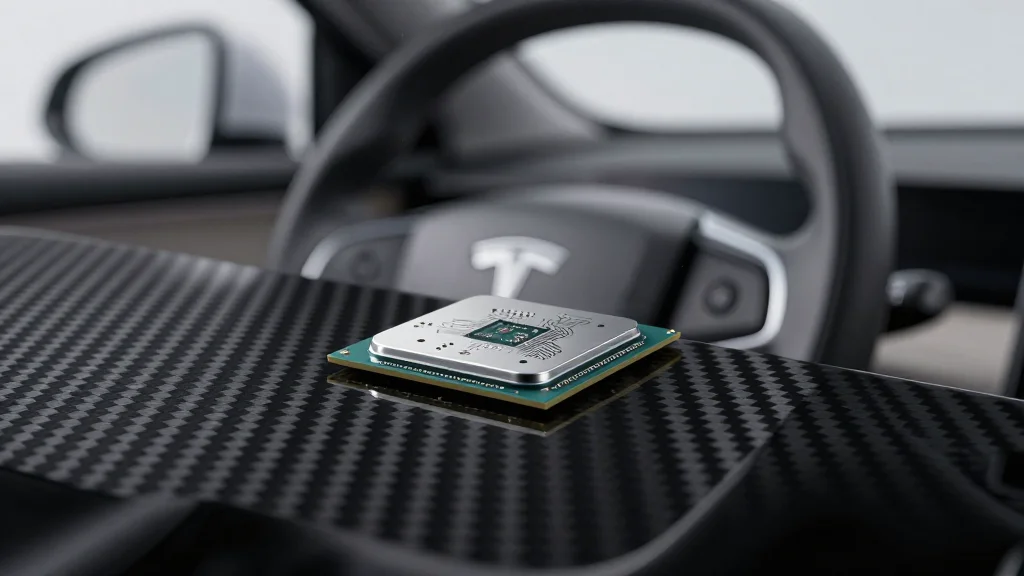
- •BYD unveiled the Xuanji A3, a 4nm automotive‑grade self‑driving chip, at a Shenzhen event.
- •The chip claims 20% lower power consumption than comparable automotive semiconductors.
- •Xuanji A3 supports Level‑3 and Level‑4 autonomous driving and real‑time sensor fusion.
- •BYD’s move challenges Huawei’s 7nm chips and puts pressure on NVIDIA, Qualcomm and Horizon Robotics.
- •Integration into BYD’s Yuan Plus and other models is planned for late 2026, pending regulatory approval.
Pulse Analysis
BYD’s entry into the automotive‑chip arena is more than a product launch; it signals a strategic rebalancing of China’s EV ecosystem. Historically, Chinese automakers have outsourced critical AI silicon to foreign firms, creating a vulnerability that has been exposed by recent export restrictions. By achieving a 4nm node in‑house, BYD not only safeguards its supply chain but also creates a feedback loop where hardware and software can be co‑optimized, shortening development cycles for new driver‑assistance features.
The competitive dynamics are also shifting. Huawei’s aggressive roadmap—7nm now, 1.4nm by 2031—has set a high bar, but BYD’s focus on power efficiency rather than sheer transistor density could carve out a niche in mass‑market EVs where cost and thermal management are paramount. If BYD can demonstrate real‑world gains in range and reliability, it may force other Chinese OEMs to accelerate their own chip programs, potentially spawning a new generation of domestic semiconductor fabs dedicated to automotive workloads.
Looking forward, the success of the Xuanji A3 will hinge on regulatory clearance for higher‑level autonomy and the ability to scale production without compromising yield. Should BYD meet these hurdles, the chip could become a de‑facto standard for Chinese EVs, prompting global automakers to reconsider their reliance on established silicon suppliers. In that scenario, China could emerge not just as the world’s largest EV market, but also as a leading source of automotive AI hardware, reshaping the competitive landscape for years to come.
BYD launches China’s first 4nm automotive chip, boosting domestic EV manufacturing
Comments
Want to join the conversation?
Loading comments...