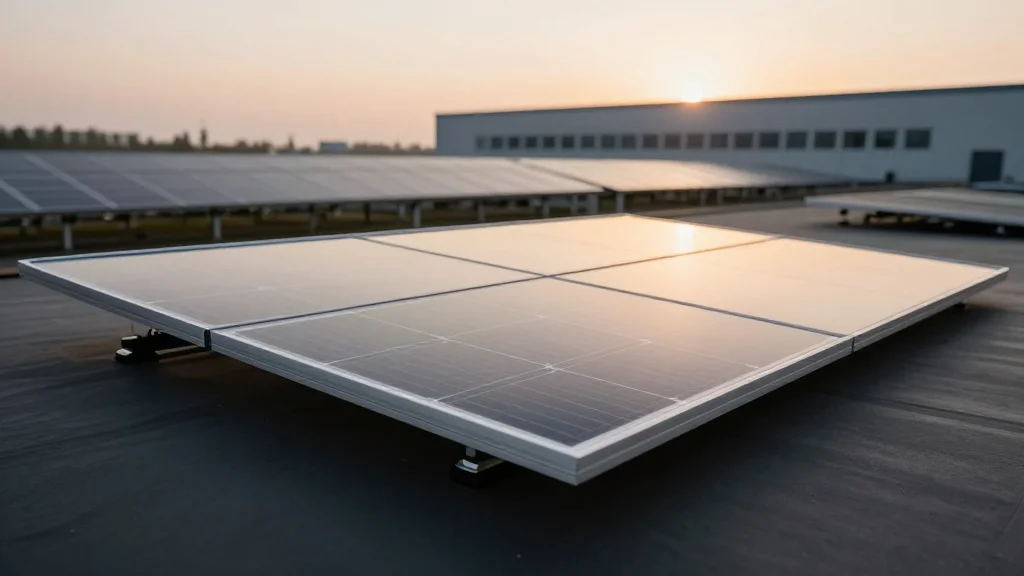
China and India’s Solar Factory Surge Powers Global Clean Energy Leap by 2025

Companies Mentioned
Why It Matters
The manufacturing surge in China and India is a linchpin for the global clean‑energy transition. By delivering cheap, abundant solar modules, these economies are lowering the cost curve for renewables worldwide, enabling faster decarbonization of power grids, transportation, and industry. The decline in coal generation in the two biggest fossil‑fuel consumers also signals a structural shift that could accelerate climate‑policy ambitions and reshape global energy markets. Moreover, the rapid expansion of battery storage—driven by falling costs—enhances solar’s reliability, addressing intermittency concerns that have historically limited renewable penetration. This synergy between manufacturing scale‑up and storage capacity creates a virtuous cycle that could lock in lower emissions for the next decade.
Key Takeaways
- •Solar generation grew 30% in 2025, adding 887 TWh of clean power.
- •Renewables reached a 33.8% share of global electricity (10,730 TWh).
- •China contributed over 50% of global solar‑capacity growth; India posted record solar and wind gains.
- •Coal’s share fell below one‑third globally, dropping 0.6% (63 TWh).
- •Battery storage costs fell 45%, enabling a 46% rise in storage capacity.
Pulse Analysis
The 2025 solar surge underscores a turning point where manufacturing capacity, not just policy, is driving the energy transition. Historically, renewable growth hinged on subsidies and mandates; today, the sheer volume of modules produced in China and India is compressing costs to a point where market forces alone can sustain expansion. This mirrors the semiconductor boom of the early 2000s, where scale economies unlocked new applications and spurred downstream innovation.
From a competitive standpoint, the manufacturing advantage gives China and India leverage over Western firms that rely on imported modules. As module prices continue to fall, Western utilities can procure solar assets at lower capital expenditures, accelerating project pipelines. However, the concentration of supply in Asia also raises geopolitical risks—export controls, trade disputes, or raw‑material shortages could reverberate globally. Companies will likely diversify sourcing, invest in domestic production, or secure long‑term contracts to hedge these risks.
Looking ahead, the interplay between solar manufacturing and battery storage will define the next wave of grid flexibility. With storage capacity now able to shift 14% of new solar output, the traditional “duck‑curve” problem is easing, making high‑penetration solar more grid‑friendly. If battery cost declines continue, we could see a feedback loop where cheaper storage fuels further solar deployment, cementing the manufacturing surge as a cornerstone of a low‑carbon future.
China and India’s Solar Factory Surge Powers Global Clean Energy Leap by 2025
Comments
Want to join the conversation?
Loading comments...