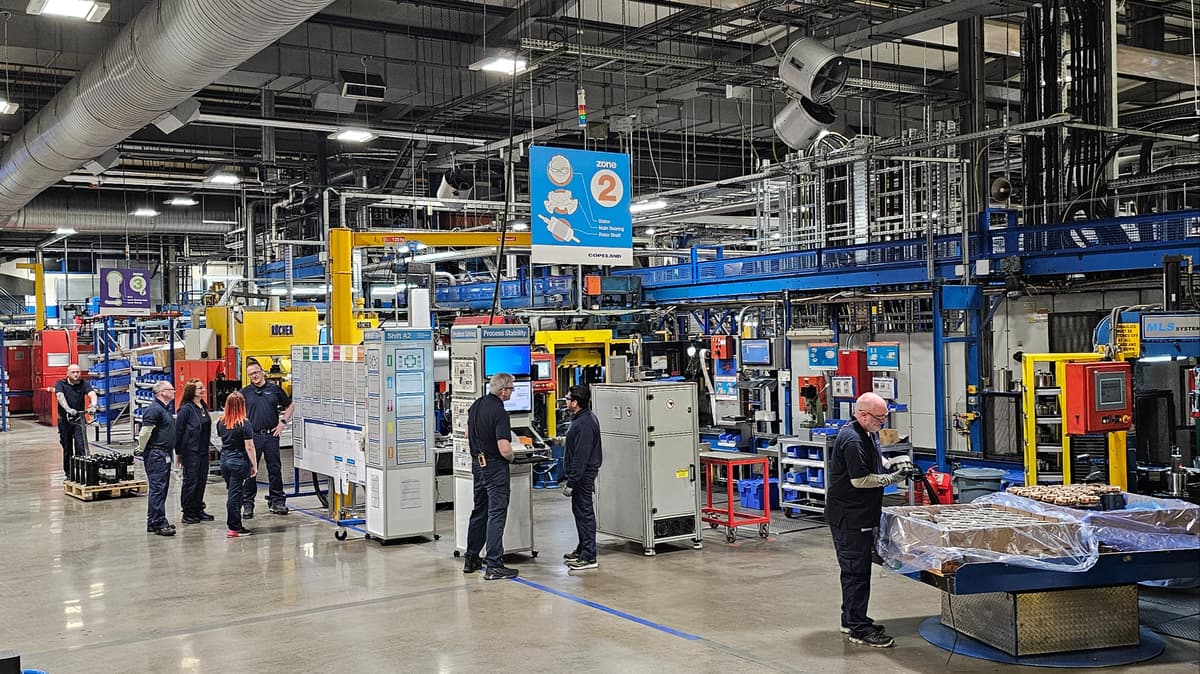
IIAs 2026 | Copeland’s Site Expansion in Cookstown, Northern Ireland
Why It Matters
The expansion bolsters European heat‑pump capacity, accelerating climate‑neutral heating while driving regional economic growth through job creation and supply‑chain strengthening.
Key Takeaways
- •£19 million investment adds new production line.
- •Creates 115 jobs in Cookstown region.
- •Supports EU and UK decarbonisation heating goals.
- •Enhances supply chain resilience for heat‑pump market.
- •Recognised as Europe’s most impactful small project.
Pulse Analysis
The global transition to low‑carbon heating is being powered by a surge in heat‑pump installations, a trend that has accelerated after the EU’s revised Energy Efficiency Directive and the UK’s Net‑Zero Strategy. As manufacturers scramble to close the gap between demand and supply, on‑shoring production becomes a competitive advantage, reducing lead times and carbon footprints associated with long‑distance logistics. Manufacturers that locate production close to key markets also benefit from lower transportation emissions and faster response to regulatory changes. In this environment, facilities that can scale output quickly are essential for meeting the projected 30 % market share of heat pumps by 2030 across Europe.
Copeland’s £19 million infusion into its Cookstown plant directly addresses that scaling challenge. By adding a dedicated production line for compressors—the core component of residential and commercial heat‑pump systems—the company can increase annual output while maintaining its stringent quality standards. The project is also a catalyst for the local economy, with InvestNI estimating 115 new jobs ranging from skilled technicians to supply‑chain coordinators. Moreover, Copeland leverages its global expertise to streamline sourcing and logistics, reinforcing the resilience of its European manufacturing network. The new line incorporates advanced automation, reducing waste and improving energy efficiency across the manufacturing process.
The investment aligns with both UK and EU climate‑action priorities, reinforcing the role of foreign direct investment in achieving decarbonisation targets. Recognition as the most impactful small‑sized project in Europe underscores how targeted capital can deliver outsized environmental and economic returns. For policymakers, Copeland’s model illustrates the benefits of supporting advanced manufacturing clusters that combine sustainability, inclusion, and skills development. As heat‑pump adoption continues to rise, similar expansions are likely to become a cornerstone of Europe’s pathway to a carbon‑neutral built environment. Such projects signal to investors that Europe remains a fertile ground for climate‑tech innovation.
IIAs 2026 | Copeland’s site expansion in Cookstown, Northern Ireland


Comments
Want to join the conversation?
Loading comments...