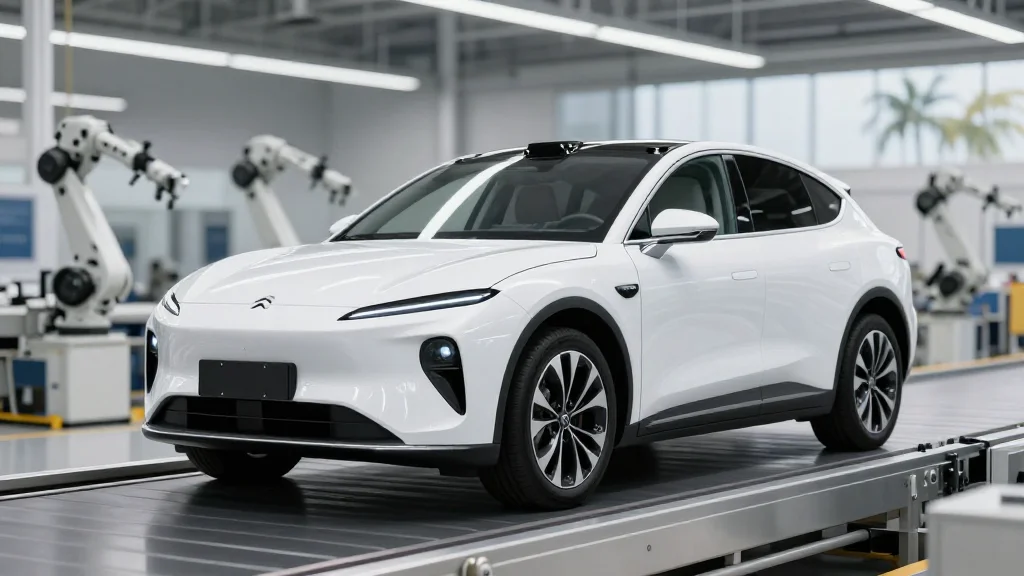
Malacca’s Pegoh Plant Ramps Up to 30,000 EVs a Year, Marking Southeast Asia’s New Assembly Hub

Companies Mentioned
Why It Matters
The Pegoh plant’s scale‑up signals a shift in Southeast Asia’s EV manufacturing geography. By offering a right‑hand‑drive assembly base with favorable tax treatment, Malaysia can attract Chinese OEMs that otherwise would rely on Indonesia’s battery supply chain or Thailand’s established auto ecosystem. This diversification reduces regional tariff exposure and accelerates the rollout of EVs across ASEAN, supporting climate goals and creating skilled manufacturing jobs. Moreover, the move underscores the growing importance of contract manufacturing as a strategic tool for Chinese automakers. Rather than building wholly owned factories, they can leverage existing local capacity, speed market entry, and adapt quickly to policy changes. Malaysia’s success could prompt other ASEAN nations to develop similar hub‑and‑spoke models, reshaping the competitive dynamics of the global EV supply chain.
Key Takeaways
- •EP Manufacturing’s Pegoh plant targets 30,000 EVs annually after Phase 2 expansion.
- •First locally assembled MG S5 EV rolled off the line in March 2026.
- •XPeng, MG and BAIC will use the facility; XPeng’s G6 SUV slated for production by March 31 2026.
- •Malaysia offers tax incentives for locally assembled right‑hand‑drive EVs through 2027.
- •Fieldman EV’s RM1 billion (US$233 million) Changan‑linked plant remains in planning, highlighting divergent project timelines.
Pulse Analysis
Malaysia’s decision to focus on contract assembly rather than full‑scale OEM operations reflects a pragmatic response to the capital intensity of EV manufacturing. By leveraging EP Manufacturing’s existing infrastructure, the state sidesteps the massive upfront costs of building a greenfield plant while still delivering on its export‑oriented ambitions. This model also aligns with Chinese automakers’ broader strategy of dispersing production to mitigate trade barriers and currency risk.
Historically, Thailand’s dominance stemmed from deep integration with Japanese supply chains and a mature parts ecosystem. Indonesia, meanwhile, has banked on its abundant nickel reserves to become a battery hub. Malaysia’s niche—right‑hand‑drive assembly for Chinese brands—fills a gap in the regional value chain, offering a quicker route to market for models that would otherwise face high import duties. The 30,000‑unit target, while modest compared with Thailand’s million‑plus output, is significant for a nascent EV segment and could serve as a springboard for more sophisticated operations, such as battery‑pack integration, in later phases.
Looking forward, the success of Pegoh will hinge on three variables: the speed of capacity expansion, the ability to secure a steady flow of CKD kits before the 2025 tax exemption deadline, and the development of downstream logistics for export. If EP Manufacturing can meet its production milestones, Malaysia could attract additional Chinese partners, creating a cluster effect that draws ancillary suppliers and boosts local employment. Conversely, delays or policy shifts could stall momentum, leaving the Pegoh plant as an isolated success amid a broader regional race for EV dominance.
Malacca’s Pegoh Plant Ramps Up to 30,000 EVs a Year, Marking Southeast Asia’s New Assembly Hub
Comments
Want to join the conversation?
Loading comments...